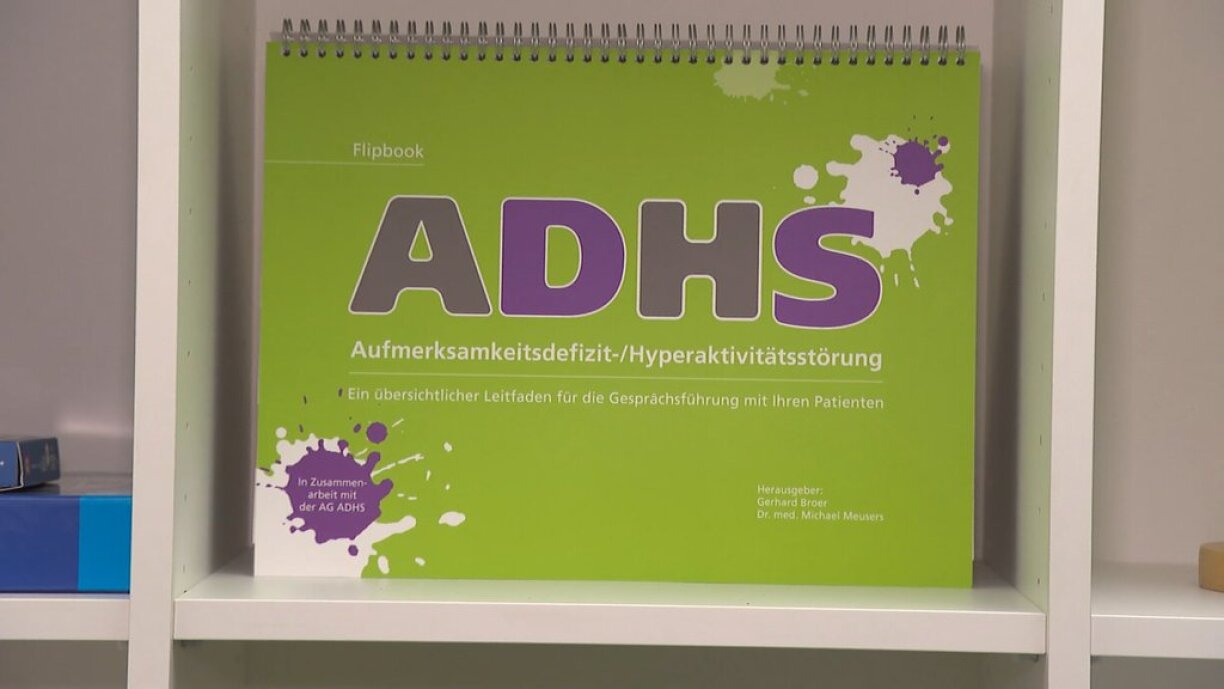
An estimated 2.5-5% of the global population are affected by attention deficit hyperactivity disorder (ADHD). In Luxembourg, it is believed that between 16,000 and 33,000 people suffer from the condition, which can in some cases lead to social isolation, career setbacks, depression, or addiction.
In 2021, a pilot project to help people with ADHD here in Luxembourg was launched. The so-called 'Attention Clinic', which is part of the neuropsychiatric department at the Ettelbruck hospital, currently treats around 125 people, meaning it is already at capacity limits.
Demand for the pilot project is said to be extremely high, which is why the clinic is expected to become a permanent institution. Negotiations on financing to hire additional staff are already being held with the National Health Fund (CNS).
Alexander was one of the first patients at the Attention Clinic. He initially sought out experts to treat a depression, but it was quickly determined that the young man suffered from an underlying condition and that the depression was a symptom.
Alexander recalls: "I was utterly unable to concentrate. I only managed to do so in high-stress situations when failure was imminent. I was not capable of managing my time and get work done during the day. That is why work dominated my life."
The Attention Clinic provides patients with clinical diagnoses of their condition. There is usually a genetic cause that engenders a deregulation of motivation-inciting dopamine levels, explains Estelle Thilgen, psychologist at the clinic: "Dopamine is actually absorbed too quickly by the frontal lobe, which means the function in the forehead is not stimulated enough."
According to the psychologist, this very part of the brain is responsible for organising, planing, and regulating attention and functionality depending on the context.
There are generally two therapy avenues for ADHD patients. One is based on medication, the other on psychological education, according to Dr Niamh Catherine Power, who also works at the Attention Clinic. She notes: "This means teaching patients how to manage the difficulties they face on a daily basis. This can be in the form of task planning to help with procrastination or time management."
Also possible is a combined approach. In the case of Alexander, therapy bore fruit: "Before I started taking meds, my life only consisted of work. There was no room for anyone else. I had no friends left at some point. Even my girlfriend was unable to cope with me."
Those with ADHD thus tend to struggle with the simplest of daily tasks, and this fatigue in return affects their health and social life, stated Thilgen in conversation with RTL: "And that is actually immensely regrettable, because therapy can be very simple. ... It has been proven that treatment even acts as a protective measure for resulting diseases and conditions like obesity, depression, addiction, difficulties in school, or financial troubles."
Success stories, like Alexander's, therefore illustrate the transformative potential of targeted treatment and the hope it offers to many struggling with the disorder.





