Here are five things you should know at the end of this week:

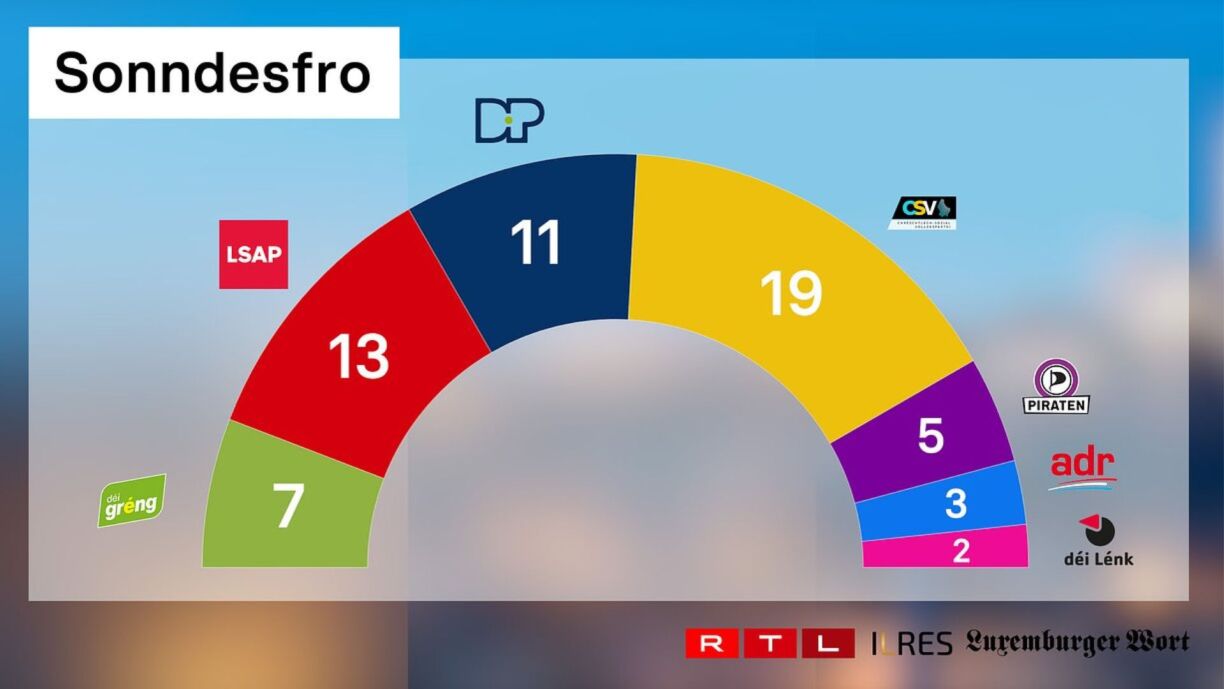
According to a new Sunday poll, the CSV would remain the strongest party in Luxembourg's Chamber, LSAP would gain seats, and the Pirates would more than double their parliamentary presence.
Ups and downs - The Christian Social Party (CSV) is set to maintain its influential status in Luxembourg's Chamber of Deputies, proving its resilience and dominant position in the political landscape.
This continuity, however, is juxtaposed against the considerable momentum of the Luxembourg Socialist Workers' Party (LSAP), which is poised to secure additional seats, reflecting a shifting political dynamic.
Equally noteworthy is the ascension of the Pirate Party, which is not only projected to more than double its seats but has also showcased its growing influence in recent municipal elections, signaling a changing voter sentiment towards alternative parties.
Fresh coalitions wanted - The upcoming elections present a tapestry of potential coalition configurations. The existing coalition comprising the Democratic Party (DP), the LSAP, and the Greens might retain its slim majority, but with a more evenly distributed power.
However, public sentiment seems to lean away from this setup, with a notable 26% advocating for a DP and LSAP partnership, excluding the Greens. This coalition arithmetic becomes more intriguing with the possibility of an LSAP and CSV collaboration, which although feasible in numbers, garners the backing of only 17% of the respondents.
The varied coalition preferences indicate the electorate's desire for change and fresh collaborations.
One month to go - Public opinion on government and opposition work is marked by distinct differences. The government, led by the coalition, seems to have left a positive impression on voters, with almost a third expressing strong satisfaction with its accomplishments.
The DP, led by Prime Minister Xavier Bettel, stands out within the coalition for its performance and has seen a spike in approval over the past few months. In contrast, the opposition faces a challenge; while parties like CSV and the Pirates are gaining traction, others like the Alternative Democratic Reform Party (ADR) and The Left appear stagnant.
With one month to go until election day, these evaluations provide crucial insights into the public's assessment of party effectiveness and might influence the final electoral outcomes.
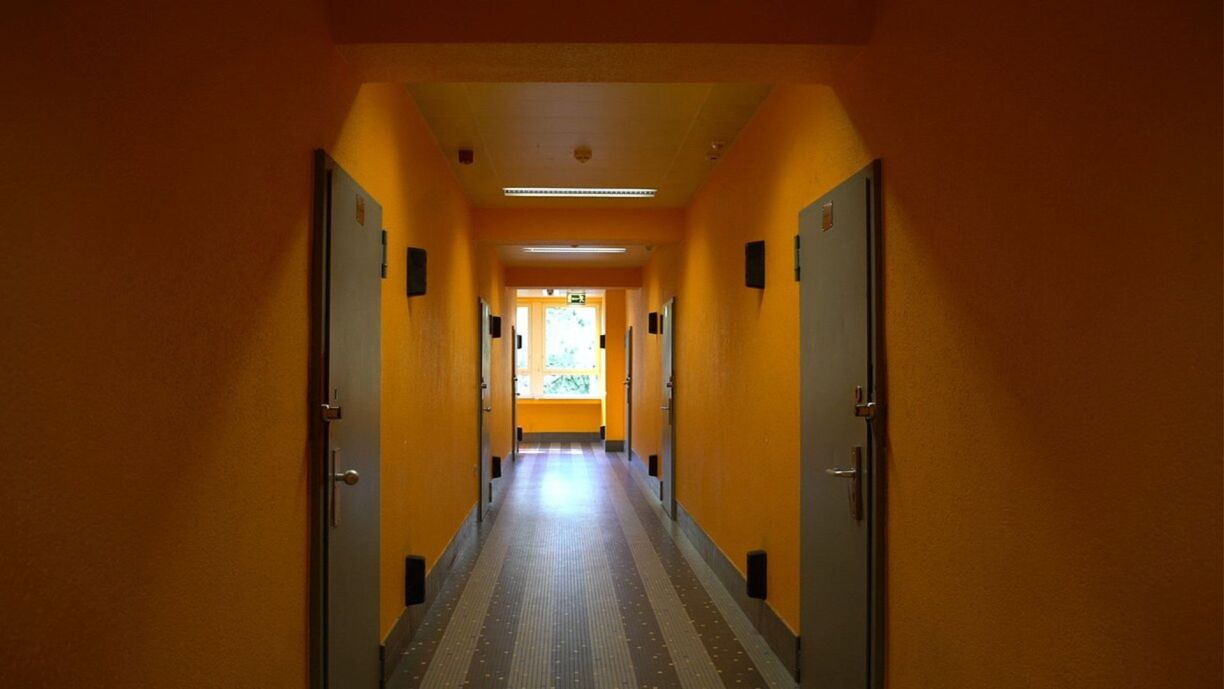
The Council of Europe's Committee for the Prevention of Torture (CPT) has criticised Luxembourg for "unacceptable" living conditions for detained children in security units, notably at the Dreiborn Unisec centre, and called for improved conditions and activities.
The CPT expressed concerns about alleged police violence and ill-treatment, highlighting issues like small 'security cells' and lack of confidentiality during medical exams for detainees.
The committee urged for better regulation and practices in closed psychiatric units in Luxembourg, highlighting concerns over the use of restraints and the need for stronger safeguards for involuntarily placed patients.
Damning report - The CPT has raised serious concerns about the treatment of young detainees in Luxembourg, particularly in security units like the Dreiborn Unisec centre. The living conditions for these children are deemed "unacceptable" and have sparked criticism not only for the physical environment but also for the lack of activities to engage them.
While the country has made some strides towards youth protection reform, the committee remains unsatisfied with the pace and extent of these changes, emphasising that the conditions in which these children are held often exacerbate incidents of violence among them.
Accusations from detainees - Allegations of police ill-treatment and excessive use of force have been a significant issue in Luxembourg. The CPT's recent inspection has brought to light several troubling practices, including the use of oppressively small "security cells" during police questioning and potential breaches of detainee privacy during medical exams.
Detainees have reported physical abuse, insults, and threats from the police during their custody, which has prompted the CPT to urge for an overhaul of the police's handling and treatment of detainees.
Committee recommendations - The psychiatric sector in Luxembourg, particularly in closed units, has been flagged by the CPT for several operational concerns. Chief among these is the excessive use of both mechanical and chemical restraints on patients, often without adequate staff observation.
The committee also highlighted a shortage of staff, notably psychiatrists, and insufficient provisions for patients. With these concerns in mind, the CPT has recommended daily outdoor activities for patients, better regulation on the use of tranquilliser injections, and overall strengthened safeguards for those placed in these units against their will.
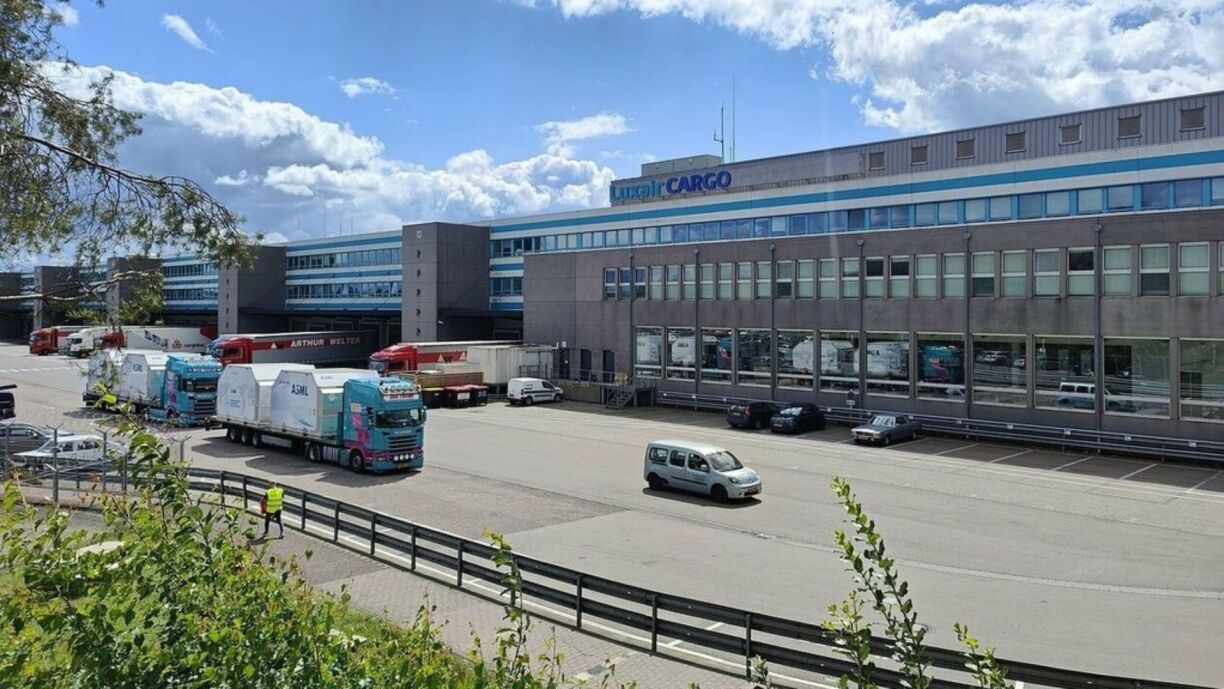
Luxair has decided to sell its air cargo handling business at Findel Cargo Centre and will not participate in the public tender for this operation.
Apart from Cargolux, two companies have bid for the future management of the air cargo facility, with licences to be issued in November.
The sale will allow Luxair to concentrate on its main airline and tour operator activities, which are expected to require more investments in the upcoming years.
Strategic change - Luxair has chosen to offload its air cargo handling operations situated at Findel Cargo Centre. This strategic move indicates a shift in the company's priorities. Despite this being a significant segment of their operation, Luxembourg's flagship airline has chosen not to participate in the forthcoming public tender meant to determine who will oversee this business moving forward.
Licenses expected in November - The process for determining the future managers of the Findel Cargo Centre's air cargo handling services has generated interest in the market. Cargolux has shown its intention to vie for control. Additionally, two other undisclosed companies have also placed their bids.
The competition for this venture underlines the significance and potential profitability of the air cargo handling service. By November, following the established tender process, the relevant authorities will issue the necessary licences to the chosen service provider or providers.
New investments needed - The sale of Luxair's air cargo handling business is not merely a decision to shed a subsidiary operation. Instead, it signals a deliberate strategy to reinvest resources and attention towards its primary functions.
Mobility Minister François Bausch highlighted that Luxair's decision to divest from this segment will allow the company to channel its energy and capital towards its primary airline and tour operator services. As the travel and tourism sectors recover and evolve, Luxair anticipates the need for increased investments in these areas to remain competitive and innovative.

The French government has imposed a ban on the abaya Muslim dress for women in over 500 schools, citing it breaks secularism rules in education.
Prime Minister Elisabeth Borne stated that while some girls agreed to remove the abaya, others would be educated about the new law.
Despite this, Education Minister Gabriel Attal opposes banning parents from wearing religious attire during school outings and has hinted at a potential uniform trial for state schools in the future.
Overt displays of religious affiliation - French authorities have recently taken a firm stance on maintaining secularism within the educational environment. They announced a ban on the abaya, a Muslim dress for women, in over 500 schools across the country.
This move is grounded in the belief that such religious attire disrupts the rules on secularism in education. This is not the first time France has made such a move, as Muslim headscarves were previously banned on similar grounds - being considered as overt displays of religious affiliation.
Educational approach - Amid the implementation of this ban, Prime Minister Elisabeth Borne addressed the situation by visiting a school in northern France. She reported a peaceful adherence to the new rule with no incidents reported.
However, she did acknowledge that some girls arrived at school wearing the abaya. While some complied immediately and removed it, others required a more in-depth discussion. The government's approach towards these students is educational, aiming to inform and explain the rationale and legal framework behind the new regulation.
Toward school uniforms? - Diving deeper into the issue, Education Minister Gabriel Attal provided insights regarding the schools affected by this ban, noting that 513 schools had been identified as potential hotspots.
Yet, in contrast to this firm stance on the abaya, Attal expressed a more lenient view towards parents. He believes that parents should have the freedom to wear religious attire when they're accompanying their children on school outings, distinguishing between in-school and out-of-school environments.
Furthermore, the broader discussion on attire in schools led Attal to mention the possibility of a uniform trial for state schools, although he remains cautious, indicating that uniforms may not be the panacea for all school-related challenges.
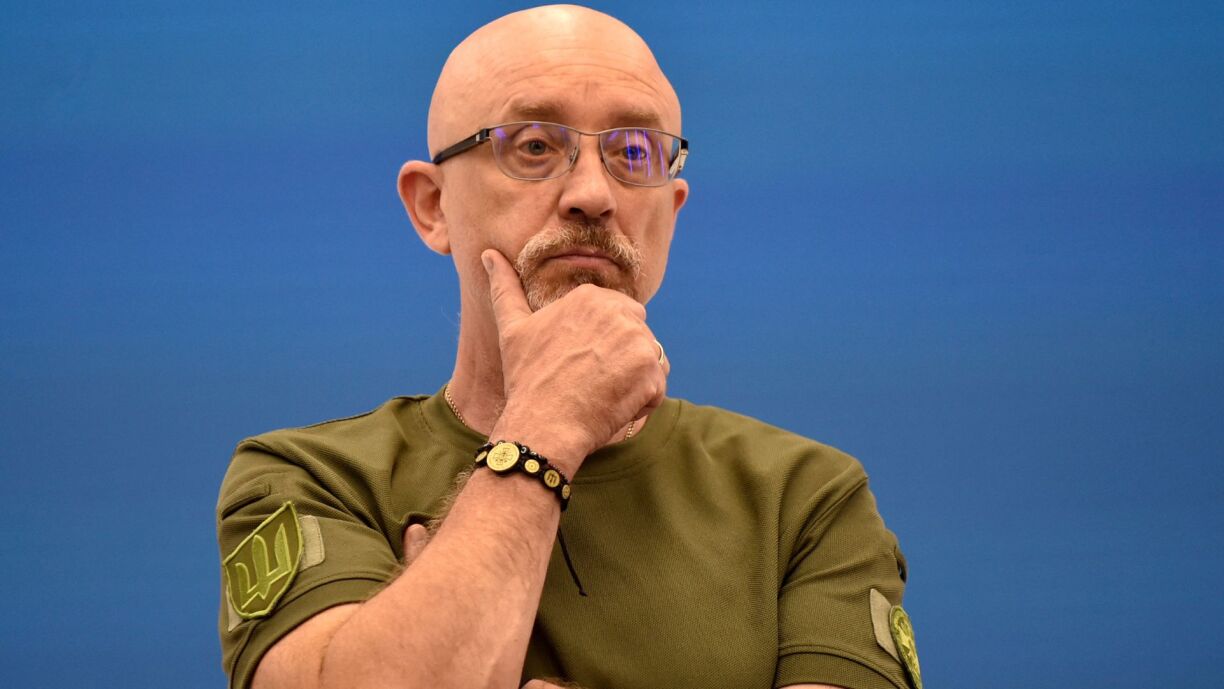
Ukrainian President Volodymyr Zelensky announced the departure of defence minister Oleksiy Reznikov, highlighting the need for "new approaches" amid Russia's ongoing invasion.
Zelensky has nominated Rustem Umerov, the head of the State Property Fund, as Reznikov's replacement, pending parliamentary approval.
The news follows a Russian drone attack in the Odesa region and coincides with Ukraine's counteroffensive efforts and broader anti-corruption measures in response to EU demands.
'New approaches' - President Zelensky's decision to let go of defence minister Oleksiy Reznikov comes during a crucial phase, with Ukraine enduring over 550 days of full-scale war against Russia.
Zelensky's remarks about the need for "new approaches" reflect the country's demand for dynamic strategies, particularly when engaging both the military and the civilian population, amidst such a protracted conflict.
Overcoming corruption - Rustem Umerov's nomination to replace Reznikov signifies a strategic shift in Ukraine's defence leadership. Umerov, being a Crimean Tatar and having previously led the State Property Fund, brings a unique perspective to the table.
His leadership might be seen as a way to bolster the country's defence mechanisms and offer fresh perspectives at a time when Ukraine faces both external military threats and internal challenges of governance and corruption.
Meeting EU expectations - The recent drone attack in the Odesa region is a testament to the continuous strain between Ukraine and Russia. Moscow's targeting of Ukrainian infrastructure has intensified, particularly in areas significant for trade and transportation.
This heightened aggression comes in conjunction with Ukraine's renewed vigor in its counteroffensive, as well as its internal push against corruption - a move that aligns with the European Union's expectations and perhaps signals a strengthening of ties between Ukraine and the EU.
Business & Tech - Two years after El Salvador boldly adopted Bitcoin as legal tender with hopes of revitalising its economy, the nation grapples with the cryptocurrency's plummeting value, unmet promises, and widespread public skepticism.
Science & Environment - US President Joe Biden's administration on Wednesday announced it is banning new oil and gas drilling over a vast region of Alaska that is significant for Indigenous communities and home to iconic animal species.https://today.rtl.lu/news/world/a/2066108.html
Entertainment - The world's biggest music publisher Universal, whose catalogue includes artists from Taylor Swift to the Beatles, announced a deal on Wednesday it says will shake up the way artists are rewarded for streaming.
Surprise birth - A woman unexpectedly gave birth to a baby at the Schueberfouer on Saturday evening, an event confirmed by the Grand Ducal Fire and Rescue Corps (CGDIS).
Noise pollution - Homeowners near Findel Airport can now access up to €16,000 in state aid for sound insulation improvements.https://today.rtl.lu/news/world/a/2066108.html
Tragedy averted - A family residing in Kirchberg experienced a harrowing close call when a section of balcony edging collapsed into their garden, just moments after their children had been playing there.

Your Weekly Recap is published every Friday at noon. Read earlier versions.





