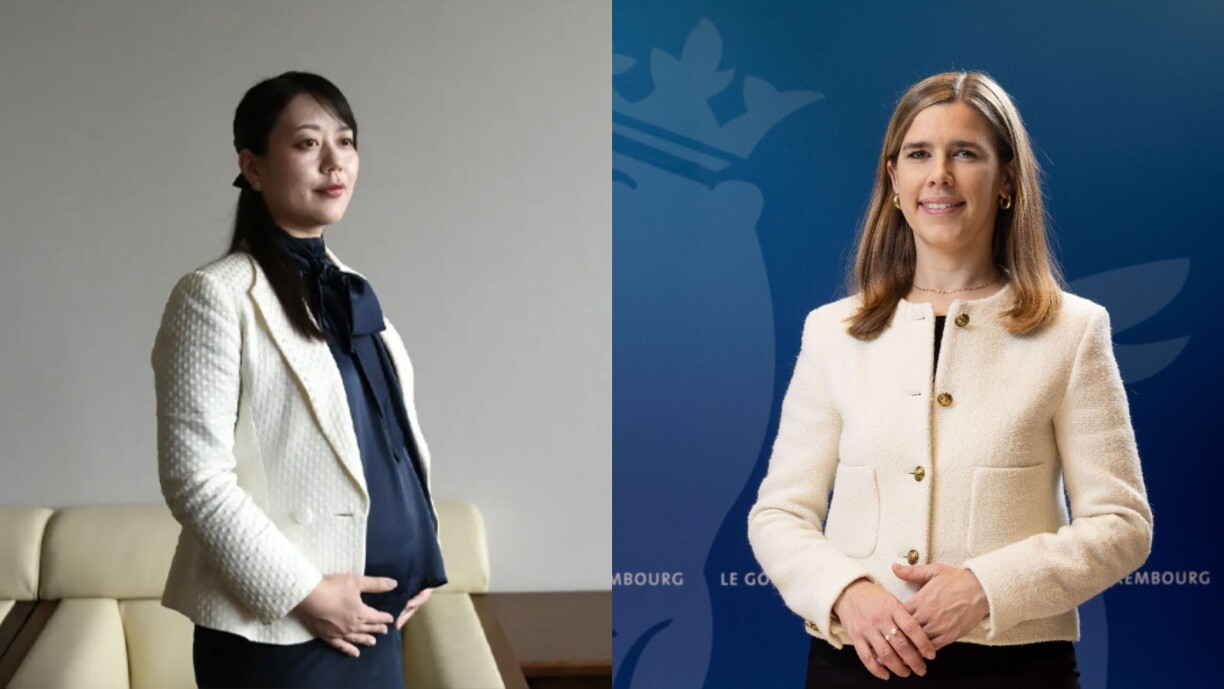
Shoko Kawata made history in Japan when she was elected youngest female city mayor in Yawata, a small town near Kyoto. She recently made history again when she became the first Japanese mayor to take maternity leave.
Since there is no official regulation for local elected officials to take time off, the public has diverting opinions on debates regarding parenthood for people in public office. This reminds of a similar story in Luxembourg a few months ago, when Elisabeth Margue became the first pregnant cabinet member while in office. Both stories reveal a legal gap in traditional labour regulations because politicians are seen as popular mandates and not traditional employees with employment contracts.
Does this pose questions of the compatibility of political career and family life? In Japan, it certainly raises questions about the impact that such regulations, or the lack thereof, have on an already struggling birth rate. Every year the birth rate is slightly lower than that of the preceding year. In 2026, the birth rate is at 6.98 per 1,000 people, and the average total fertility rate is 1.1 per woman.
It then goes without saying that not providing a legal framework for women in elected positions, to balance their professional life and their private family life, could cause women in Japan to refrain from having children altogether.
The country risks contributing to their population decline by sustaining a society that makes women choose between work and family, and instead backs up a culture that is already characterized by overwork. Japan even has terms like 'karoshi' or 'karōjisatsu', meaning death from overwork from either physical exhaustion or even suicide due to mental stress, respectively.
The story of Shoko Kawata highlights yet another issue. In Japan, only 4% of Japan's 1,720 municipal leaders are women. For a developed nation, that is one of the worst gender gaps in politics. The World Economic Forum ranked Japan 118th out of 148 countries in their Global Gender Gap Report in 2025.
Luxembourg was ranked 50th. If complete equality would be 100%, Japan is set at 66.6% and Luxembourg has a mark of 74.5%. Japan's lowest category was that of political empowerment with 8.5% compared to Luxembourg with 29%.
Despite the differences in ranking, both countries still have this gray zone, that is maternity leave as an elected official, and women like Kawata and Margue spark important discussions on representation in politics and the compatibility of motherhood and public duty.
Luxembourg and Japan are alike in that both lack modern labor rights, forcing women in elected positions to resort to delegation and not official maternity leave.





