
Here are five things you should know at the end of this week:

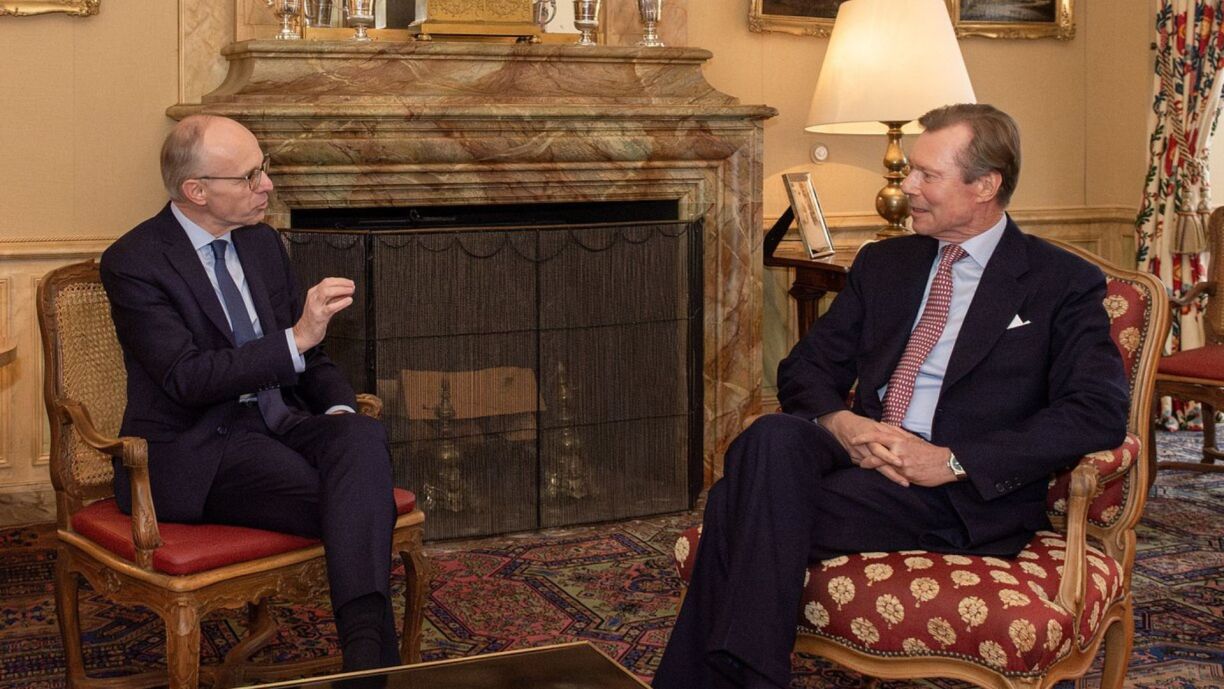
Luc Frieden has been updating the Grand Duke on the progress of negotiations with the Democratic Party (DP), with a coalition agreement expected to conclude next week.
Cautious optimism - The ongoing coalition negotiations in Luxembourg have seen Luc Frieden from the Christian Social People's Party (CSV) playing a pivotal role as the formateur. He has been actively involved in discussions with the Grand Duke, providing updates on the talks between the CSV and the DP.
Frieden suggested that the coalition formation is in its final stages and has been cautiously optimistic about wrapping up the talks by next week. This highlights a collaborative effort to blend the electoral programmes of both parties into the new government's agenda, emphasising a fresh and people-centric governance approach.
Key issues - As the negotiations between the CSV and DP advance, the efforts of the twelve thematic task forces have concluded, setting the stage for the final rounds of talks.
These task forces have laid the groundwork for the delegations to tackle, with poverty alleviation being earmarked as a priority issue. It is also believed that fiscal and educational reforms are among the key topics of these discussions.
Strategic pause - The negotiation process experienced a brief hiatus on Thursday due to Acting PM Bettel's engagement with an international conference concerning the Middle East. This intermission was used as strategic pause, during which working groups continued to refine the agreement documents. Negotiations picked back up on Friday at Senningen Castle, with the aim of moving closer to the ratification of the coalition agreement.

Luxembourg's economy is projected to contract by 0.8% of GDP at the end of 2023, with a public deficit increase to €1.5 billion, as reported by the National Economic and Financing Committee (CEFN).
Opposition parties in Luxembourg express no surprise at the recession forecast, but show concern over a lack of transparency in the government's economic predictions - as well as the feasibility of tax reductions promised by the CSV during elections.
Despite the economic downturn and CEFN warnings, the CSV remains committed to its coalition agreement positions, while opposition parties emphasise avoiding austerity measures and maintaining investments and tax reforms to support the economy and residents' purchasing power.
Potential recession - The CEFN of Luxembourg has brought to light the possibility of an economic downturn, expecting a contraction in the nation's GDP by 0.8% by the end of 2023. This grim forecast is accompanied by an anticipated increase in the public deficit to €1.5 billion, or 1.9% of GDP, influenced by the financial, industrial, and construction sectors.
These projections are worrying as they signal a potential recession and raise concerns over the sustainability of public finances, especially with the added risks posed by taxation changes affecting multinational corporations.
Doubtful opposition - The response from Luxembourg's opposition parties to the CEFN's forecast has been one of expected resignation rather than surprise, indicating a general anticipation of the economic contraction. Criticisms have arisen regarding the accuracy and transparency of economic predictions made by government bodies, with comparisons drawn to more conservative figures from international institutions like the IMF.
The opposition also questions the practicality of the campaign promises made by the CSV, particularly around tax cuts, given the current economic outlook and the latest projections which seem to imply that such promises may not be economically viable.
Broad vs. targeted tax reforms - In the face of these economic challenges, the CSV shows itself undeterred by the CEFN's cautionary report. The party, along with its coalition partner, the DP, believes in stimulating economic activity and reinforcing the purchasing power of residents as a countermeasure to the impending recession.
Meanwhile, there is a consensus among the opposition that austerity measures should be off the table. Instead, there is a call for continued investment in the economy and the pursuit of tax reforms aimed at providing targeted relief rather than broad, unfocused measures.

LuxChat, an instant messaging app initially for Luxembourg's civil servants, has been made public, offering secure, encrypted communication without selling user data, a contrast to services like WhatsApp.
The app supports sharing messages, documents, images, and videos up to 50MB, with registration via LuxID, and is backed by local companies and government, ensuring compliance with Luxembourg and EU data protection laws.
The Luxembourg government subsidises LuxChat, allowing it to operate without advertisements, and is part of a larger initiative to enhance the nation's cybersecurity infrastructure.
Post-flood measure - LuxChat has expanded its reach beyond the Luxembourg civil service to the general public, positioning itself as a secure alternative to other messaging platforms by not collecting or selling user data. The app's development was spurred by the need for reliable communication following the floods in Luxembourg in 2021, signalling the government's commitment to future-proof and resilient digital communication solutions.
Corporate and institutional uses - The functionality of LuxChat mirrors that of other well-known messaging services, allowing users to exchange text messages, documents, and multimedia content, with a current file size limit of 50MB. It requires users to register through LuxID, ensuring a secure verification process.
The app's adoption by prominent local entities like Post Luxembourg hints at a broader shift towards more secure digital communication methods within the corporate sphere, showcasing its potential to serve not only individual users but also businesses seeking to safeguard their communications.
Data protection - LuxChat's launch is underpinned by financial support from the Luxembourg government, which eliminates the need for in-app advertising, often a revenue source for free applications. This subsidy is part of a broader strategy to fortify Luxembourg's cybersecurity capabilities.
The government's involvement also underscores the importance placed on maintaining high standards of data protection, in line with Luxembourg's and the European Union's stringent privacy laws.
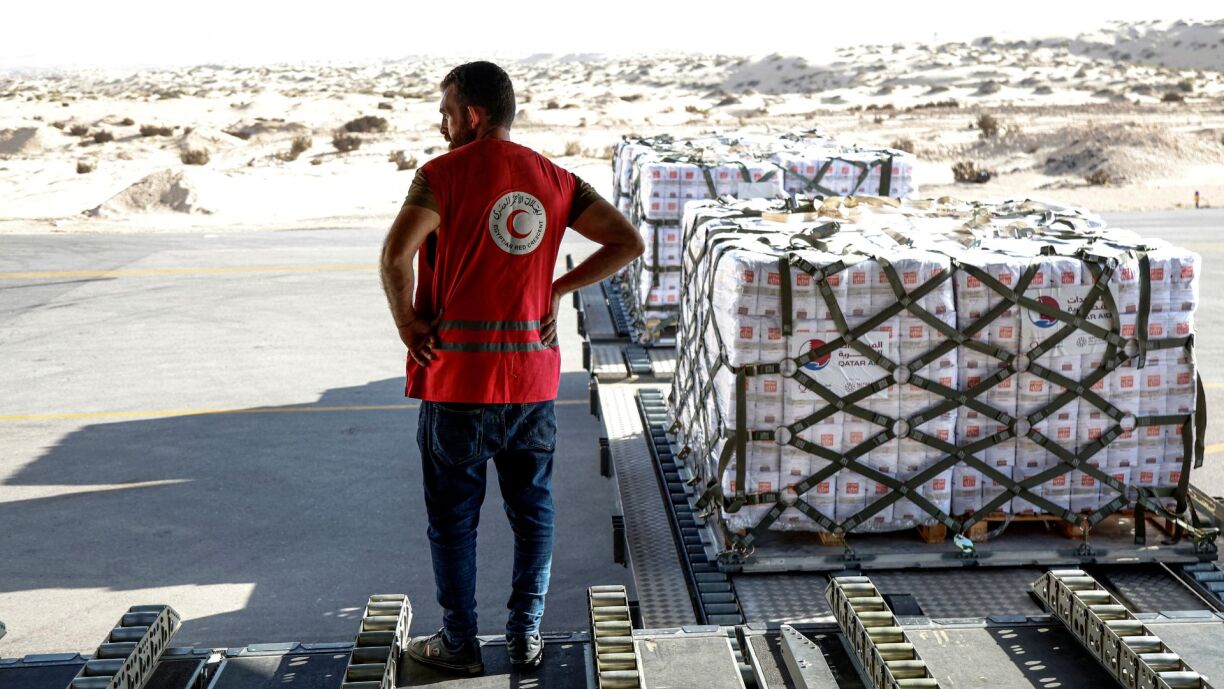
Israel has initiated a pause in its offensive operations in northern Gaza to allow civilians to flee, but Prime Minister Netanyahu has dismissed the possibility of a broader ceasefire with Hamas, equating it to a surrender.
Hamas says civilian casualties are mounting with over 10,800 Palestinians killed, mostly civilians, as the UN reports that 1.6 million people have been internally displaced since October 7.
Despite international calls for a ceasefire and humanitarian aid pledges, Israel continues its military campaign, while regional tensions escalate with cross-border incidents involving Lebanon and Syria.
Ceasefire not expected - The temporary pause in Israel's military actions in northern Gaza represents a brief respite allowing some civilians to escape the intense conflict zone. However, Israeli Prime Minister Benjamin Netanyahu has firmly ruled out a broader ceasefire, asserting that such a move would constitute a capitulation to Hamas, the militant organisation that Israel holds responsible for starting the conflict with cross-border attacks.
US President Joe Biden has expressed support for the pauses, which have already enabled tens of thousands to flee. However, like Netanyahu, Biden sees no immediate prospect for a comprehensive ceasefire agreement.
Mass displacements - The humanitarian situation in Gaza is deteriorating rapidly due to the Israeli offensive. The health ministry in Gaza, controlled by Hamas, reports over 10,800 Palestinian deaths, predominantly among civilians, including many children.
The United Nations Relief and Works Agency (UNRWA) indicates a massive internal displacement crisis, with more than 1.6 million people, over half of the local population, having fled their homes since the conflict escalated on October 7. The displacement has further strained the already dire humanitarian conditions in Gaza, with shortages of food, water, and medical supplies.
Regional unrest - International appeals for a ceasefire and humanitarian intervention have intensified against the backdrop of continued Israeli military operations and a significant civilian death toll. Alongside the ground and aerial offensives, Israel has faced accusations of targeting hospitals in the Gaza Strip, which Israel rebuffs by accusing Hamas of using medical facilities for military purposes.
Meanwhile, the conflict's ramifications extend beyond Gaza, stirring regional unrest. Cross-border exchanges between Israel and Hezbollah in Lebanon, missile launches from Yemen's Houthi rebels, and drone strikes from Syria have contributed to a broader conflagration, prompting Israeli retaliatory strikes and adding layers of complexity to the already volatile situation.

The Pas-de-Calais region finds itself grappling with historic floods, prompting authorities to declare a red alert on Thursday and water levels not anticipated to recede until Friday.
Regional schools have been closed for two days as the floods affected almost 200,000 people and left 5,200 without running water since Tuesday evening, according to the prefecture.
Interior Minister Gérald Darmanin announced plans to declare a state of natural disaster for the affected towns in the Pas-de-Calais and Nord departments.
Historic rainfall - Before being placed under red flood alert for the first time on Monday afternoon, the Pas-de-Calais department had already been hit by flooding during storm Ciarán last week. In the space of 30 days, "the equivalent of six months' rainfall" has fallen in the department, with the last week alone accounting for "three months' rainfall," according to Christophe Béchu, the Minister for Ecological Transition, who visited the affected commune of Saint-Etienne-au-Mont near Boulogne-sur-Mer on Wednesday.
School closures - In response to the crisis, the Pas-de-Calais prefecture has declared the closure of schools in 74 communes, particularly those around Saint-Omer, Boulogne-sur-Mer, and Montreuil-sur-Mer, on Thursday and Friday.
This decision follows the closure of schools in the Aa and Liane river basins on Tuesday.
Business & Tech - Meta on Wednesday said that advertisers will soon have to disclose when artificial intelligence (AI) or other software is used to create or alter imagery or audio in political ads.
Science & Environment - Brazilian Amazon deforestation fell 22.3% in the year through July, hitting a five-year low as President Luiz Inacio Lula da Silva's government fights to curb destruction of the world's biggest rainforest.https://today.rtl.lu/news/world/a/2066108.html
Entertainment -Hollywood celebrated Thursday after actors ended a crippling months-long strike, kicking off a race to get the cameras rolling and salvage next year's movies and television shows.
Travel - Luxembourg-based transport provider Flibco.com announced the relaunch of its popular shuttle service between Luxembourg and Charleroi Airport.
Weekend construction - If you are planning to travel on the A4 this weekend, be prepared for disruptions near the Raemerich roundabout in the direction of Luxembourg City.https://today.rtl.lu/news/world/a/2066108.html
Healthcare - After last year's €40 million deficit, the National Health Fund (CNS) is happy to report a €25 million surplus in 2023, but forecasts a heavy deficit for 2024.

Your Weekly Recap is published every Friday at noon. Read earlier versions.





