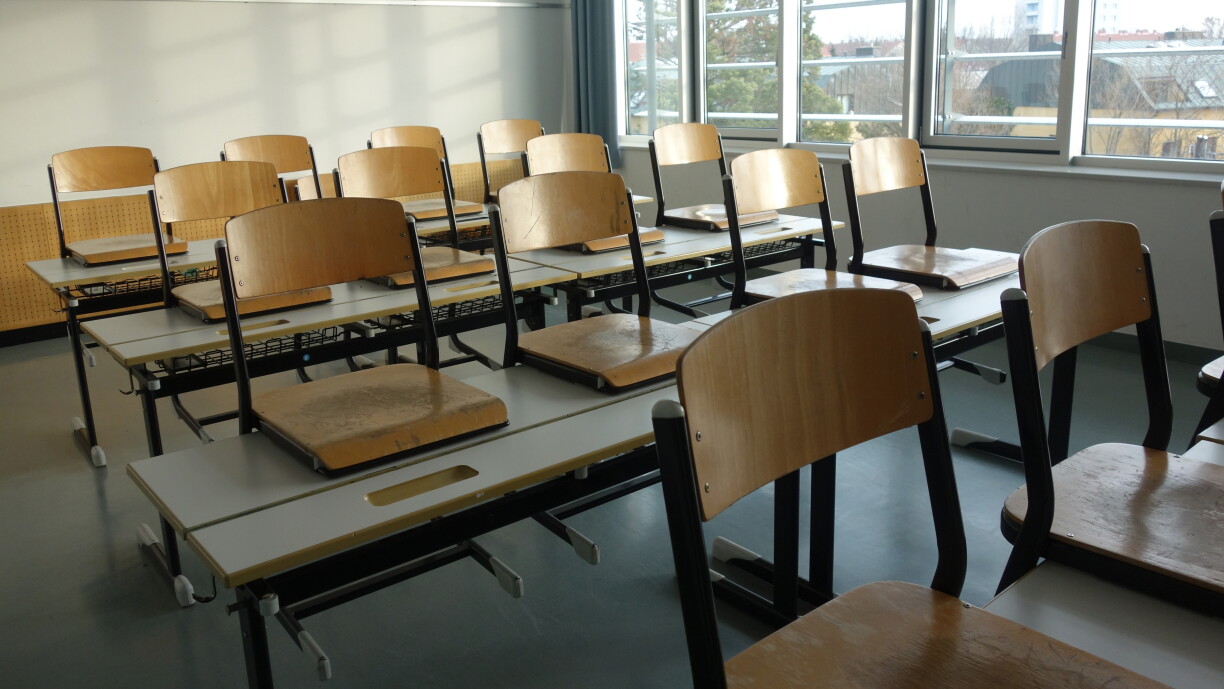
A new European secondary school with an international curriculum is to be built in Schifflange as the Chamber has now passed the corresponding bill. The new school will accommodate 1,000 pupils, take five years to complete, and cost €21.4 million.
Demand for places in the public European school system is running high. For this school year alone, 1,592 pupils applied to the international school in Differdange/Esch, but only 413 could be accepted, Education Minister Claude Meisch said with regret.
This means that only one in four pupils whose parents wish for them to be educated at the school will be able to do so, he said. For the other three out of four, that door is "shut".
He added that it was well understood what such a refusal can often mean in terms of opportunities, whether for a good education, qualifications, integration into Luxembourg society and working life, and beyond.
Luxembourg Socialist Workers' Party (LSAP) MP Francine Closener said she had often been asked why another European school should be built, and whether ordinary schools were no longer good enough. They absolutely are, she insisted, and traditional schools have every right to exist, but they have not adapted as quickly as society itself has changed.
The LSAP voted in favour of the bill, she said, though for the party, different schools for different children is not a long-term solution.
As things stand, Closener said, it is necessary to open another international school, this time in Schifflange, quite simply because there is no other option on the table. In the long run, however, the LSAP does not consider this to be the right path.
Children of different backgrounds, the party believes, should be able to learn together. That does not mean they all have to learn the same thing at the same time and at the same pace, especially in a model where school content is not tailored to the individual pupil.
For Christian Social People's Party (CSV) MP Ricardo Marques, the priority is to provide another public international offering, which he sees as particularly important for equal opportunities. He said it was important to offer a public international option since not every child grows up in the same linguistic or family environment, and not every family has the same opportunities.
Precisely for that reason, however, he was clear that the offering should be an alternative and not a replacement for the traditional Luxembourg school system, a supplement rather than a guiding principle. The core of the country's public schooling, he said, remains the common school system with its languages, its methods, and its social role.
The bill was ultimately adopted with 55 votes in favour. The Alternative Democratic Reform Party voted against.





