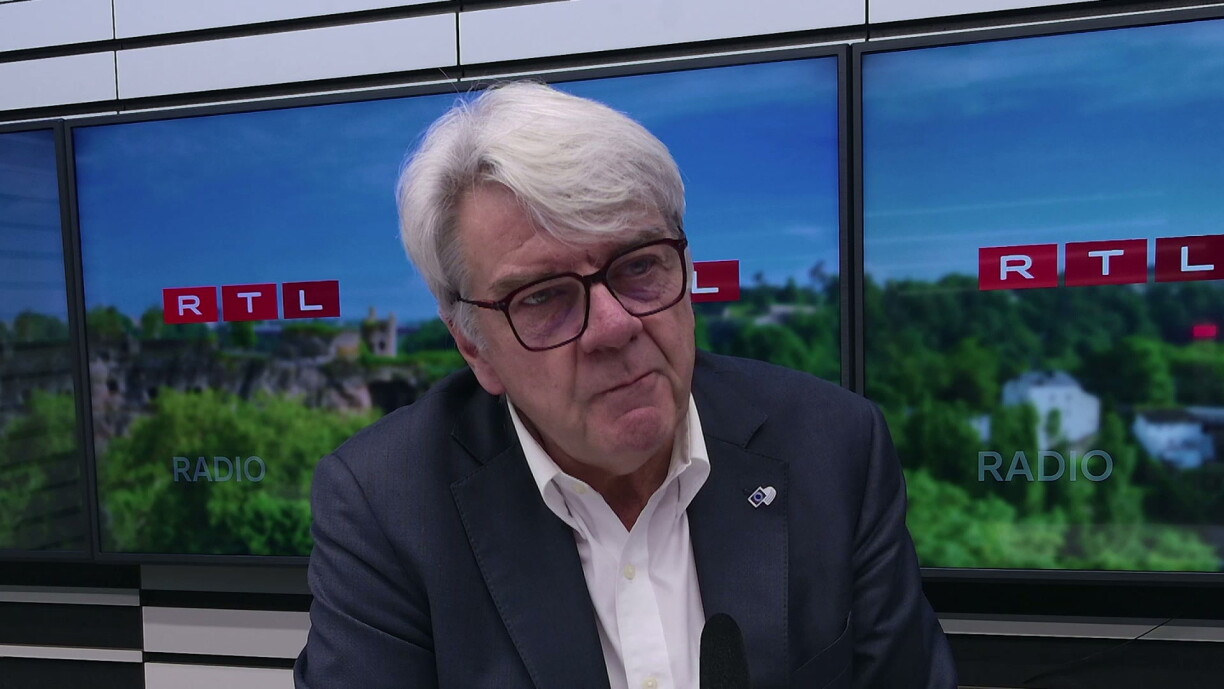
Reopening negotiations on individual support measures like the fuel rebate could jeopardise the entire agreement, warned Romain Wolff, President of the General Confederation of the Civil Service (CGFP).
The public sector union called, in advance of this week’s Tripartite monitoring committee, for an unchanged extension of current energy aid, but only for three months.
This period was deemed reasonable by the union’s general assembly, Wolff explained, after which the situation should be reassessed and further measures considered if necessary.
Wolff insisted the CGFP would not block a longer extension, but wanted to see updated figures and detailed government proposals expected later on Thursday.
He made clear his union would not automatically reject a six-month prolongation, but stressed that decisions about further support should not be left until the end of the year, as legal changes could be required and swift action is needed.
While three months is seen as a reasonable time frame, if inflation remains high after that, new measures would have to be considered. Forthcoming calculations will also need to reveal whether the current aid package is doing enough to slow inflation and prevent two index-linked wage adjustments within a year.
The CGFP favours extending the existing package without modification, despite ongoing criticism of the fuel rebate.
Wolff defended maintaining the measure, arguing that while the fuel rebate is not a perfect solution, "we have to bear in mind that not everyone can afford a heat pump or an electric car".
Many people, including a great number of cross-border workers who the country needs, benefit from these rebates. He warned that changing or removing individual measures could risk reopening the entire support negotiation, potentially derailing the process.
The best approach now, Wolff said, is "not to start reworking the whole package or introducing new measures", as this would only create more problems and threaten a final deal which, he says, must be reached.
Regarding concerns that Luxembourg’s fuel rebate could threaten supply security by attracting too many buyers and risking fuel shortages, Wolff pointed out that these arguments had been challenged by other participants in recent negotiations.
Critics argue that the current measures lack sufficient targeting and are too broad in their effect. On proposals for a mobility tax credit linked to actual distance travelled, put forward by the Independent Luxembourg Trade Union Confederation (OGBL) and the Luxembourg Confederation of Christian Trade Unions (LCGB), the CGFP has not yet developed a detailed stance. Wolff again cautioned against starting new debates that could delay a decision.
Asked whether aid should be more focused on those struggling to pay their energy bills, Wolff emphasised that the middle class is also suffering from rising prices, particularly for heating oil.
However, he could not specify at what income level the middle class begins or ends, explaining that the CGFP had not made precise calculations but that this group pays significant taxes and should also benefit from relief.
Whether the union would support more targeted measures will depend on upcoming discussions and new budgetary data, he added.
The CGFP is also mindful of the state budget, especially following the recent tax reform and figures from OGBL President Nora Back, who estimated the cost of extending the current aid measures for six months at around €82 million.
Nevertheless, when it comes to financing, Wolff placed responsibility with the Minister of Finance.
The public sector’s current pay agreement expires at the end of this year. According to Wolff, no talks or negotiations on a new deal have started, and no concrete demands have yet been presented.
However, he hinted that the CGFP will raise the issue of adjusting the civil service pay index, without specifying by how much. He did not rule out pursuing such a demand despite the budget situation.
Negotiations on a new agreement could take place before the current deal expires, or in the first half of 2025. Wolff concluded that in the past, new agreements have sometimes been reached as late as July, but a swift settlement would be preferable as legislative changes might also be required.


