
The government’s resilience package has reduced inflation by 0.7% since August, according to the latest economic report from the National Institute of Statistics and Economic Studies (STATEC).
However, these state interventions have also delayed the next wage indexation by a few months compared to previous projections. Without these support measures, the indexation would have been triggered before the end of this year. STATEC now projects it will occur in the second quarter of 2027.
Due to the extension of these measures, STATEC expects inflation to average around 2.5% in 2027, which is 0.4 percentage points lower than it would be without state intervention.
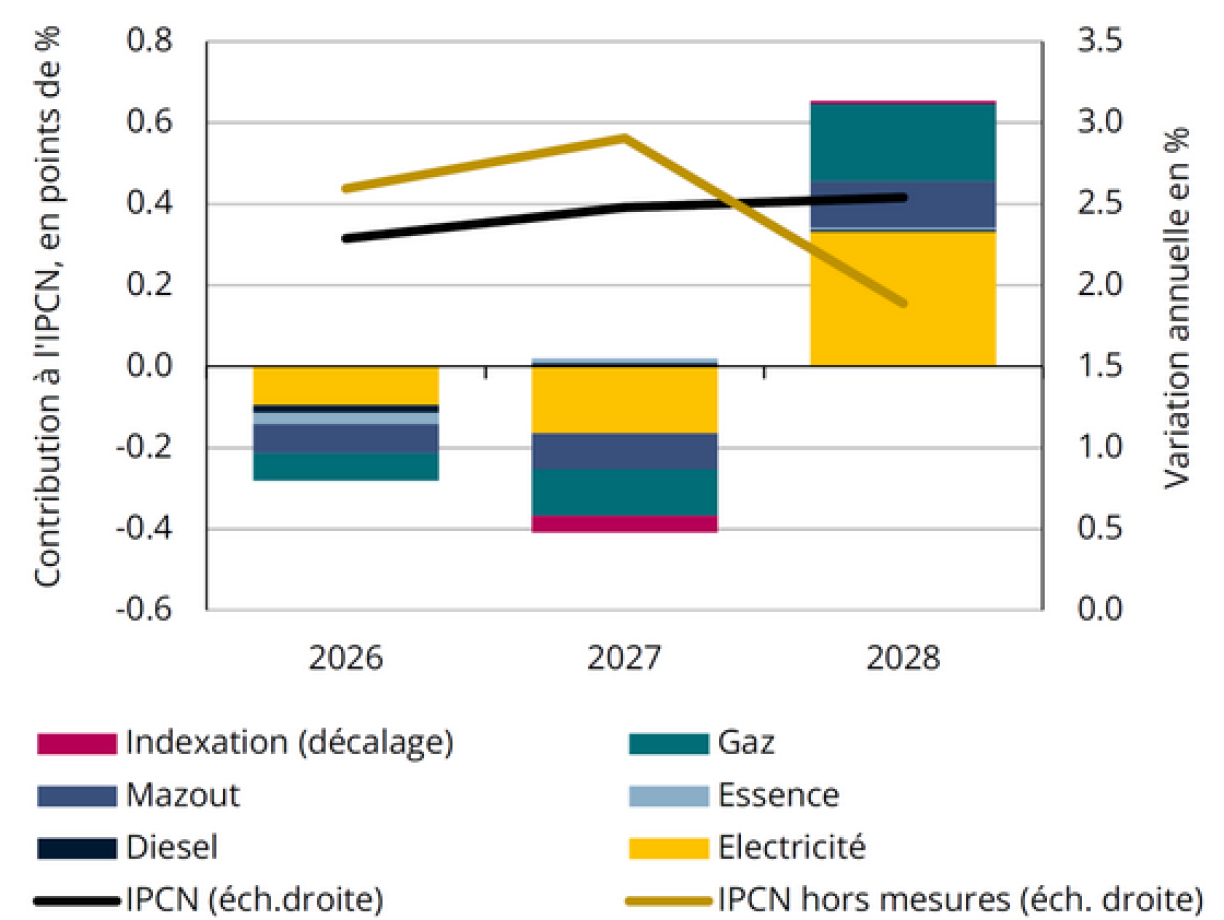
Under the current framework, price reductions on electricity, gas, and heating fuel will remain in effect until the end of 2027. In contrast, the five-cent-per-litre discount on petrol and diesel is set to expire at the end of February.
Despite these subsidies, underlying energy prices remain elevated. In October, heating fuel was 68% more expensive than in January, while diesel prices had risen by 47% over the same period.
Additionally, the extended resilience package is expected to prevent a second wage indexation in 2027. STATEC currently projects the subsequent indexation will be triggered in the second quarter of 2028. Once these support measures conclude, inflation is projected to stabilise at 2.5% in 2028.
Ultimately, while these measures defer a portion of inflationary pressure, they do not substantially reverse the broader increase in prices expected between 2026 and 2028.