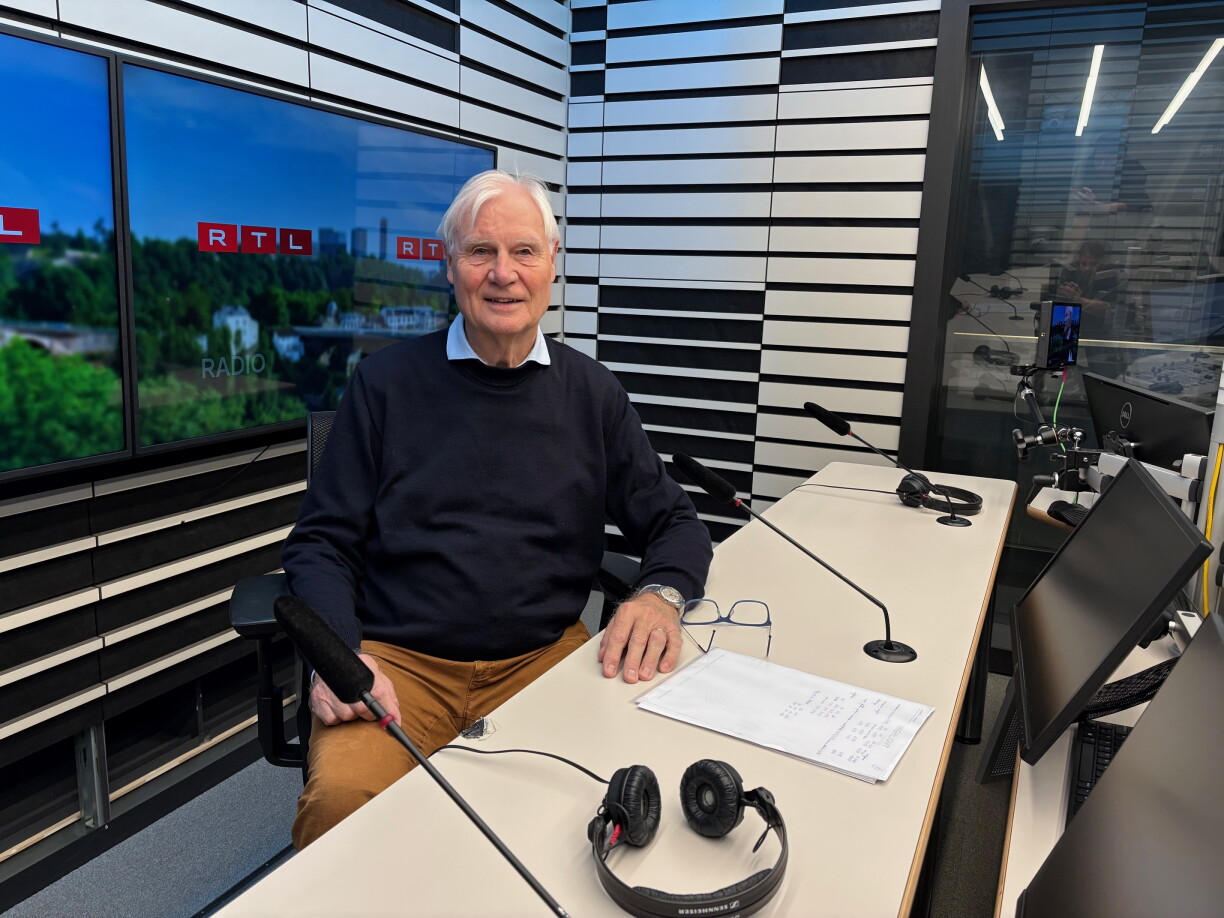
On Tuesday morning, Romain Bausch, president of the National Council of Public Finances (CNFP), discussed the state of public finances in an interview with RTL Radio.
The multi-year budget through 2030 projects a modest 4.5% increase for the 2028 election year. Bausch noted that achieving this target requires budgetary adjustments from both the current CSV-DP coalition and the next government.
He pointed out that while the economy and the labour market are growing below their historical averages, state expenditure is rising by 6.5%. According to Bausch, lawmakers must either rein in spending, find new sources of revenue, or do both. Currently, he noted, only public debt and its associated interest rates are rising.
Addressing the debt ceiling, Bausch argued that if public debt surpasses 30% of GDP, it would not be an immediate disaster, given that Luxembourg still maintains the second-lowest debt-to-GDP ratio in the EU. However, he emphasised that the primary concern is not the absolute level of debt, but its upward trajectory.
When asked if the temptation to take on debt is always greater than implementing "unpopular" austerity or tax measures, Bausch replied that politics is only popular when pursued in a favourable economic environment and a world where "everything is all right." He argued that the current geopolitical landscape is unstable and fraught with "many vulnerabilities," necessitating unpopular measures.
At the same time, Bausch strongly cautioned against cutting future investments. Instead, he recommended implementing greater "social selectivity" in both spending and revenue collection, suggesting this could be done "without bringing about the 'end of the world' in Luxembourg."
For example, while acknowledging that raising corporate taxes would "of course" impact competitiveness, Bausch advocated for taxing high incomes or increasing levies on investment funds and similar assets.
Regarding expenditure, the CNFP president identified administrative costs as a key area for reduction. While Bausch acknowledges the state's need for civil servants and the risk that reducing public sector hiring could negatively impact social security funds, he pointed out that state staff levels have grown by 53% over the past decade, while the wage bill has surged by 130% (or 80% when excluding wage indexations).
Drawing on his own 20-year career as a civil servant and 20 years in the private sector at SES, Bausch stressed that he is "the last person to say anything against civil servants." Nevertheless, he argued that pay across both sectors should remain broadly comparable. He noted that while the private sector certainly has high-paying roles, public sector salaries are generally higher overall.
Reiterating points made during the CNFP's recent budget assessment, Bausch recommended introducing a "budget rule": a cap on expenditure tied to economic growth and inflation. While he acknowledged it is "fair game" for ministries and administrations to maximise their budgets, he argued it is the responsibility of the finance minister and the prime minister to look at the broader picture and keep the budget on track.
The CNFP will renew its leadership next year. Although the Chamber of Deputies has asked Bausch to continue his tenure as a council member, the 73-year-old made it clear he does not wish to serve another term as president. He suggested that a younger successor should be chosen from the council's seven members.