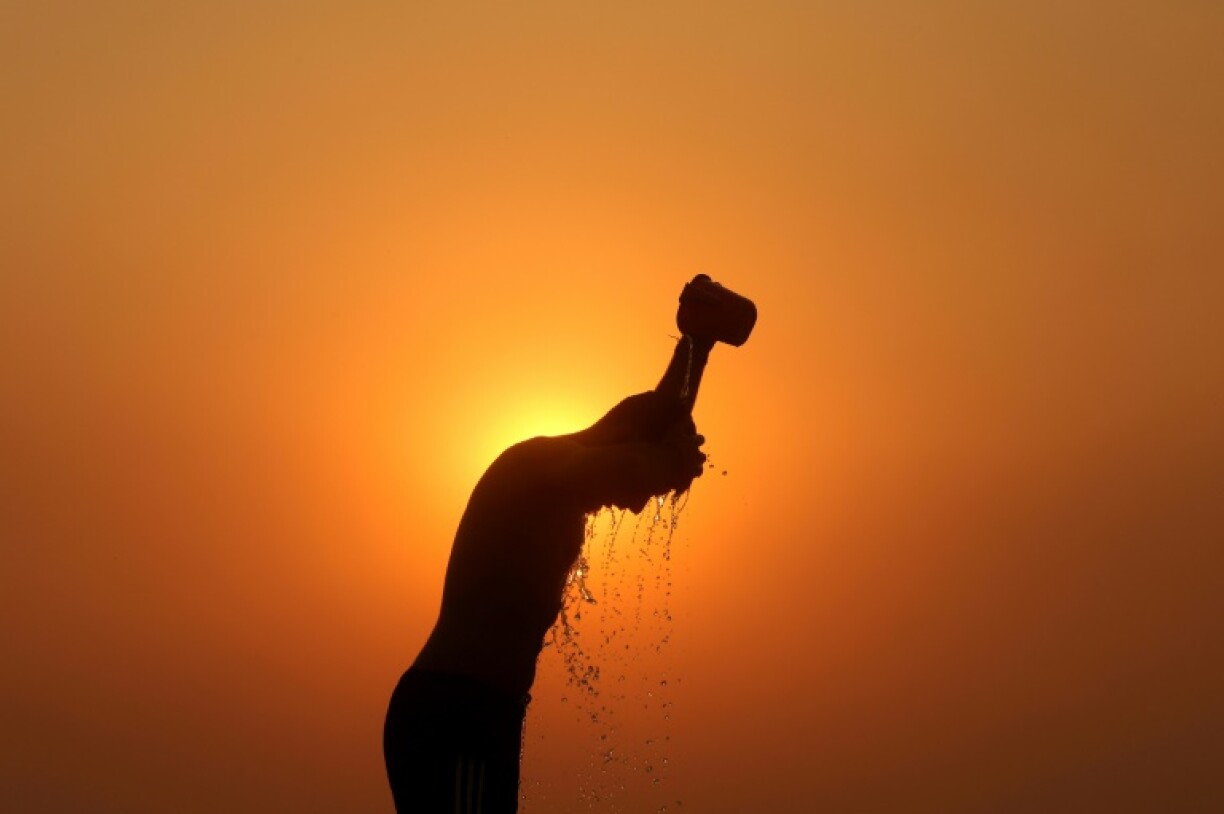
The cool evenings of autumn in Europe came as a great relief to scorching summers just months ago. According to the World Meteorological Organization, Western Europe experienced its hottest June on record, and MeteoLux dubbed the summer of 2026 the hottest ever in the Grand Duchy.
But even as fans and air conditioning units ran out, China worked overtime to provide for Europe's new needs, and red alerts were issued in Luxembourg, there are many for whom shade and cool homes only help so much: the outdoor workforce of Luxembourg, such as the just under 50,000 construction workers, as well as those who work in already high-heat and intensity environments.
So, even as chaotic UN climate talks collapse without a deal, Luxembourg's workers are already bracing for the next heatwave.
"It's a bit quieter when you first start, but once things get going, the heat is intense", says Boubacar Diallo, who works in a school kitchen in the Mamer region. "This year has been different from the last – it's very difficult to work under these conditions."
Describing the conditions of his work – a large kitchen with heavy machinery running as well as stoves and ovens running high – Diallo says that the combination of heat and intensity can have a severe effect on workers.
"We often work in very high temperatures", added Diallo. "[One day] while I was at the dishwashing station, the machine was at 90 degrees… the boss came over and told me I needed to open the door to let some air in. So I went to open the door… that's when I collapsed."
Diallo ended up in the hospital, and was released after recovering.
"I was the second person to collapse here due to the heat", he said.
Speaking to RTL Today, the Independent Luxembourg Trade Union Confederation (OGBL) shared that beyond the heat, it is the frequency of heatwaves that affects the well-being of workers.
"Two to three years ago, we had a situation where for two days, it was over 30°. And there, it was a unique episode where we managed to find solutions in a day or two", said Jean-Luc De Matteis, OGBL central secretary. "But now, we are really confronted, especially in a sector like construction, with much longer periods of heat."
A construction worker from Stugalux Construction Group shared the nature of his work: one physically demanding regardless of the temperature.
"My duties mainly involve building and renovating structures, such as houses. I handle various tasks, including erecting walls, laying bricks, and carrying out other construction work", he said. "It's a physically demanding job that requires a great deal of effort, concentration, and precision."
This last summer brought the challenge to a new level
"We work outdoors all day, and we aren't accustomed to such high temperatures", the Stugalux mason shared. "One of the main challenges involves safety footwear; work boots simply aren't designed for such extreme heat. Nevertheless, safety comes first, and we are required to wear them."
A minibus driver shared that while there are no problems while driving in the air-conditioned bus, a lot of time is spent waiting outside between clients.
"Management published a list of advice on how to deal with extreme temperatures, which appeared on our tablets as soon as they were switched on", he explained. "During the heatwave we were not restricted to [designated waiting areas] and were told to stay in a safe and secure area."
While well-intentioned, the driver pointed out that practically, little more could be done: "The only [other] thing that could have been done was to change the timetable and not offer the service during the hottest hours of the day – although I'm not sure how that could have been implemented practically."
Instead of something to brace for, winter in Luxembourg has brought with it respite from the heat, as did the period of collective leave in August. With the time available, what is being done to help Luxembourg's outdoor workers, and how can they prepare for the next heatwave?
The Ministry of Labour, in a written response to RTL Today, shared that for those working outdoors, in particular on construction sites, the amended Grand-Ducal Regulation of 27 June 2008 requires weather-related risks to be taken into account in the organisation of prevention and, where required, in the general safety and health plan.
"This regulation also provides for drinking water to be made available close to workstations. In accordance with Article L. 312-4 of the Labour Code", they stated, "an employee who, in the event of serious, immediate and unavoidable danger, leaves his or her workstation may not suffer any prejudice as a result."
The Ministry noted that such situations are assessed on a case-by-case basis, and in light of all circumstances.
The protocols already in place have value – but may have little effect on the individual, OGBL says. "The MeteoLux system has the merit of existing – but it is not automatic that when there is a red or orange alert, there are health and safety measures for employees [implemented]. It is just simple information to say, 'yes, try not to go outside'."
The Ministry of Labour shared that under the national heatwave plan (‘plan canicule’), level 3 of the extreme-heat alert was activated by the Health Directorate on 18 June 2026.
"The vigilance levels issued by MeteoLux and the extreme-heat alerts triggered under the heatwave plan are not statutory thresholds automatically triggering specific obligations or a suspension of work", they confirmed. "They are, however, important elements which employers must take into account in their risk assessment and in the adaptation of preventive measures."
From the employees RTL Today spoke to, none were quick to blame their own management.
On the contrary, some praised the support they had received.
"We looked at [the situation] and figured it's a natural occurrence – it's not the company's fault", said Diallo. During the peak of the summer heatwave, he shared how his own boss stepped in to help.
"Even the [big boss] ended up having to help clear tables himself, but he really rallied everyone together", Diallo shared. "Everyone stood by one another during that time. And we kept reminding each other: 'Drink some water, drink some water.'"
The Stugalux employee shared a similar experience, where their employer made sure to provide workers with a regular supply of water to stay hydrated throughout the day, and offer the option to start earlier in the day.
"However", he added, "we were still required to complete our full eight hours of work."
The Ministry of Labour pointed out that any employee who considers that his or her safety or health is not sufficiently protected may also contact the ITM.
But the labour union explained that without automatic measures in place, these gestures are at the employer's discretion. "There are no clear rules that say that people have the opportunity to quench their thirst, to take a little break", De Matteis said.
What the union is pushing for would move the needle from the good will of employers to a legal obligation. "It [would be] an obligation for the employer to impose breaks during working hours", De Matteis said. "But today, it is always a matter of negotiation."
While Luxembourg sets into another winter, the heat of next year's summer is not far from the minds of those most affected by it.
"I've been thinking about the coming summer", said Diallo, who with his colleagues is trying to raise awareness on working conditions. "I have been meaning to talk to the team about how we might prepare. If things don't change, it's going to be quite difficult, and that goes for everyone working in the restaurant sector – we're serving hundreds of people: 300, 400, even 500, all waiting to be fed. We really suffered this last year."
While the Ministry has stressed the laws in place that allow workers to seek help, the union insists that these laws need to be further defined.
"Aware of the growing impact of climate change on working conditions, the Government will continue to closely monitor scientific developments and work carried out at European level", said the Ministry of Labour. "It will pursue its exchanges with the social partners in order to examine, where appropriate, adjustments capable of further strengthening the prevention of occupational risks linked to extreme heat."
OGBL stressed that things need to change from a legal standpoint.
"In terms of labour law, the employer is responsible for the health and safety of employees. So legally, there is an obligation to achieve results regarding health and safety", said De Matteis. "But it is clear that the government, on its side, could also make changes to the law, for example, to give more rights to employee delegations."
De Matteis said that OGBL is currently working on proposals for changes to the law and that for next year, there may already be some modifications.
For Diallo and his colleagues, speaking out and asking for better working conditions has become an important step ahead. "I think we're going to keep fighting for this, it's important", he underlined. "We're asking for something significant: better working conditions. It's a matter of being heard, of having our working environment taken seriously."