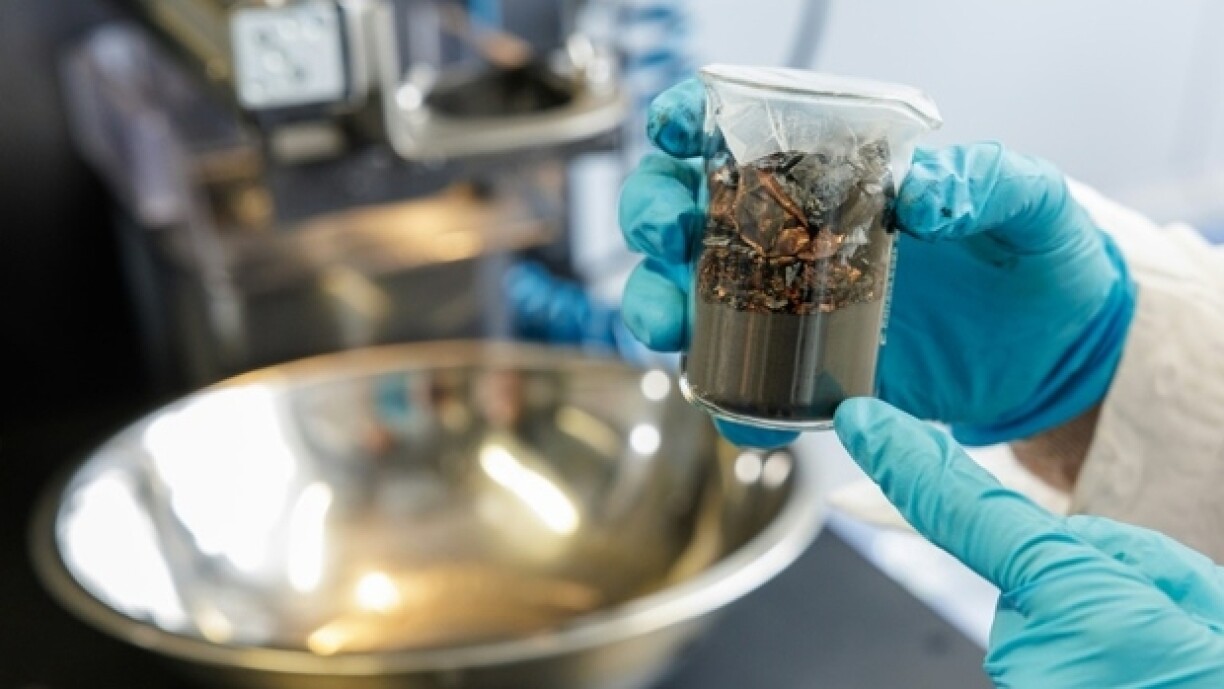
The company intends to conduct its research in Luxembourg, positioning it as a center of excellence in collaboration with the Luxembourg Institute of Science and Technology (LIST), says Chief Operating Officer Jean-Marc Ichbia.
The construction of these two European refineries, located at undisclosed sites, will require an investment of approximately one billion euros. Livista Energy plans to secure financing through bank loans while also seeking additional investors.
"Our first factory will rely on nearly 100 percent electricity from an offshore wind farm," according to Ichbia.
To address the need for gas in the refining process, which is essential for heating the stoves, Livista Energy aims to cover roughly half of the requirement with on-site hydrogen production.
Global demand for lithium is soaring, as electric car production is expected to rise from the current 10 million vehicles per year to 33 to 40 million vehicles by 2040. "In Europe alone, we will require the same quantities of lithium as the current global demand, yet there is currently no lithium refinery in Europe," says Ichbia.
Lithium can be sourced from ores, brine, and recycling old batteries, but the COO stated that the company's focus will be on refining recycled lithium at the facilities. The estimated demand for lithium in Europe amounts to around 500,000 tons.
At present, all lithium used in European batteries undergoes refining in Asia. Ichbia stresses the need for proactive action "to prevent delays and ensure economic and energy transition without complete dependence on Asia."
He further highlights the potential risks, drawing parallels to the impact of the Ukraine war on Russian gas supplies. "If a similar situation were to arise between China and Taiwan, the production line could halt, leaving millions of workers idle due to the lack of a critical mineral for batteries."
Livista's two refineries aim to produce enough lithium for 1.7 million electric cars. Several other companies are also working to develop lithium refining capacities in Europe. However, Ichbia remains unfazed by the competition, stating that the market will have sufficient room to accommodate the growing demand. Furthermore, he believes that technological advancements will continue to drive the industry forward.