
Here are five things you should know at the end of this week:

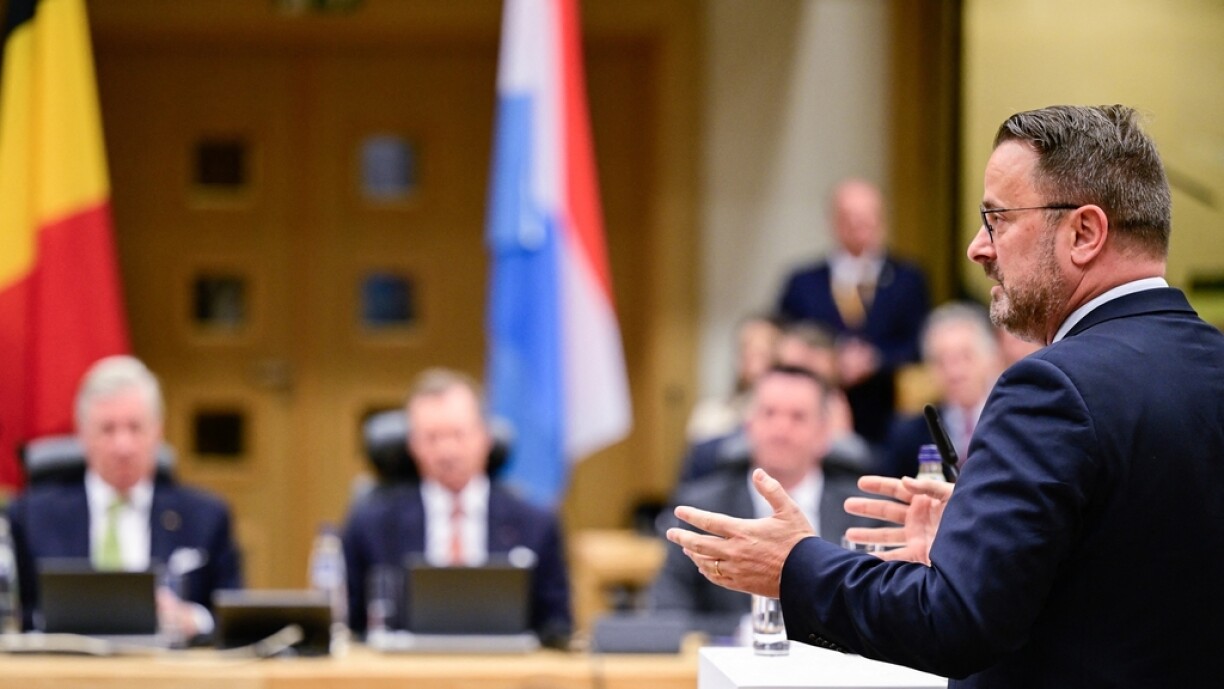
Luxembourg's Foreign Minister Xavier Bettel has emphasised the importance of a unified EU approach to address conflicts in Ukraine and the Middle East at a summit in Kirchberg on Monday
Two-state solution – During a recent EU foreign ministers' meeting in Kirchberg, Bettel emphasised the critical need for a unified approach to the ongoing conflicts in Ukraine and the Middle East. In the discussions that involved not only EU foreign ministers but also representatives from six Gulf states, Bettel underscored the necessity of achieving a two-state solution to resolve the Israeli-Palestinian conflict.
He articulated that peace in Palestine would lead to peace in Israel, stressing that such a resolution is fundamental to regional stability. Bettel highlighted the challenges in reaching a consensus within the EU on this matter due to differing opinions, but reaffirmed the importance of a collective effort to support this outcome.
New EU sanctions – Bettel further announced that the EU had agreed to impose new sanctions on Iran, aimed at hindering its missile and drone manufacturing capabilities. This decision was influenced by Iran's recent attacks against Israel, considered a further step in regional escalation.
These sanctions are intended not only to limit Iran's military reach, but also to reduce its ability to support Russia's activities in Ukraine, thereby aligning with broader EU objectives to restore peace and security in affected regions.
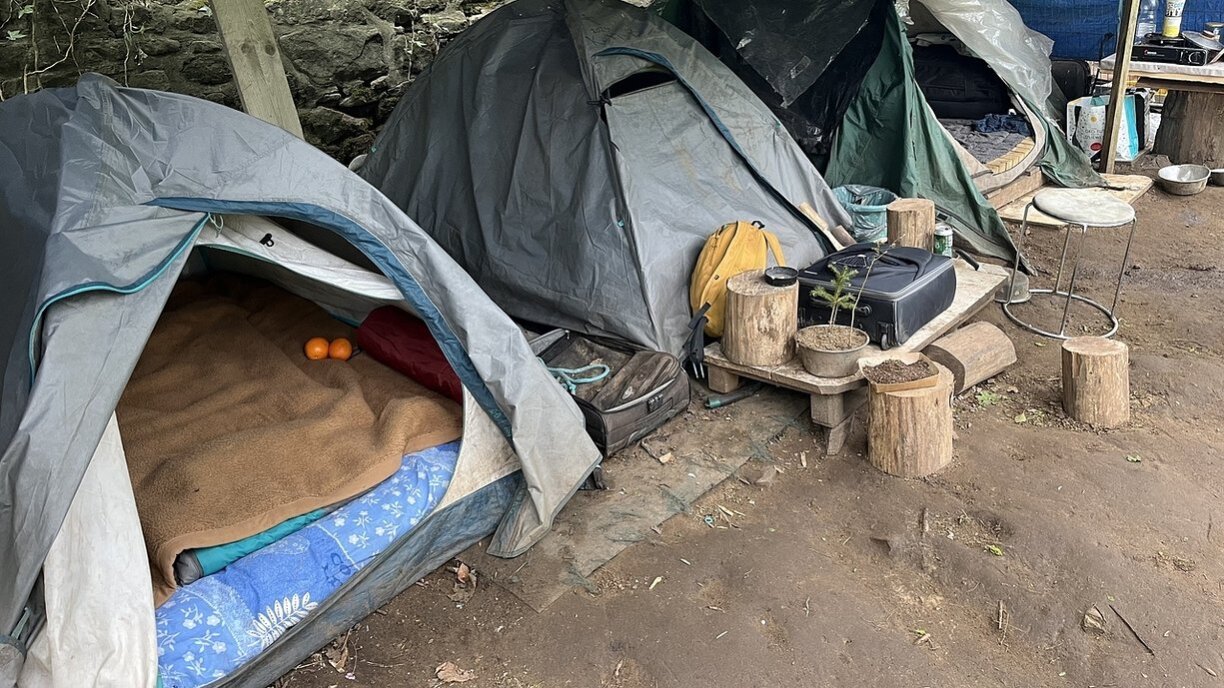
The non-profit organisation 'Stëmm vun der Strooss' in Luxembourg City has experienced a fourfold increase in demand for its services over the past decade, with more homeless individuals resorting to sleeping in tents and receiving meals from their Gare office.
Some homeless individuals prefer living in tents due to overcrowding and cultural clashes in shelters, and face significant challenges in securing employment due to their visible living conditions.
The Luxembourg government extended the operation of the 'Wanteraktioun' night shelter in Findel until late April to prevent homeless individuals from suffering hypothermia during unusually cold weather, marking the continuation of this emergency measure from previous years.
Visible uptick – 'Stëmm vun der Strooss', a nonprofit organisation based in Luxembourg City, has observed a dramatic increase in people seeking their assistance, with demand quadrupling over the last decade. This escalation has been particularly noticeable at their Gare office, where they distribute between 280 to 350 meals on average.
The increase in the number of homeless individuals and those in need is indicative of rising poverty levels within the city. This surge has become more visible as more individuals have taken to sleeping in tents, highlighting a lack of adequate shelter options.
Vicious circle – Two individuals from Hungary now living in Luxembourg illustrate the plight faced by many homeless people who choose to live in tents rather than in official shelters. They have set up a makeshift home in the Kirchberg forest, citing overcrowding and cultural tensions at shelters like the one in Findel as their reasons for staying away.
Their situation is compounded by the challenge of finding employment, as homelessness often stigmatises individuals and visibly marks them, making it difficult to secure jobs. This cycle of homelessness and unemployment creates a barrier that is hard to overcome, illustrating the broader systemic issues affecting the homeless population.
Night shelter extended – In response to the ongoing and severe cold, the Luxembourg government has taken measures to protect the homeless population from hypothermia by extending the operation of the 'Wanteraktioun' night shelter at Findel until 28 April. This extension is part of an annual winter action plan that typically runs from mid-November to mid-April, but has been adjusted this year due to continued low temperatures.
The shelter, managed by the 'Dräieck' non-profit consortium, aims to provide a safe, warm space for homeless individuals, accommodating a significant number of people each night during the coldest months.

The ECDC has reported an increase in STD cases across Europe, with Luxembourg experiencing significant rises in chlamydia, gonorrhoea, hepatitis B, hepatitis C, and Mpox since 2020.
Health Minister Martine Deprez detailed that 2023 data is being validated and announced plans to evaluate Luxembourg's national plan for Emotional and Sexual Health, including broader condom distribution.
In response to an enquiry about free condom provision, Deprez emphasised existing measures like condom distribution in schools and events, and free distribution to vulnerable groups, with an upcoming STD awareness campaign
Up 50% – The European Centre for Disease Prevention and Control (ECDC) has observed an increase in sexually transmitted diseases (STDs) across Europe, a trend mirrored in Luxembourg. Specifically, the country has seen a marked rise in cases of chlamydia, which jumped by 50% from 1,003 in 2020 to 1,527 in 2022. In addition to chlamydia, gonorrhoea, hepatitis B, hepatitis C, and Mpox have also experienced significant increases in incidence during the same period, as reported by Luxembourg's Health Minister Martine Deprez in response to a parliamentary question.
Preventive measures – In the face of rising STD numbers, Minister Deprez announced ongoing efforts to review and potentially enhance Luxembourg's national plan for the Promotion of Emotional and Sexual Health. This plan includes considering an expanded distribution of condoms as a core strategy to prevent the spread of STDs. Deprez's announcement comes as part of a broader response to concerns about sexual health practices and preventive measures in the country, highlighting an integrated approach to tackling the increase in STD rates.
No free condoms... yet – Addressing a specific query from former minister François Bausch regarding the provision of free condoms, Minister Deprez outlined the current strategies that include distributing condoms in educational settings and at major public events, as well as ensuring free access through approved associations for vulnerable populations. Despite rejecting the proposal for immediate free condom distribution to the wider public, Deprez confirmed that a public awareness campaign focusing on STDs is planned for later in the year, aiming to increase general awareness and promote safer sexual behaviours among the population.

President Joe Biden has signed a significant aid package for Ukraine, which includes $61 billion in assistance and the promise of rapid delivery of weapons and military supplies, amidst strong bipartisan support in Congress.
The aid package also involves measures such as the potential banning of TikTok in the US if it does not sever ties with its Chinese parent company, and provisions to sell confiscated Russian assets to fund Ukrainian reconstruction.
Despite internal political debates and delays, the US continues its strong military support for Ukraine, with additional humanitarian aid included for Gaza, Sudan, and Haiti.
Swift Ukraine aid promised – President Joe Biden's recent action of signing a comprehensive aid package for Ukraine marks a pivotal moment in US foreign policy, particularly in the context of the ongoing conflict with Russia. This package allocates $61 billion specifically to assist Ukraine. The rapid deployment of weapons and military supplies, as pledged by Biden, reflects an urgent response to the pressing needs of the Ukrainian military, which has faced severe shortages.
Further provisions – Beyond direct military support, the legislation includes broader geopolitical measures, notably a provision that could lead to the banning of the social media app TikTok in the US unless it dissociates from its Chinese parent company. This aspect of the bill addresses growing concerns about data privacy and foreign influence tied to technology companies based in rival nations.
Additionally, the bill authorises the US government to confiscate and sell Russian assets, funnelling the proceeds to Ukraine for its post-war reconstruction. This move aligns with actions taken by other G7 nations and represents a strategic approach to both penalise Russia for its military actions and support Ukraine's recovery.
Bipartisan support – The approval and signing of this aid package come after protracted internal debates and political manoeuvring within the US Congress, which showcased the polarised views on foreign aid and strategic priorities. Despite these challenges, the package also allocates substantial funds for humanitarian aid to other global hotspots such as Sudan, Haiti, and Gaza.

The UK government's controversial plan to deport asylum seekers to Rwanda has passed its final parliamentary hurdle, despite criticism and attempts to amend the bill by the House of Lords, leading to its impending royal assent.
Criticism of the plan includes concerns over Rwanda's human rights record and the high cost and effectiveness of the deportation scheme, with fears it may undermine the UK's moral authority and international standing.
Migrants in France hoping to cross the Channel to England, now aware of the new law, have expressed fear and desperation, contemplating alternative destinations or staying in France rather than facing deportation to Rwanda, which they do not consider safe.
Parliamentary ping pong – The UK government's legislative push to deport asylum seekers to Rwanda has successfully navigated the challenges of parliamentary procedure, securing passage through both the House of Commons and the House of Lords. Despite rigorous scrutiny and amendments proposed by the House of Lords, the House of Commons, where the ruling Conservative Party holds a majority, dismissed these amendments in a process known as "parliamentary ping pong".
The Lords eventually yielded, allowing the bill to move forward to receive royal assent, which will formalise it into law. This legislation is part of the government's broader efforts to control the influx of asylum seekers, particularly those crossing the English Channel.
Human rights concerns – The Rwanda deportation plan has been met with significant criticism from various quarters, including UN human rights experts, legal challenges, and public watchdogs. Critics argue that the plan is not only costly – estimated at nearly £2 million per deportee for the first 300 migrants – but also potentially ineffective in significantly reducing the backlog of asylum applications.
Additionally, there are concerns about Rwanda's human rights record under President Paul Kagame's administration, which has been accused of stifling dissent and freedom of speech.
Asylum seekers weighing options – Many migrants in France, like those at Loon-Plage near Dunkirk, are reconsidering their plans to seek asylum in the UK due to the risk of being sent to Rwanda, a country they do not trust as safe.
After the quick spread of information about the law within migrant communities, some are contemplating staying in France or seeking refuge in other countries such as Ireland, rather than risking deportation to Rwanda. This sentiment is especially poignant among those who have already endured significant hardships to reach Europe.
Business & Tech – TikTok's CEO vowed Wednesday to fight in the courts to overturn a newly signed US law that could see the popular app banned due to allegations it is controlled by the Chinese government.
Science & Environment – NASA's Voyager 1 probe – the most distant man-made object in the universe – is returning usable information to ground control following months of spouting gibberish, the US space agency announced Monday.https://today.rtl.lu/news/world/a/2066108.html
Entertainment – 20-year-old Luxembourger Emma Sorgato has triumphed in 'The Voice Belgium', beating stiff competition with memorable performances, including a finale throwback to her audition song, ABBA's 'Money Money Money'.
Innovation – Luxembourg-based firm Tractel is revolutionising tunnel construction with its innovative machinery, playing a pivotal role in the construction of Europe's longest immersed tunnel between Germany and Denmark.
Tax relief – Finance minister Gilles Roth issued a formal commitment to relieve taxpayers in class 1A – mostly divorced or widowed people – over the course of the next year.https://today.rtl.lu/news/world/a/2066108.html
Social struggles – Last year, a quarter of households with children in Luxembourg struggled to make ends meet, according to a new STATEC report.

Your Weekly Recap is published every Friday at noon. Read earlier versions.





