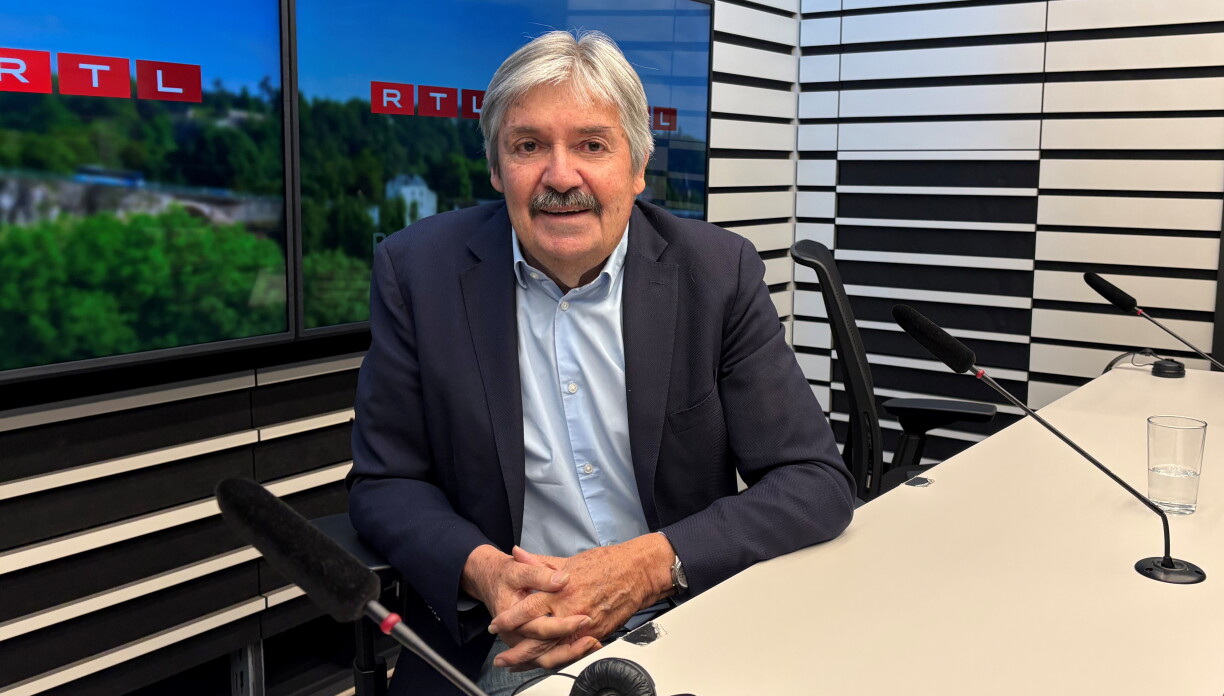
In an interview with RTL, Luxembourg Football Federation (FLF) president Paul Philipp expressed concern over the unsporting conduct witnessed during the recent World Cup final, where Spain defeated Argentina 1-0 after extra time.
While Spain's win was a relief for football fans, Philipp said the aftermath of the match was marred by "catastrophic images" as some Argentinian players approached the Spanish team in a manner he described as "lamentable".
Aside from Argentina's previous displays of aggressive play during the tournament, the behaviour at the final whistle gave a poor impression worldwide.
"Those are images that go around the whole world. And that is disastrous when you are at a World Cup final", he expressed.
He went on to call the Argentine actions "unprofessional" and "partly provocative", arguing that such behaviour has no place in football or sport in general: It is mainly a provocation towards the opponent and also towards "neutral spectators", according to him.
The FLF president was also critical of Argentina's display in the final. He noted that the team failed to register a single shot on goal in regular time. At the same time, Spain dominated with 20 attempts, suggesting that Argentina's strategy focused on disruption rather than playing football, he said.
Nevertheless, he praised Spain for keeping its composure: "You have to give Spain credit for not losing their nerve and waiting for the right opportunity."
Had Argentina survived extra time and gone on to win the penalty shoot-out, Philipp said the result would have been deeply damaging.
Phillippe agreed with the interviewer that their victory "would have been a catastrophe for football". Given the way the match had unfolded and the tournament's generally strong playing standard, he argued that an Argentina victory would have amounted to "a small catastrophe" for the World Cup as a whole.
Philipp said Argentina's apparent objective had been to force extra time and then hold out for penalties. He also felt that some of their challenges went well beyond acceptable limits, adding that Argentina could potentially have received another red card if the referee had applied the rules more consistently.
Although he broadly welcomed the refereeing approach of allowing matches to flow and discouraging players from going to ground too easily, he stressed that officials must still protect players.
Philipp also criticised the extended half-time show during the final, which lasted around 27 minutes despite FIFA regulations normally allowing a maximum interval of 15 minutes. He joked that the only thing missing from the spectacle was a half-time speech by US President Donald Trump.
More seriously, however, Philipp warned that such a long interruption could increase the risk of injury. Players had already completed 45 minutes of intense activity and then had to prepare their muscles again before returning to the pitch.
The addition of hydration breaks, which Philipp described as effectively doubling as advertising breaks, had already divided matches into four separate periods. A half-time interval lasting more than half an hour, he argued, further disrupted the rhythm of the game and potentially placed players' health at risk.
Philipp also returned to the controversy surrounding Trump's reported appeal to FIFA president Gianni Infantino over a red card shown to a US player during the tournament.
He had previously described the incident as a catastrophe because it raised fundamental questions about the independence of FIFA's judicial bodies.
Philipp said he expected the issue to be discussed when representatives of the Luxembourg, Belgian, and Dutch football federations meet in early September. The Belgian federation's president also sits on FIFA's executive committee and may be able to provide further information.
Philipp suggested that similar political interventions may have happened in the past, but said Trump's public comments had forced the issue into the open during the World Cup.
FIFA is due to hold another presidential election in March, but Philipp said the FLF was not currently supporting another term for Infantino. "At this stage, we are supporting no one", he said, adding that this did not automatically mean the federation opposed Infantino, whom he referred to as "Trump" in a Freudian slip.
Before taking a position, the FLF wants to see how FIFA reviews the tournament, how it responds to the recent controversies, and what vision it presents for the future.
Philipp acknowledged that many aspects of the expanded 48-team World Cup had worked better than expected and said the overall sporting level had been relatively high. However, he firmly rejected suggestions that the competition could be expanded further to 64 teams.
The five-week tournament was already extremely long, he noted, with some teams spending extended periods in hotels between matches. The scale of the competition also made it increasingly difficult for a single country to host because of the number of stadiums, matches, and logistical demands involved.
While a larger field might theoretically improve Luxembourg's chances of qualifying, Philipp said earning a place at the World Cup should remain meaningful. "If there is no real sporting merit, it is no longer enjoyable", he said.
Philipp concluded that 48 teams represents the upper limit of what remains manageable, even if the format is unlikely to be reduced again.





