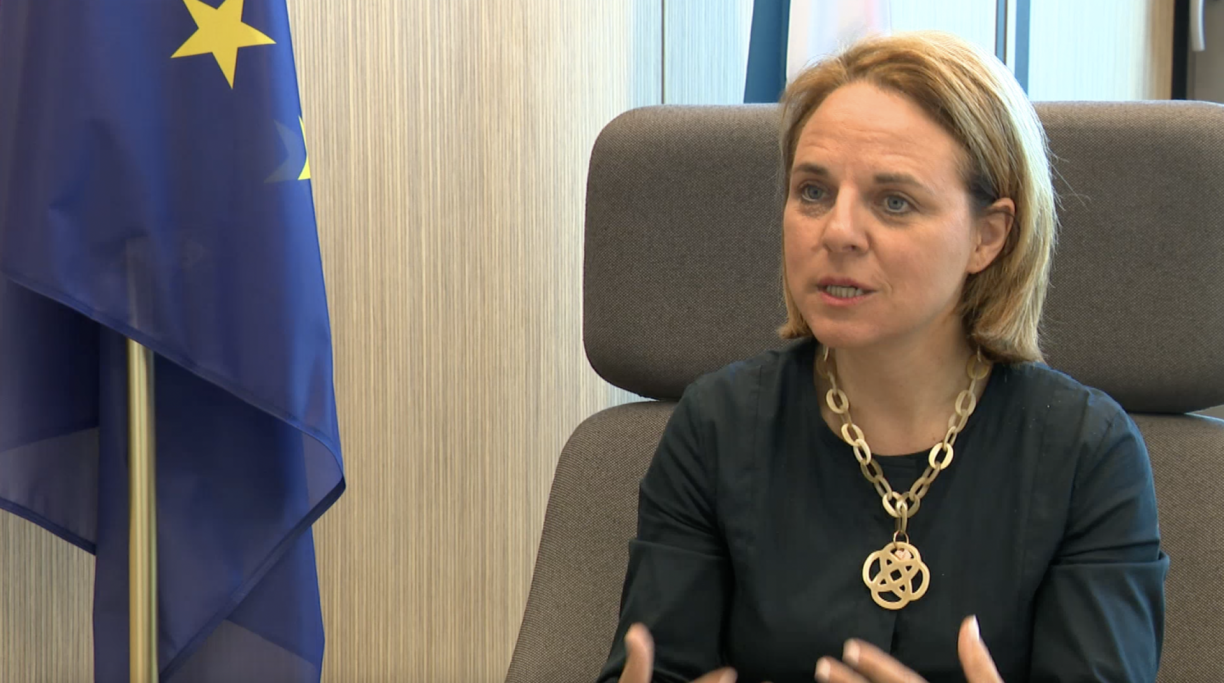
"Frankly, I'm unfamiliar with this trend; there are no available statistics on it," Cahen, quickly pointed out during an interview in her final days in office. Although direct statistics are absent, the phenomenon can still be observed through alternative data and studies from neighbouring countries. For instance, a 2022 survey in France, conducted in partnership with Ifop, revealed that 30% of women of reproductive age did not want children.
In Luxembourg, the fertility rate is noticeably lower than its European counterparts. While France leads Europe with an average of 1.83 children per woman, Luxembourg ranks 23rd, with a rate of only 1.36 children per woman. This statistic caught Ms. Cahen by surprise. She emphasized that if the birth rate in Luxembourg remains positive, it is largely due to the contribution of the foreign community.
"I experienced enormous pressure when I had my children. Societal pressure was immense," Cahen said. She believes societal expectations and scrutiny push women towards having fewer children. She posited that the more women have the freedom to choose their own life paths, and the more the state facilitates such freedom, the more likely women will opt to have children. She adds that societal judgments and preconceived notions about mothers and their child-rearing choices serve as deterrents for potential mothers. Cahen vividly recalls the criticisms she faced when she became a minister while still raising her children.
"The reality is that it's primarily the woman who collects the children from daycare, bathes them, and takes care of the housework." A Statec study in 2012 revealed a stark difference in gender responsibilities: women spend roughly 19 hours a week on household chores, compared to eight hours for men. Similarly, women spend an average of 35 hours a week caring for their children, compared to men's 21 hours. This inequality dissuades some women from embracing motherhood, as echoed by Marine Henry, a 31-year-old woman who doesn't want children: "If I had children, I would be the one the school calls, the one the doctor calls, (...) society would place that burden on me."
In conclusion, Corinne Cahen wanted to send a clear message to future parents: "Fathers are obligated not just to assist, but to take action. They share this responsibility."





