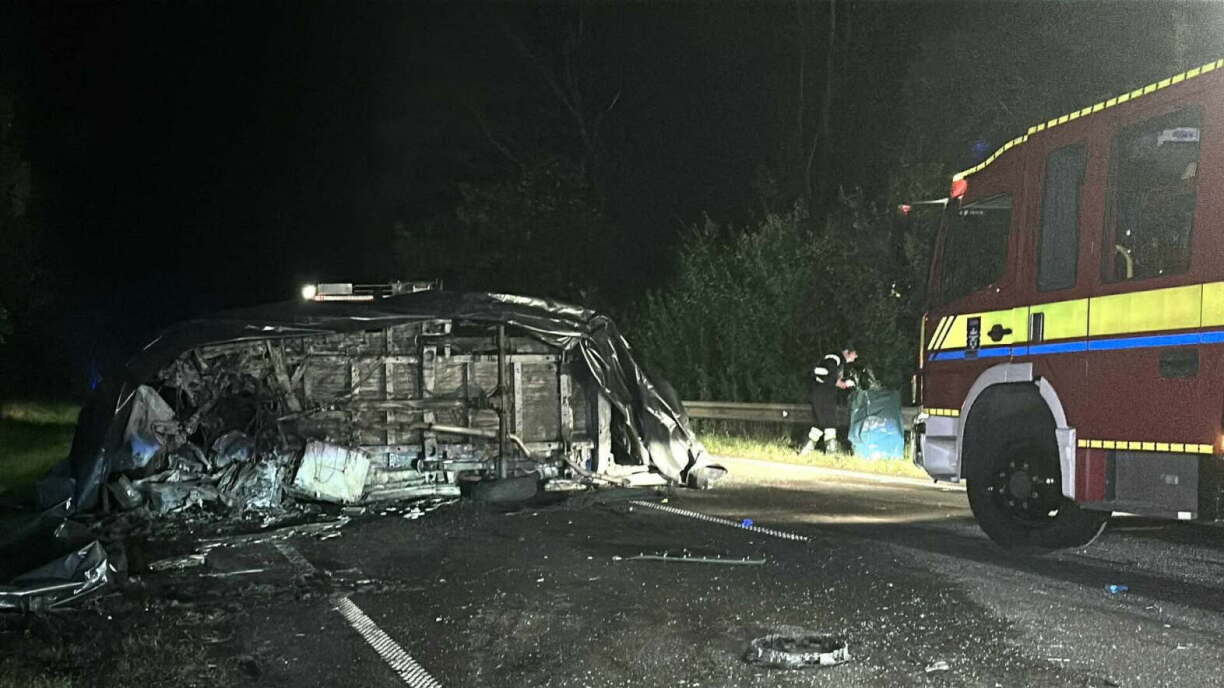
The fatal accident on the N15, which claimed five lives, stands as the most serious road tragedy in Luxembourg in more than three decades. It occurred on 1 September 2025, when two vehicles collided head-on between Feulen and Heiderscheid.
When the emergency response ends, the question arises: what happens next after a disaster of this magnitude? Beyond the initial investigation into the cause, a series of legal, civil, and road safety processes come into play.
There are two key legal aspects to consider after such an accident, explains Michaël Federici, Director of the National Association of Road Victims (AVR): the criminal case and the civil case.
In the N15 case, the criminal investigation was closed relatively quickly. Since all those directly involved died in the crash, it was impossible to initiate criminal proceedings against any individual. As a result, the public prosecutor closed the file.
However, this does not mean that there are no further consequences, particularly on the civil side. As Federici points out, issues such as compensation for victims' families are addressed in civil proceedings, usually handled between insurance companies – either through mutual agreement or, if necessary, before a court.
Even when no criminal charges result, understanding the accident’s circumstances remains crucial. Families, lawyers, and insurers can access information from the official police report, which helps clarify liability as much as possible. This is not only important for relatives seeking closure, but also to draw safety lessons from such incidents.
At the same time, authorities assess whether improvements are needed on the affected road. This is the role of a special working group – "Groupe de travail – Audit de sécurité" – led by the National Roads Administration and involving police, road safety experts, and the AVR.
The group’s scope is broad: not only does it analyse particularly serious accidents, it also monitors locations with frequent collisions to determine where infrastructure upgrades or other safety measures are needed.
Because of its gravity, the N15 accident was given priority. As a direct result of the group's assessment, a request was made to install a speed camera on the stretch in question. According to Federici, the main objective was to reduce vehicle speeds along the road.
Since 18 May 2026, a section speed camera has been operational on the N15. By 27 August, it had recorded 2,869 instances of speeding, according to police figures.
The number of violations has remained relatively steady over the first few months: from mid-May to mid-June, 865 were recorded per month; from mid-June to mid-July, 821; and between mid-July and mid-August, 926. The highest speed detected was 139km/h.
In addition to the speed camera, police continue to monitor the N15 with patrols and targeted checks, focusing on offences such as mobile phone use at the wheel and failure to wear seatbelts. Police say it is too early to provide precise statistics on the radar's impact.
However, officers on site have reported a positive trend: overall, vehicle speeds on the N15 appear to be decreasing. While police do not yet have concrete data to quantify this development, their ongoing observations indicate that the measures are having a beneficial effect.





