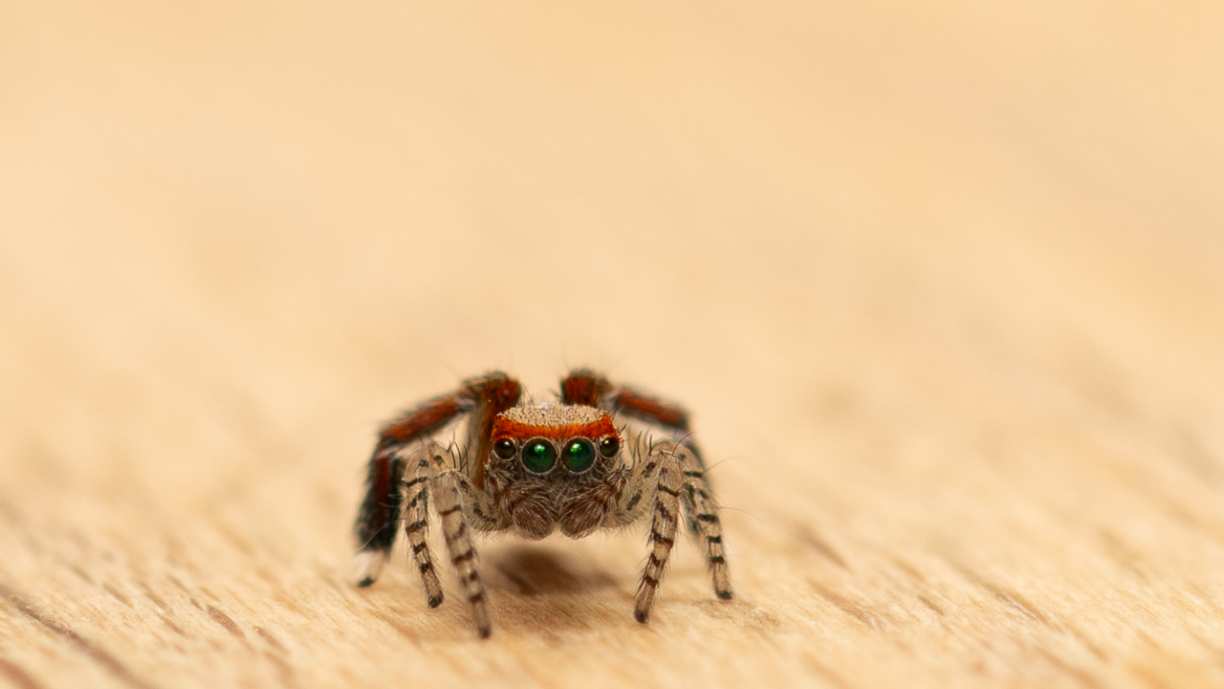
The Luxembourg National Museum of Natural History has confirmed the presence of a new spider species in the country’s fauna: Saitis barbipes, a type of jumping spider typically native to the Mediterranean region, was spotted for the first time in Luxembourg on 6 May.
The discovery was made in the south of the country by Guy Colling, head of the museum’s Department of Population Biology and Evolution.
According to the museum, the spider, though tiny, is visually distinctive, making its identification straightforward. Its presence in Luxembourg provides clear evidence that the species is now expanding beyond its usual habitat range.
Male Saitis barbipes are known for their vivid colours, fan-like legs, and striking courtship dances. As members of the jumping spider family, they are becoming increasingly popular among nature enthusiasts and wildlife observers.
Colling described the find as highly unusual, noting that the species typically favours warm, southern climates. Its appearance in Luxembourg, he explained, is both a remarkable scientific occurrence and a tangible sign of the ecological changes driven by climate change.
This is not the first such case. In recent years, researchers at the museum have observed a growing number of Mediterranean or southern European species establishing themselves further north. Warmth-loving insects such as the European mantis (Mantis religiosa) and the southern oak bush cricket (Meconema meridionale) have also been recorded in the Grand Duchy.
The museum links these shifts to long-term climate trends. Data show that Luxembourg’s average annual temperature has increased by around 1.5°C since the 1960s, creating more favourable conditions for species that would previously not have survived this far north. The arrival of Saitis barbipes is therefore seen as another biological indicator of ongoing climate change.
The discovery is currently being documented and entered into the national biodiversity database via iNaturalist. The museum hopes it will also contribute to raising public awareness of how global warming is already affecting local ecosystems and species diversity.
Additional information about the Saitis barbibes can be found on iNaturalist.





