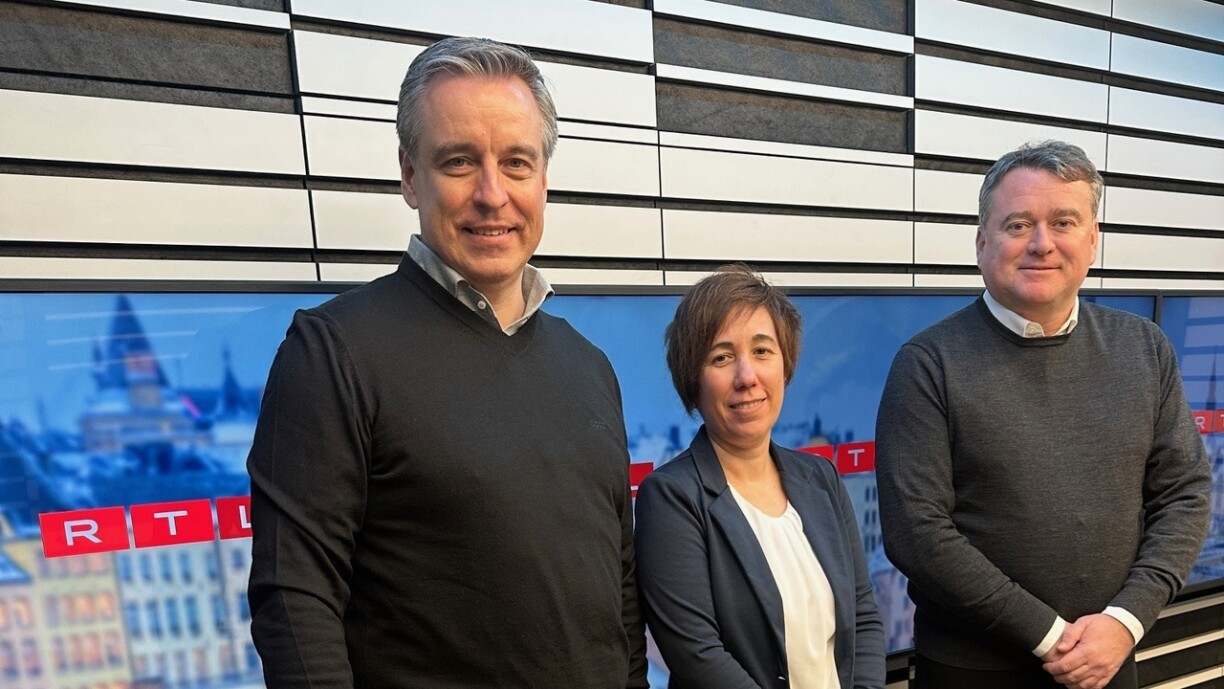
Saturday's weekly roundtable discussion on RTL Radio focused on the most pressing issues in Luxembourg's education sector, with guests including Education Minister Claude Meisch, Cynthia Recht, headmaster of the Lallenge technical secondary school and president of the Headmasters' College, as well as Patrick Remakel, president of the National Trade Union of Teachers (SNE).
Both Recht and Remakel voiced concerns early on over staff shortages, particularly notable in the midst of the current flu season. Though steps were taken to ensure that class schedules were maintained despite countless sick leaves, Remakel warned that primary education in general is no longer attractive enough to get by without the inclusion of career changers. This comment came in reference to the Ministry's decision to discontinue a popular programme that allowed people with any Bachelor's degree to become teachers in the span of a year.
He elaborated that the recently announced civil service payment agreement stipulates compelling bonuses–such as the annual flat-rate payment of €1,750 for head teachers–but argued that overall their working conditions have not been improved significantly.
Minister Meisch disagreed with the notion that the profession is no longer attractive, instead arguing that demand has simply increased, with the addition of 2,000 to 3,000 pupils entering the system each year. He also drew attention to competition from the private sector, notably in areas like IT where the teacher shortage is particularly significant, according to Recht.
Meisch also spoke about the growing diversity of pupils in Luxembourg, acknowledging that the socio-economic background of a student plays a deciding role in their academic career. The Ministry believes that the French literacy programme–currently still in its project phase but to be made available country-wide by 2026–is a way to counter potential inequalities.
Remakel argued that this can only be one of many solutions, proposing the introduction of a foreign language approach to German to assist students facing difficulties with the language. He also expressed concerns that the sector still lacks the necessary resources to successfully carry out such a fundamental reform.
Meisch countered that the project is based on regular scientific assessments and has been in the making since 2016. He asserted that the multilingual nature of modern classrooms requires adaptation, but was unwilling to comment on whether or not the programme can really be introduced nation-wide in 2026.
Responding to logistical concerns from Remakel, the minister argued that the programme only needs an additional 150 class rooms across Luxembourg's 100 schools, which he believes to be achievable.
Read also: Teachers' union advocates for phased roll-out of French literacy programme
Recht drew attention to the problems faced by foreign students who move to Luxembourg after having completed their primary education elsewhere. She suggested extracurricular language courses as a potential support mechanism but acknowledged that time outside of school should also be spent on leisure activities.
Meisch noted that public international schools can help ease pressure, with plans for three new such institutions in Esch-sur-Alzette, Dudelange, and Luxembourg City stipulated in the coalition agreement. He expressed his view that international schools are more flexible to accommodate those who do not speak any of Luxembourg's three official languages, which he said roughly equals a third of the population.
Recht underlined the importance of providing pupils with proper guidance to help them find the right path. She made the case that even if students dislike a certain internship, the experience still may help them figure out what it is that they want to do in the long run.
Discussing children who require special care, Remakel observed that pupils and teachers alike feel left behind. He emphasised the need to differentiate more between those with physical disabilities, those who struggle with reading and writing, and those with behavioural problems, saying that there is a lack of experts in the field to respond to each in the best possible way.
The conversation steered toward the recent cases of vandalism across several secondary schools, with Recht defending the restrictive measures she introduced in the Lallenge school as a reaction. She argued that pupils have received the message, but admitted that the culprits have yet to be identified.
Read also: School's crackdown on vandalism leads to toilet access restrictionsIn response to these behavioural issues, Meisch questioned whether excessive smartphone use may be to blame for a rise of such problems in recent years. He also suggested providing more options for physical exercise, floating the idea of introducing an additional lesson in the first three years of secondary school.
National Trade Union of Teachers (SNE) welcomes the planned smartphone ban, which is to come into effect in primary schools by Easter. Nevertheless, Remakel said that questions about the implementation remain.
Meisch said that teachers will not receive concrete directives, arguing that "common sense" should suffice. If a student is caught with a phone, the teacher should temporarily confiscate the device and eventually inform parents in case of repeat incidents, according to the education minister.
Recht voiced support for the smartphone ban and stressed that the ministry has thus far provided sufficient support.






