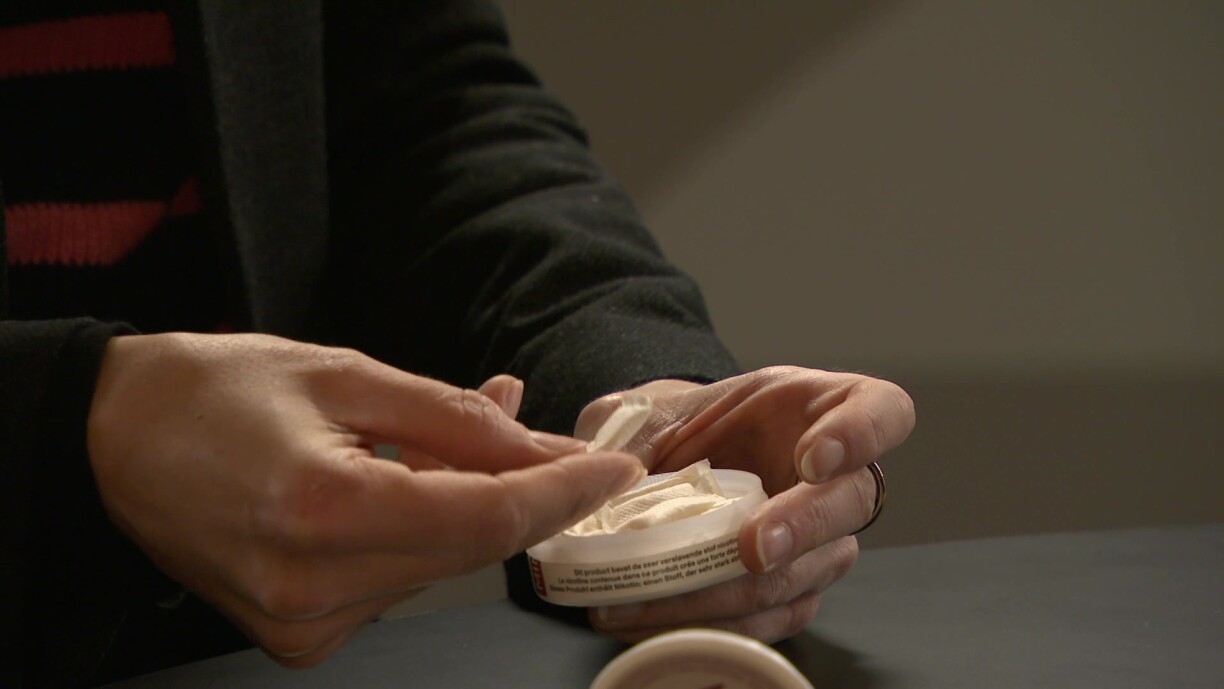
In the Grand Duchy, policymakers are looking for a middle ground that would implement strict regulations to protect young people. However, some producers are arguing that such regulations are so severe that they amount to an effective ban.
Among those pushing for a review is Philip Morris. The US tobacco giant has dispatched a team of advisers from Brussels to Luxembourg, hoping to influence the debate. Their official mission? Not lobbying, they insist, but education. A matter of interpretation, notes RTL editor Pierre Jans.
Philip Morris claims to be committed to combating cigarette smoking. Miguel Matos, the company's Benelux Director, argues that the science is clear:
"The problem with cigarettes is not the tobacco or nicotine, but the combustion. When you light a cigarette, you inhale thousands of chemicals. This can be avoided if nothing burns. Nicotine pouches are placed under your lip, delivering nicotine without the burning."
Currently, non-combustible tobacco and nicotine products (including vapes, heated tobacco, and nicotine pouches) already account for 40% of Philip Morris' global net sales. The company envisions these products as the future.
However, a proposed law in Luxembourg would set a nicotine cap that is so low that "it would virtually make no sense for smokers to switch," says Matos.
Public health experts strongly disagree. The Fondation Cancer, for instance, argues that nicotine pouches pose a significant risk, particularly to young people. A public health expert within the foundation, Lex Schaul, warns:
"The problem is the high nicotine content in these pouches. Some contain up to 20 milligrams per sachet, compared to just 1 milligram per cigarette. Young people, who are particularly sensitive to nicotine, risk intoxication, and nausea."
He also notes that flavoured pouches, often infused with mint or eucalyptus, are highly appealing to young users, making addiction more likely.
Nonetheless, Philip Morris denies accusations of targeting youth. The company claims it is open to adjusting packaging and flavouring to deter minors.
"We can reduce flavours to make them less attractive, design packaging that prevents easy access for young users, and collaborate with retailers," says Matos.
The company acknowledges that regulations and taxes are necessary, but argues that an outright ban would only fuel a black market.
However, Margot Heirendt, Director of Fondation Cancer, dismisses this reasoning, asserting that public health concerns far outweigh such arguments.
Even so, both sides recognise a political reality: tobacco taxes remain a significant revenue stream for the Luxembourgish state, generating up to 2 billion euros annually, primarily from traditional cigarettes.





