Luxembourg's "crime doesn't pay" policy is showing promising results, as highlighted by the first report from the Asset Management Office (BGA) based in Kirchberg. The BGA is responsible for managing the substantial sums of money and property seized or confiscated from criminals by the courts.
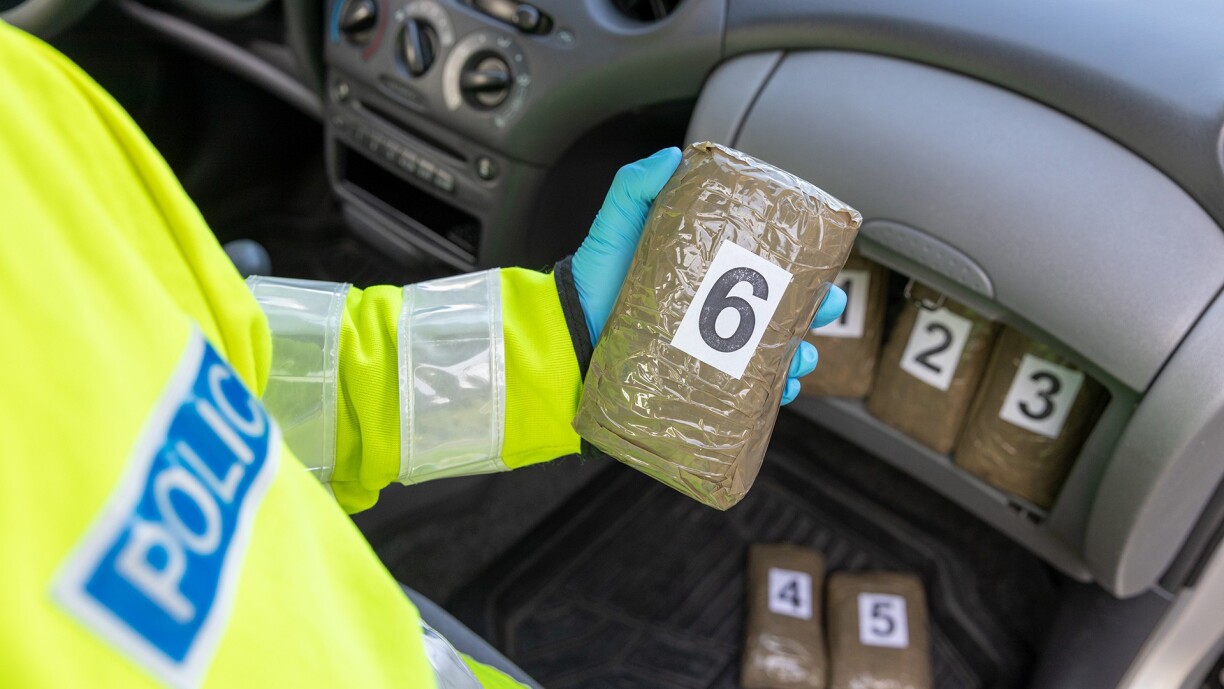
The range of assets seized in criminal cases is extensive, including bank accounts, cash, real estate, drugs, weapons, mobile phones, jewellery, works of art, and even animals. These seizures often occur in cases related to money laundering, fraud, swindling, drug trafficking, and other forms of economic crime.
To strengthen its fight against economic crime, Luxembourg passed a new law on 22 June 2022, aimed at ensuring that "crime doesn't pay" by depriving criminals of the proceeds and tools of their illegal activities. This led to the establishment of the BGA, which became operational on 1 October 2022.
The BGA recently released its first activity report for 2022-2023, detailing its achievements since its inception. It manages various assets, including sums of money, claims, virtual assets, and other property seized or confiscated at the request of judicial authorities. Although the BGA operates under the supervision of the Ministry of Justice, it functions independently. Led by Michel Turk, the office currently employs nine staff members and operates with a budget of €300,000.
The initial results from the BGA are notable. By the end of 2023, it was handling 762 cases, with the total value of seized assets under its management exceeding €1 billion.
The BGA's report provides detailed insights into its operations, revealing that it currently manages €508 million spread across 1,743 bank accounts, most of which were seized before its official launch on 1 October 2022. Among the 227 accounts seized in 2023, 23 held balances ranging from €100,000 to €500,000, while eight accounts contained over €5 million.
Additionally, the BGA oversees €456 million in 113 securities accounts, €40 million in receivables, and €635,000 in cash and bitcoins. Revenue generated by the BGA in 2023 contributed €5,325 to the Fund for Combating Certain Forms of Crime and €328,004 to the State budget, with expectations for these amounts to increase in the coming years.
The assets under management also include 99 properties, with 81 of these seized in 2023. Additionally, 22 vehicles were seized for traffic or other offences, along with 881 items of jewellery, confiscated between 2008 and 2023. The BGA also manages 133 electronic items, 50 works of art, 116 tools, 41 different narcotics and medicinal substances, and 324 items of clothing, among other goods.
Except for weapons, drugs, and mobile phones, which are systematically destroyed, the seized items are sold at auction once their confiscation is legally confirmed. A portion of the proceeds from these auctions is allocated to victims who have been granted compensation.
The BGA has also overseen the destruction of more than 42 tonnes of confiscated vehicles or vehicles that had fallen into state ownership, previously stored in the judicial impound yards of Sanem and Colmar-Berg.
"The balance sheet is positive in terms of managing funds and securities. The law has entrusted us with that responsibility. However, when it comes to other types of assets, we've found that the mechanism established by the new law is somewhat cumbersome," explained Michel Turk, Director of the BGA. Turk clarified that he does not fault the lawmakers, acknowledging that the BGA is a newly established institution created from the ground up.
To improve efficiency, Turk suggested simplifying the procedures. For instance, he proposed that when a vehicle is seized, its management should be automatically assigned to the BGA without requiring a decision from a magistrate. "I believe we could significantly streamline the process and allow the BGA to decide on whether to destroy or dispose of the property," he said. In its first activity report, the BGA called for a "thorough overhaul" of the existing procedures, aiming to make the disposal of property the standard practice, with its conservation becoming the exception.
The report also highlighted the unresolved challenge of managing historical stocks – assets seized before the law's enactment on 22 June 2022. The volume of these assets has left the judicial authorities overwhelmed, with the issue worsening over time, as evidenced by the Sanem judicial impound yard. Some vehicles have been held there for so long that their procedural records have been lost. The BGA has expressed its readiness to take over the responsibility of managing these assets.





