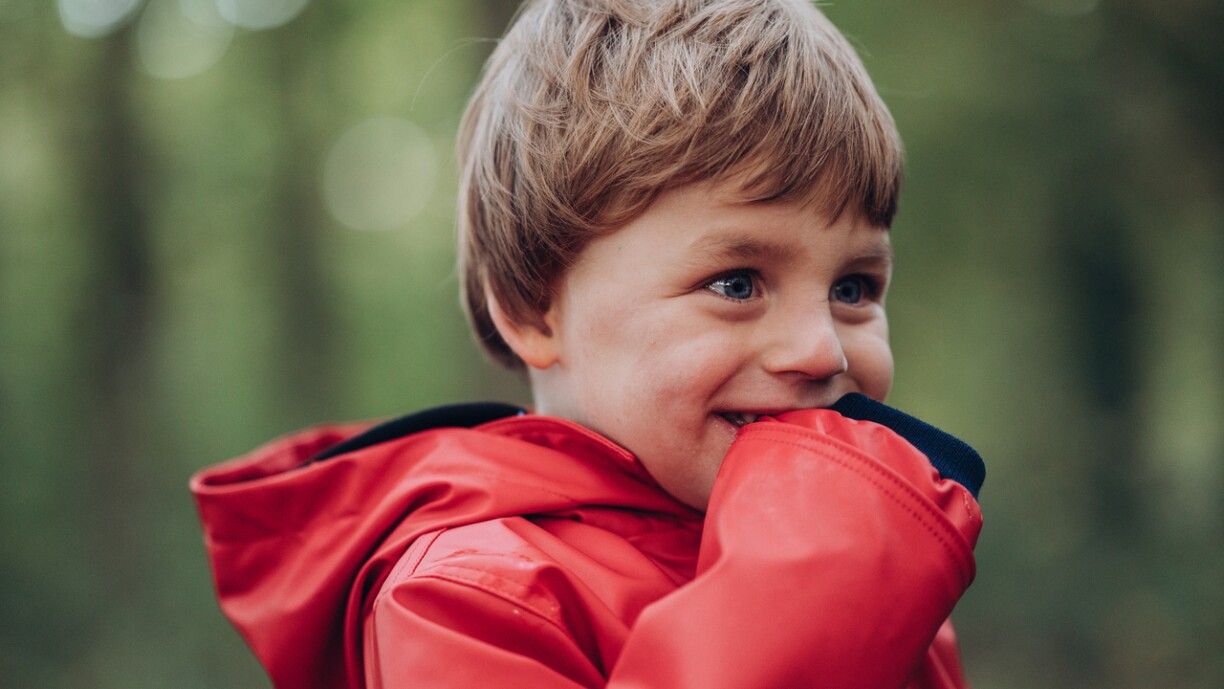
Angelman syndrome is a rare genetic disorder which affects the nervous system and disrupts communication between the brain and neurons, often resulting in delayed development and side effects such as epileptic seizures and sleep disorders.
Daniel has suffered from the rare condition since his birth four and a half years ago. His father Roman says that children who have the syndrome often appear like neurotypical children at first glance, as they are friendly and love to approach people, smile a lot and display hyperactive behaviour.
This is exactly how Daniel's parents describe their son: "He's sociable and happy, but hyperactive." He loves to be silly and enjoys giving his parents kisses.
For more on this topic, you can also listen to the Rare Disease Month episode of The Lisa Burke Show, on RTL Play.
"There's a life before diagnosis, and then another after," says Roman. These days, Daniel attends various different therapies, with the goal of stimulating his development. He has physiotherapy sessions, sees an occupational therapist, and even sessions of hippotherapy (with horses) and swimming. It's a lot of work to keep the four-year-old going to his extracurriculars, but it's worth it, say his parents. "Every bit of progress gives us so much joy."
But Daniel's condition has affected his family, Roman explains. Looking after Daniel takes a lot of energy, as the boy must be under constant supervision in order to ensure his safety. He also needs support with daily tasks. His parents say their personal life lacks stability, with plans often turned upside down at the last minute due to unforeseen issues.
The couple's social life has also taken a battering, although they can manage moments to themselves when Daniel spends time at a specialist centre or inclusive nursery.
"After four years, we were totally exhausted," Daniel's mother Natalia explains. "But we have learned not to see our child as the centre of our world, but an important element in our lives. You have to be able to take time out and find opportunities to recharge your batteries." It is also important not to neglect one's relationship with one's partner. "Live in the moment, appreciate every moment of joy... that's what we try to do."
So far, the family has not gone through any negative experiences with other people. "Most people react very kindly and display understanding towards us and to Daniel," Roman says. The couple try to avoid difficult situations by keeping a constant eye on Daniel at playgrounds for example, to ensure he does not disturb other children. "His main difficulty is expressing himself and communicating with others," Roman says. "This is difficult with his limited language skills." Sometimes Daniel has pulled other children's hair, for example. "He doesn't mean to hurt them, he wants to get their attention."
Most of the family's experiences in Luxembourg have been positive, and they say they have received plenty of support from the ALAN charity for rare diseases, as well as from the inclusive nursery which Daniel attends, and other associations.


"We think it's important to improve the school system for children with these conditions. The courses could be more structured and more efficient, and staff who work with the children should receive more training on different techniques, such as alternative methods of communication."
The couple also encourages further investment in modern and new therapies, as well as collaborating with other countries in order to better integrate young patients in clinical trials.
"Days like Rare Disease Day have the advantage that they can reach the wider public, to make more people aware of this condition and others," says Roman. Currently, some twenty big pharmaceutical companies are working on a treatment for Angelman syndrome, each with a different approach. "Two years ago, some of these companies began clinical trials on children. In Europe, there are a few centres carrying out research, but the majority are based in the US."
Natalia says every day is a day of awareness in their family. "We volunteer for several different organisations in Belgium and France. Personally, I run a blog through Instagram, @my.angel.man, where I share the reality about life with Daniel."
"When we got Daniel's diagnosis four years ago, I asked myself, how could this happen to me? But now, four years later, I instead ask myself the question 'what can I do with this? What is the purpose of my life? How can I create positivity?'" Natalia says.
Her experience with Daniel's condition has changed the way she sees the world. Now, she lives in the moment, and has found her tolerance and strength have both expanded as a result. Natalia says she now knows what unconditional love means. But she still has hope. "I hope one day they will discover an effective treatment, and I will one day be able to hear my son say 'I love you Mama'."
Living with a rare disease: "I don't want my illness to define my life"
Listen to the 'Rare Disease Month' episode of The Lisa Burke Show





