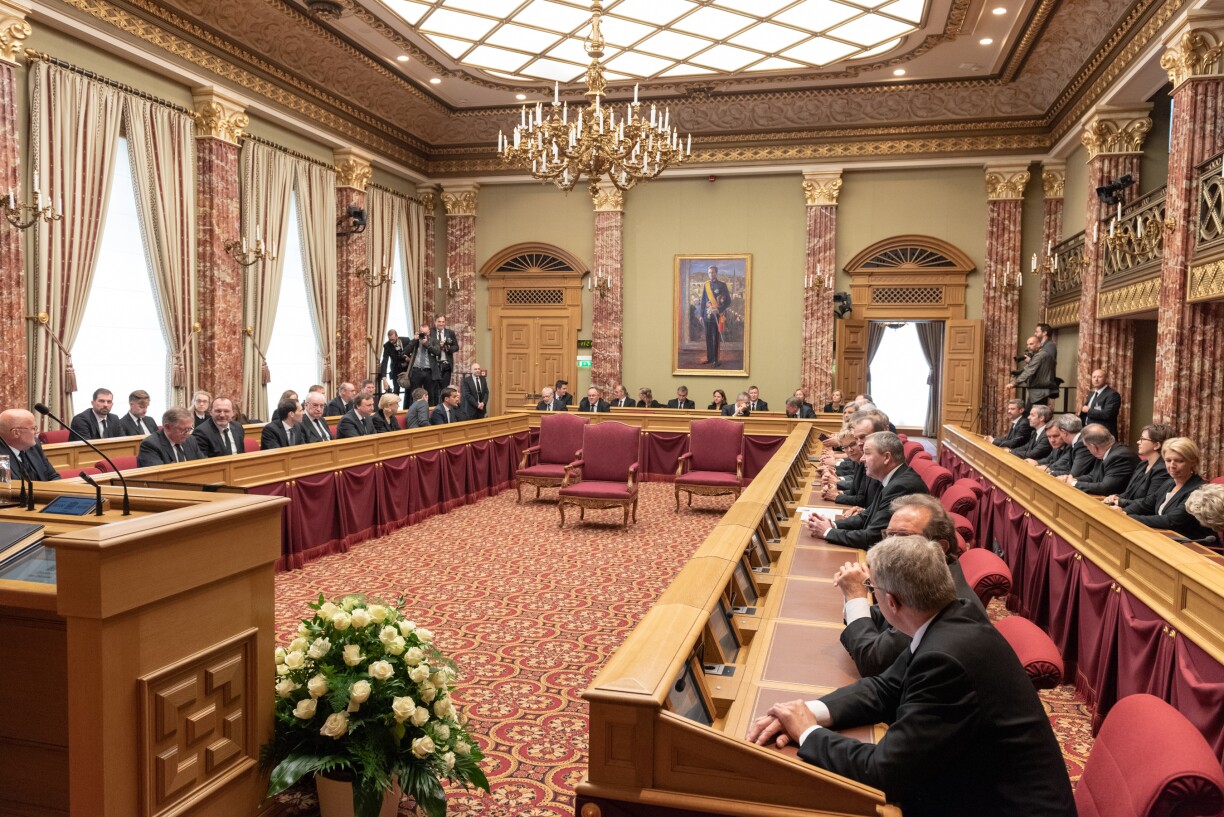
A recent debate in the Chamber of Deputies revealed a broad consensus on the need for greater citizen participation but stark disagreement on how to achieve it.
MP Marc Goergen of the Pirate Party argued that national-level participation is effectively non-existent beyond elections. "Time and again, we see one isolated measure per legislative period, be it a citizens' climate council under the last government or a strange platform on pensions now. This remains purely symbolic politics", he said.
His criticism was echoed by MP Taina Bofferding of the Luxembourg Socialist Workers' Party (LSAP), who dismissed the recent pension reform platform as a "sham debate". She argued that such superficial efforts are counterproductive, stating: "The result is that people think: 'Those up there do whatever they want anyway,' and the consequence is that mistrust grows, or rather, trust is lost."
Advocating for a more structured approach, MP Sam Tanson of The Greens (Déi Gréng) renewed her call for permanent citizens' councils. She proposed that these bodies could include residents who do not have the right to vote and could operate at both national and municipal levels. "The latter in particular is where the decisions closest to daily life are made – about mobility, urban planning, public space, and building development", she explained.
Prime Minister Luc Frieden, however, outlined a more limited role for such consultations. His government has no plans to establish permanent citizen councils for general policymaking, preferring instead to convene them for specific, pre-defined topics like education or climate.
In a related discussion on direct democracy, MP Marc Baum of The Left (Déi Lénk) introduced the concept of "pre-referendums". This model would gauge public preferences on an issue before formulating a definitive "Yes" or "No" question for a formal vote.





