Curator Régis Moes explained to our colleagues from RTL Radio that setting up a special exhibition about Luxembourgers in western colonies in 2022 is "not a coincidence".
In fact, exactly 100 years ago, Belgium granted Luxembourgish nationals equal treatment in Belgian Congo, meaning that they could become civil servants.
And numerous Luxembourgers did follow that career path. However, there were also engineers, missionaries, and many families. At its peak in 1957, almost 600 Luxembourgers lived in Belgian Congo.
The Luxembourgers who lived in the colonies had a certain influence on society in the Grand Duchy.
According to Moes, they represented "an electorate that politicians wanted to keep happy". For this reason, Luxembourgish politicians "took a stance" and supported Luxembourg's colonial associations both morally and financially, visiting many of their events.
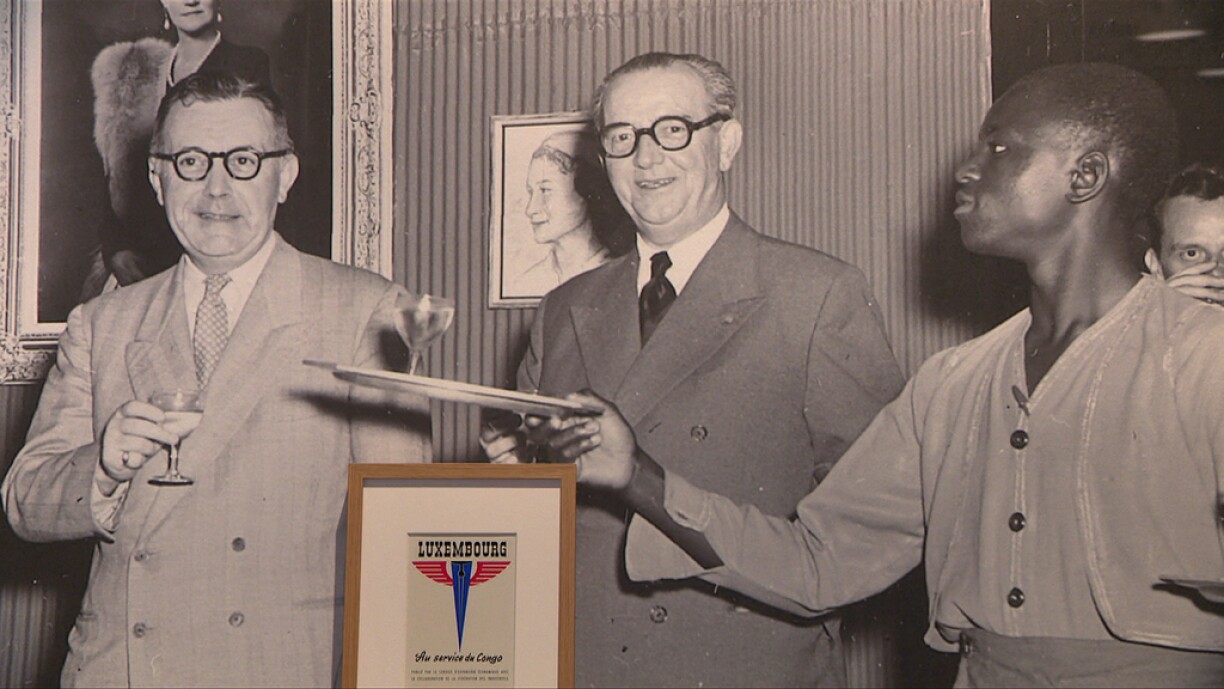
As the inequalities in the colonies were well known at the time, there were also some critical voices. Nevertheless, Moes explained that life overseas had "a prestigious air" to it. Trips to the colonies were also of interest from an economical point of view. The exhibition showcases a picture of former Prime Minister Pierre Dupong, which shows the politician holding a glass of wine while in Belgian Congo.
However, the exhibition is not meant to shame anyone, according to MNHA Director Michel Polfer.
Polfer explained that the museum "does not want to wag any fingers," but "raise awareness and put some facts out into the world". These facts, Polfer went on to say, clearly show that colonialism was and continues to be "a phenomenon" for the Luxembourgish population.
The second part of the exhibition deals with the repercussions Luxembourg's colonial past has to this day. The main focus of this part is on testimonials from people who have some sort of connection to this past. Visitors are invited to listen to their stories.
One of these stories is told by Jeannine Grisius, whose mother was from Rwanda while her father was born in Luxembourg. Grisius explains that people used to call her a 'Mischling' ("mongrel") back then. She lived with her mother in an African village for the first six years of her life. When she turned six, her father decided that she should receive a "European education" and took her from her mother.
The exhibition will be open to visitors until 6 November.
In a parliamentary question to Minister of Culture Sam Tanson, MP Fernand Kartheiser from the Alternative Democratic Reform Party (adr) asked whether Tanson thinks the title of the exhibition, "Luxembourg's Colonial Past", is appropriate. In response, both the Minister and Director Michel Polfer invite the MP to visit the exhibition himself. The Museum also specifies that during its research for this special exhibition, its team took a closer look at its own inventory and found several "problematic" objects from Africa.





