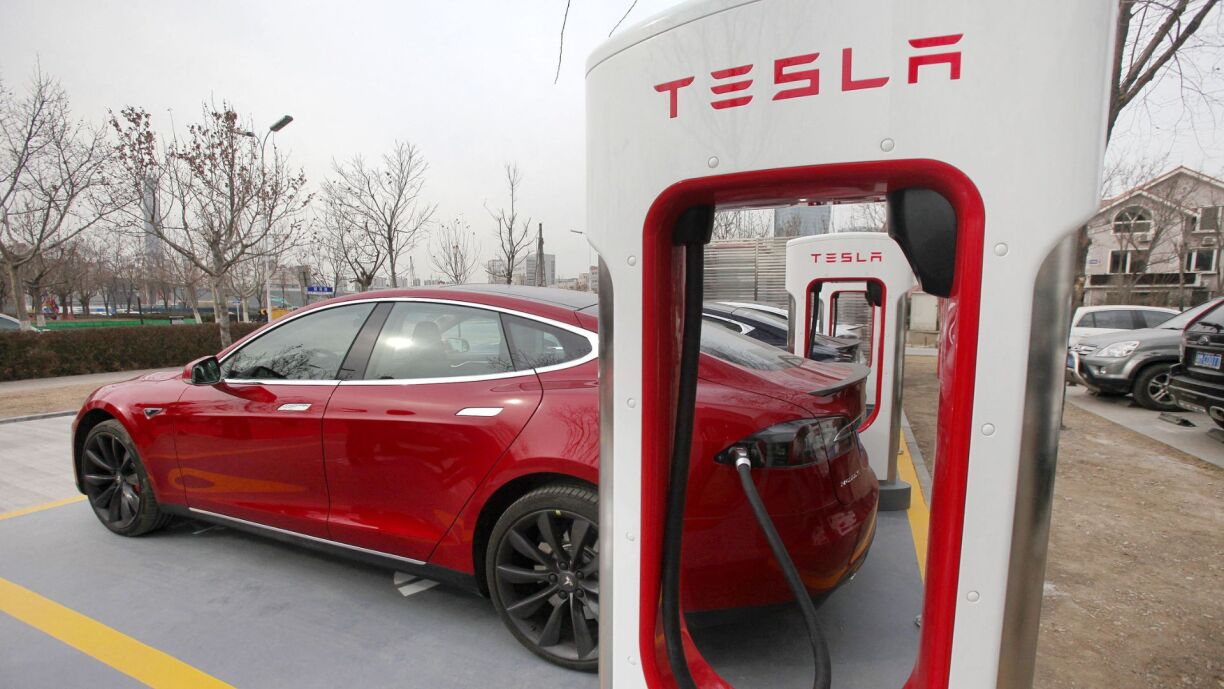
At a time when his vehicle was still considered a UFO, Luca (name changed by RTL) purchased his first Tesla. Since then, it's been "nothing but happiness" as he argues the car has saved him at least €125.000.
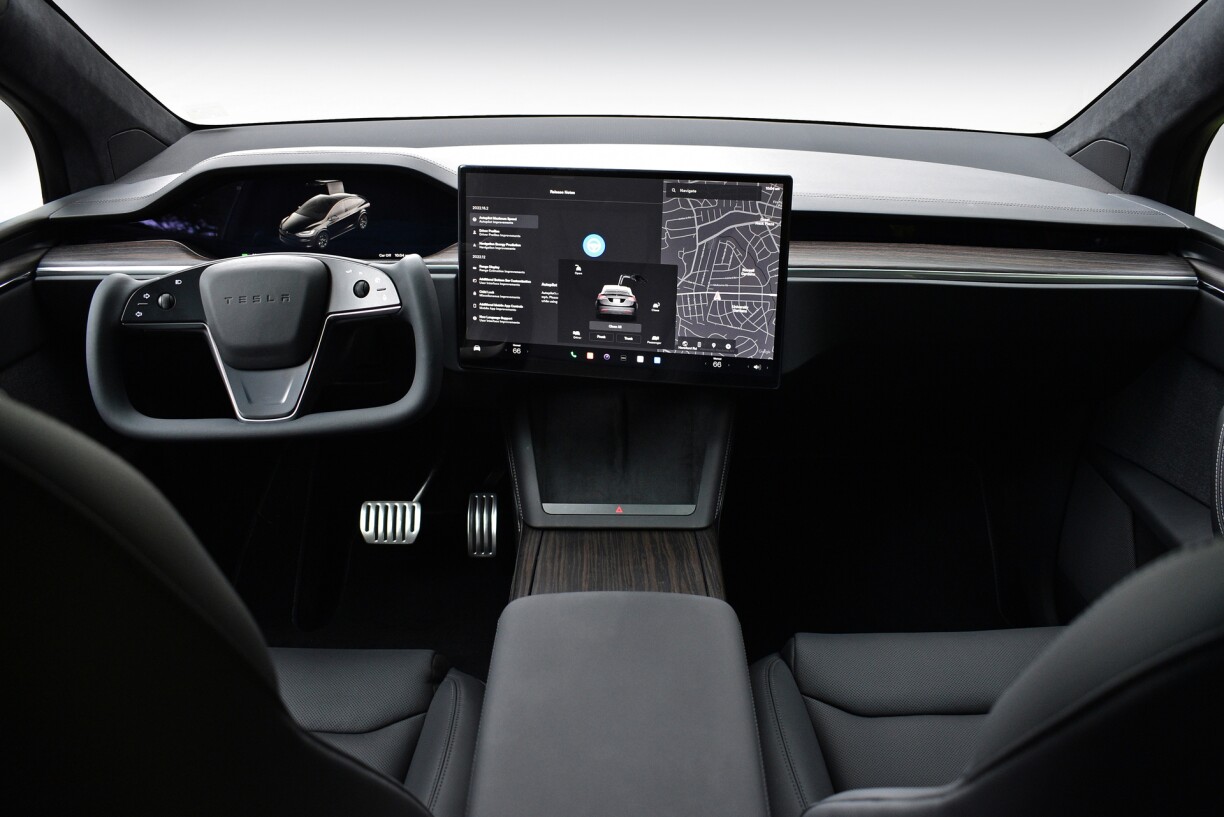
Back in 2014, Luca was invited to a hotel in Luxembourg for an exclusive presentation of the Tesla Model S. He was stunned by the airplane cockpit-like dashboard: "When I got onboard, I was immediately fascinated. It was revolutionary, with practically no buttons apart from the warning light and the glove box. Everything was regulated with this gigantic central screen."
He tried to start the car, but failed. "Where's the start button?", Luca wondered and then learned that there's none. As soon as you enter the car, you're ready to go.
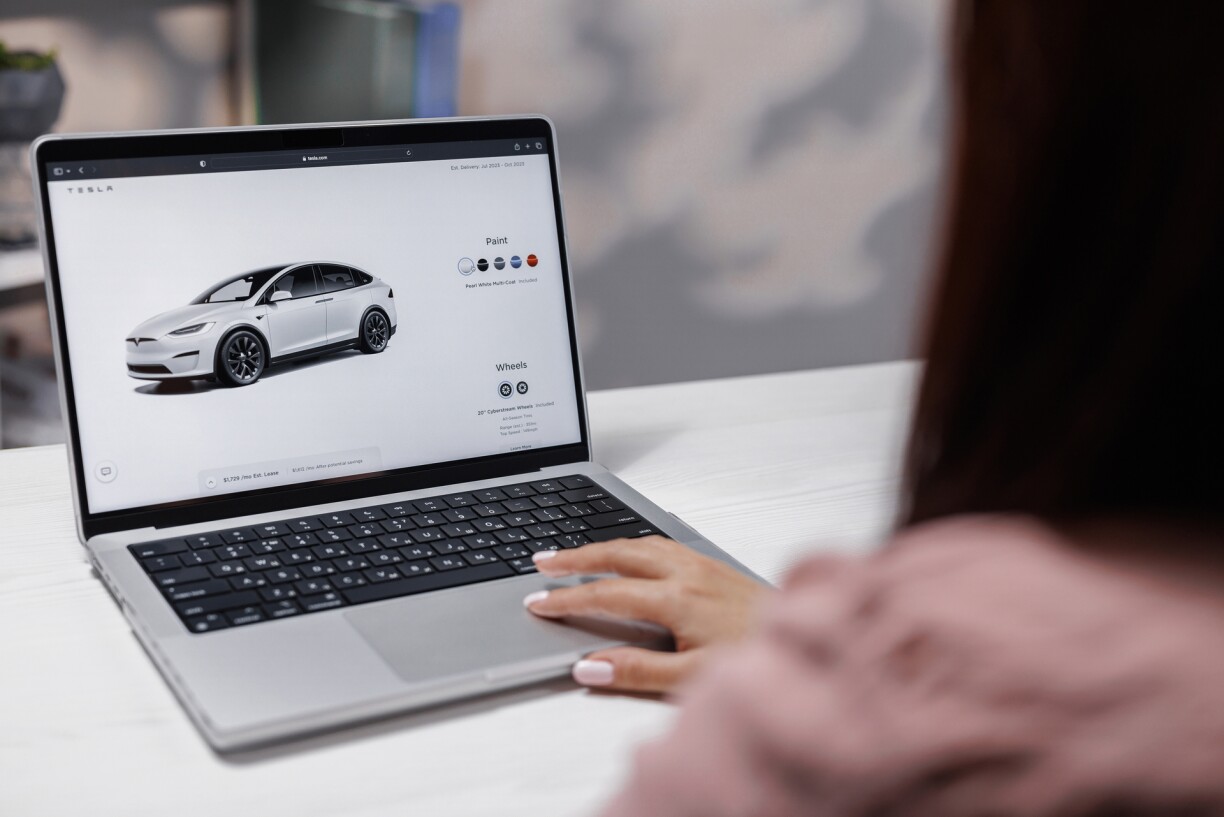
As no physical point of sale was available in Luxembourg before 2016, Luca's order was placed exclusively online. "I paid less than €1,000 when ordering on the website, the remaining part was paid upon delivery."
"The importing was done via a dealer in the Netherlands, who delivered the car to my front door by truck," Luca explains, who lives in a beautiful house in Luxembourg City.
For €85,000, Luca treated himself to a Model S85, one of the very first Teslas to have set its wheels on Luxembourg soil. "When I arrived in town in a Tesla, I saw people with wide eyes, or others who jumped when I passed because the car made no noise," he recalls.
At that time, electric cars were still extremely rare. "The electric cars on the road were mainly small city cars with little autonomy, like the Renault Zoe. There was no high-end electric car or sedan. That's one of Tesla's brilliant ideas: to have designed a car that would first attract wealthier people, then gradually reduce its cost thanks to economies of scale.”
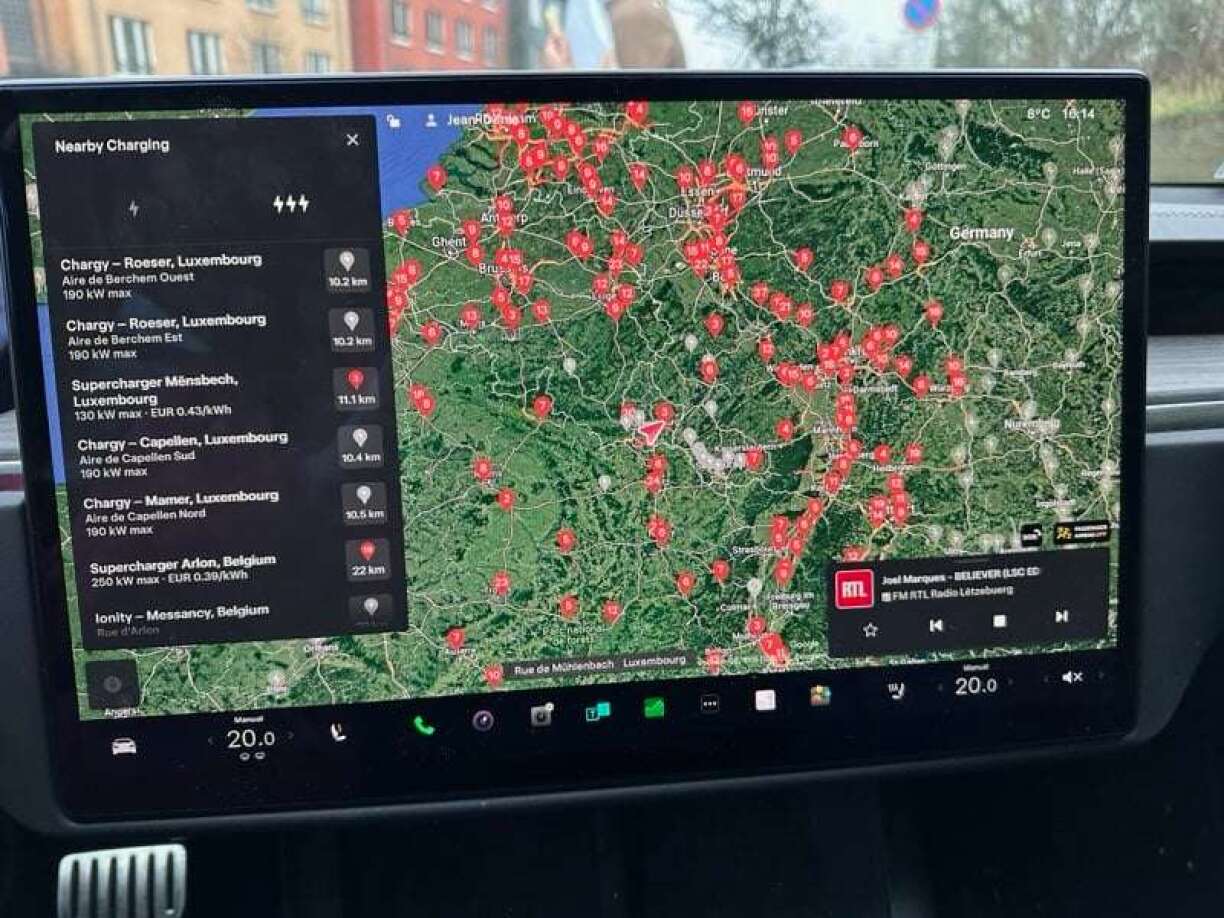
Luca drives a lot, both for work and to go on vacation. In the first two years, he covered a total distance of 120,000 kilometres. His Tesla 'only' had a range of 350 kilometres, and the supercharger search system through the dashboard were in its infancy.
"I had to search on the Tesla website where the superchargers were located, then enter the destination in the navigation system. And I had to calculate carefully to avoid running out of power."
He remembers a trip to the south of France. He was supposed to halt at a supercharger in Nuit-Saint-Georges (near Dijon), but "the freezing temperatures caused me to easily lose 10-15% of autonomy. Today, there is a system that heats the batteries, and we hardly lose any range in cold weather" he says, although this is often refuted by experts.
Tesla superchargers have since multiplied: there are more than 11,000 across Europe, and Tesla remains the only manufacturer to have its own charging network.
"On other operators' terminals, we are never sure if there is a charger available, and then some will ask for a login to connect, or a visa card...it's a permanent lottery," says Luca.
With Tesla, "there is no more uncertainty. Everything is clear and anticipated. The car will tell you to recharge for 20 minutes in Nancy, where there are still four free spaces, for a specific price, and so on. And after nine years and 450,000 kilometres in a Tesla, I've never had the slightest disappointment with that."
Most of Luca's recharging is done at home: "I rarely do more than 100-150 kilometres per day in Luxembourg, and my charger recharges the battery at a speed of approximately 40-50 kilometres per hour. So in three hours it's fully recharged."
At a Tesla supercharger, "it starts charging at 1,700km/h, so in 20 minutes an empty battery can be fully recharged."
Another "revolution" with this car is the fact "that you almost never need the brakes. Because as soon as you release the accelerator, it brakes very hard to recharge the battery," Luca explains.
"When we go down mountain passes, we arrive at the bottom with more autonomy than at the top." Luca first changed his brake pads on his second Tesla after 195,000 kilometres.
For his second Tesla, a Model S90D, Luca paid €114,000, attracted by its increased autonomy (450 kilometres) and numerous updates, like hardware, more cameras, and a smarter autopilot.
Isn't €114,000 a big sum? "Yes and no. Some large German sedans are the same price," says Luca, who drove a Mercedes before converting to electric.
"But when we take into account all the parameters, I've never had such a cheap car. According to my calculations, in the nine years that I've been driving a Tesla, I must have saved almost €125,000."
He bases his calculations on the following, starting with the ecological purchase bonus (up to €8,000) and fuel savings, "because until 2021, we could recharge for free, and therefore drive without spending a euro."
Now, "with a Tesla supercharger, it costs me €50-60 to do 1,000 km. Well, it depends on the country. In Luxembourg it's not expensive especially since I recharge at home. In France where it costs something like €0.28 per kWh, in Switzerland it's €0.4, in Italy €0.5..." according to Luca.

Luca continues: "The first Tesla that I bought for €85,000 I sold for €65,000, even though it had driven 120,000 kilometres."
His calculations also take into account the savings made by not having to service the car much: "In the first years, I went to Frankfurt and Antwerp for servicing, before Tesla announced it was useless and you should only come to them if there was a problem."
As Tesla's website says: "Unlike vehicles with internal combustion engines, your Tesla does not require an oil change, spark plug or fuel filter replacement, nor an emissions test." Certain equipment (air filter, brake fluid, etc.) still require regular maintenance.
This mechanical minimalism has a certain effect: As there are fewer moving parts in a Tesla, there is less risk of wear and tear. "We kept the second Tesla up to 280,000 kilometres, and there was never the slightest problem. And I know that it still runs perfectly well, since we sold it to a friend."
In January 2021, Luca then ordered his third Tesla, the very latest Model S, with a 650-kilometre range at a price of €96,000... "Elon Musk announced his release in the middle of the night on social networks, and I rushed to pre-book it straight away."

Luca praises the evolutionary nature of his car. As he takes RTL journalist Romain Van Dyck for a drive, he shows him a strange setting on the screen: "Joe Mode".
"One day, a guy named Joe complained about the annoying 'beep beeps' the car made whenever there was an obstacle or something, because it woke up the kids sleeping in the back," Luca explains.
"Elon Musk saw this and said no problem, next week you will have an update. This update is called "Joe Mode" and it reduces the noise of these notifications and directs them towards the driver. Clever!"
There seems to be a love-hate relationship with Tesla, with many dissatisfied Tesla owners criticising the brand and its controversial founder Elon Musk. Despite professional journalistic interrogation, Luca swears with his hand on his heart that there are very few faults with his electric car.
"Among those close to us, the reactions were often very positive. But we also have a few friends who are 'petrolheads', fans of the combustion engine who enjoy sending over every anti-Tesla article, for example when a Tesla catches fire," Luca says. "There are people who are scared to death by this revolution and don't understand it very well. I'm sure that a century ago, people who travelled on horseback said the same thing when petrol cars arrived."
Nonetheless, Luca criticises some fine details, like certain plastics or small design flaws. He admits the Tesla's finish is not as slick as that of a Mercedes or Audi.
Luca also highlights a certain fragility of the vehicle: "It's a car which is mainly made of aluminium, so when you close the front hood for example, you have to close it delicately with both hands, so as not to risk making a dent. So if we have an accident and the bodywork needs to be redone, it's probably more expensive than a classic car."
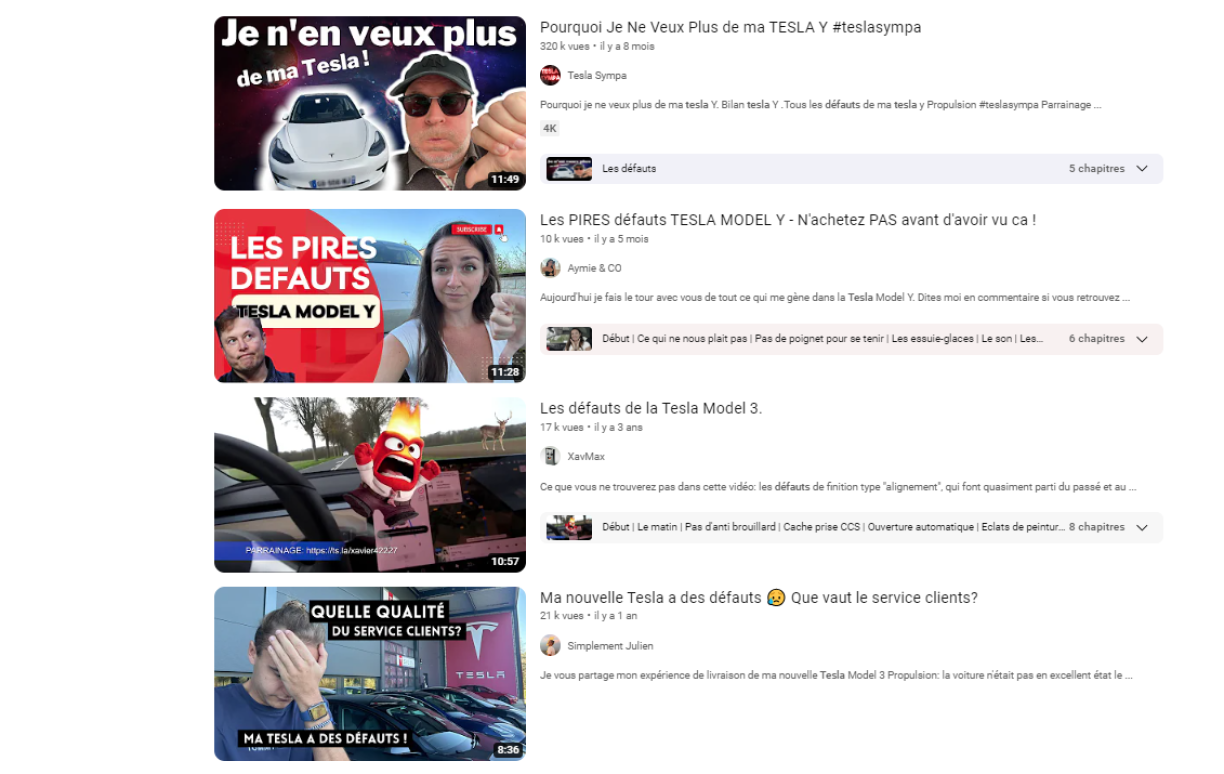
On the other hand, in the nine years with Tesla, he says he has had practically no breakdowns, but only small, minor problems.
For example: "One day, while I was in the south of France, I got an alert because the small 12V battery needed to be replaced. I called Tesla and the operator made a diagnosis from afar and noticed that the battery indicated 11.8V. He reassured me by telling me that I could return to Luxembourg without problem, and we immediately made an appointment to change the battery in Luxembourg with a technician who came straight to my house."
He also notes that when he buys a new model, "surprisingly sometimes we take a step backwards in functionality and reliability. When they moved to an eight-camera system, the autopilot functioned less well than the previous system which relied on radars. But because they update frequently, they quickly correct these defects."
Another particularity of Tesla that attracted Luca is its "disruptive" business model.
"For example, they don't make discounts or commercial gestures when purchasing. This surprised a friend of mine who was interested in a Tesla, and who was used to Mercedes always giving him a discount 10 or 15%. At Tesla, it's 0%, the discount is already integrated into the official price, which is therefore the same for everyone. As a result, my friend refused to buy from them," Luca jokes.
RTL contacted Tesla Luxembourg to offer to meet a manager, but it stated that "our comms policy is quite strict, we don't do interviews or present our employees to press/media. Most important for us are our products and mission, not our people. Also photo/videography is forbidden on our premises".
Clearly, Tesla doesn't do business like other brands. While traditional dealerships happily welcome journalists to talk about their products and the automobile market, Tesla has a closed-door policy.
This doesn't surprise Luca: "Look, during the Autofestival in Luxembourg, have you seen ads for Tesla? No, it's the disruptive policy wanted by Elon Musk, who prefers to bypass traditional channels and communicate directly via social networks. Including X (formerly Twitter), the network it owns... and whose algorithm it can manipulate to promote its brand!"





