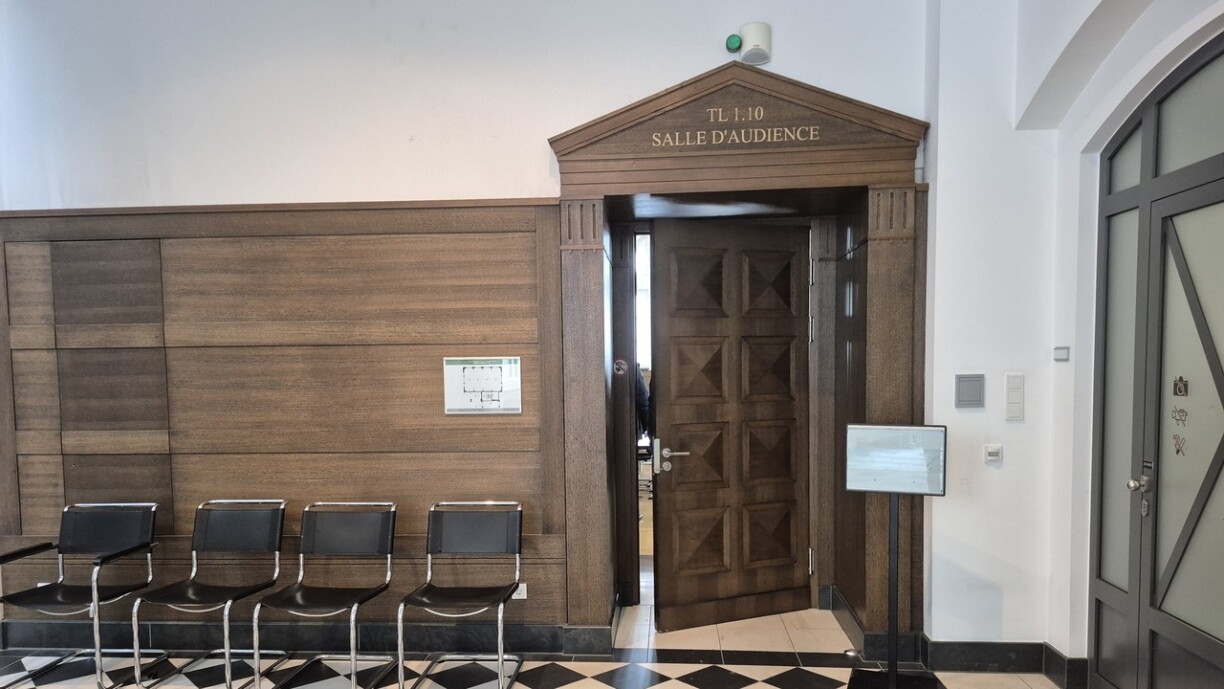
The Luxembourg City court on Wednesday began hearing the case against a 20-year-old man accused of threatening a school shooting at an Esch-sur-Alzette secondary school in 2022.
The defendant, who was 17 at the time of the offences, faces charges for social media threats and maintaining a journal detailing potential attack plans, including intentions to acquire weapons upon turning 18.
During proceedings, the defendant spoke articulately while acknowledging the accusations. "I did some self-reflection and have tried to learn from all of this," he stated, characterising his threats as unrealised "fantasies" stemming from youthful frustration with peers who had provoked him. He admitted his actions were "completely idiotic" and said he understood the resulting reprimand.
The court heard that the defendant remains in psychological treatment and has recently immersed himself in philosophical studies. When questioned by the presiding judge about this pursuit – "Is this where you're looking for your answers?" – he responded, "One has to look into the past to understand the future."
Notably, while police investigation records from 2023 suggested possible racist motivations, courtroom questioning revealed no apparent discriminatory tendencies in the unemployed defendant's current statements.
The court also heard testimony Wednesday from the examining psychiatrist. The psychiatric report aims to assess whether the defendant poses a danger or if he truly had no intention of acting on his mass shooting fantasies.
The psychiatrist argued that it is challenging to name the determining factor that drives someone to commit a school shooting, particularly due to the limited number of cases that would allow experts to compare culprits and potential culprits. While ruling out psychosis, schizophrenia, and narcissistic personality disorder – conditions frequently present in perpetrators – he identified several risk factors: the defendant's public sharing of violent fantasies, admiration for mass shooters, conflict avoidance tendencies, and deeply rooted self-esteem issues stemming from childhood abuse.
"He doesn't like making eye contact with people and doesn't like being among others because he is afraid of being judged by them," the psychiatrist reported, detailing a traumatic upbringing marked by physical violence and constant belittlement from his father. Notably, the evaluation found no history of violent behaviour by the defendant himself.
The expert strongly recommended continued psychological treatment and permanent firearm restrictions, while acknowledging the defendant's proactive steps in seeking help from a school psychologist even while posting the threats.
Prosecutors have requested a two-year prison sentence with potential suspension contingent on mandatory mental health treatment.
The defendant offered a final apology before proceedings concluded and wished all those present a nice day.
The court will deliver its verdict on 22 May.





