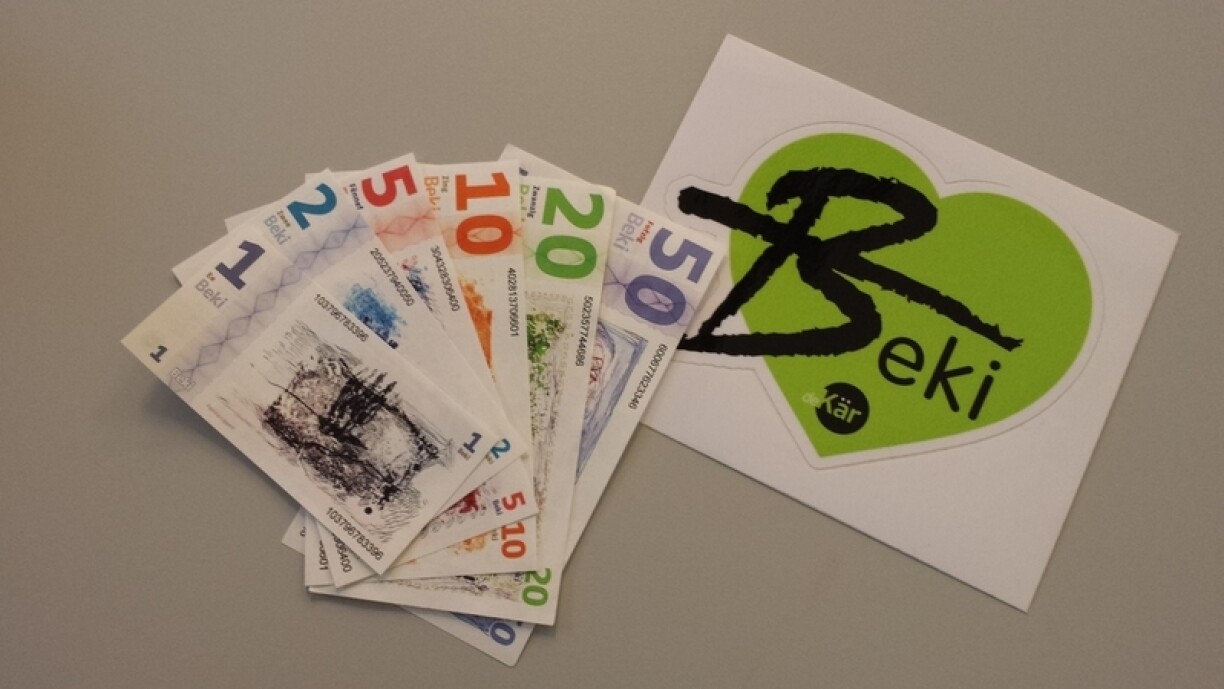
You may have thought that Luxembourg’s funny money is a thing of the past, but currency in Luxembourg does have one peculiarity - the Beki. Let’s have a closer look at this currency currently in use in the Redange canton.
The currency is not that old, all things considered. Beki was first brought into circulation in January 2013 as an initiative thought up by the De Kär association. The association describes the currency as residing on the pillars of “solidarity, innovation, and autonomy.”
The association introduced the local currency for the Redange canton as a means to support the sustainable development of the region. The association believes that by paying in Beki, residents increase the purchasing power of the area, create a cohesive network promoting social cohesion, and create a demand for regional products and services and stimulate that market. The currency also has an environmental purpose in its local emphasis, as purchasing local products would ensure that residents are decreasing the products they buy from abroad.
When purchasing Beki, the exchange rate is €1 for 1 Beki. However, if you purchase 100 Beki, you get an additional 3 Beki for €100. Residents can still use Euros in the area, but the local currency has the added function of inciting residents to think about their own consumption and where their money goes.
De Kär argues that Euros will quickly leave the region, whereas by paying in Beki, this in theory triggers a chain reaction of local purchases. The association claims that Beki will pass by five hands before being converted back into Euros, thus stimulating the local economy. Exchanging Beki back into Euros involves a 5% fee.
Local banks in Redange, Bettborn, and Saeul all convert Euros into Beki for interested customers. The Tourist information office in Useldange (TouristInfo Atert-Wark) also offers Beki and De Kär offer a delivery service of the currency.
According to De Kär, using the local currency places an impetus on businesses to change their habits. The association cites an example in which a resident would purchase goods from a supermarket that imports its produce. If the resident purchases with Beki, then the supermarket cannot pay its supplier with Beki given the fact that Beki converted into Euros incurs a 5% loss. This then in turn encourages the business to offer local products to customers in order to not incur losses.
You can purchase Beki in the form of notes, namely 1,2, 5, 10, 20, and 50 notes. In 2015, the complementary currency became so popular that banks and De Kär ran out of stock for a time.
The Beki currency cannot be dissociated from the late Camille Gira, the former secretary of state and mayor of Beckerich, who died of a heart attack last year. In memory of the dedicated politician, De Kär released limited edition versions of Beki notes commemorating Gira and designed by six different artists.
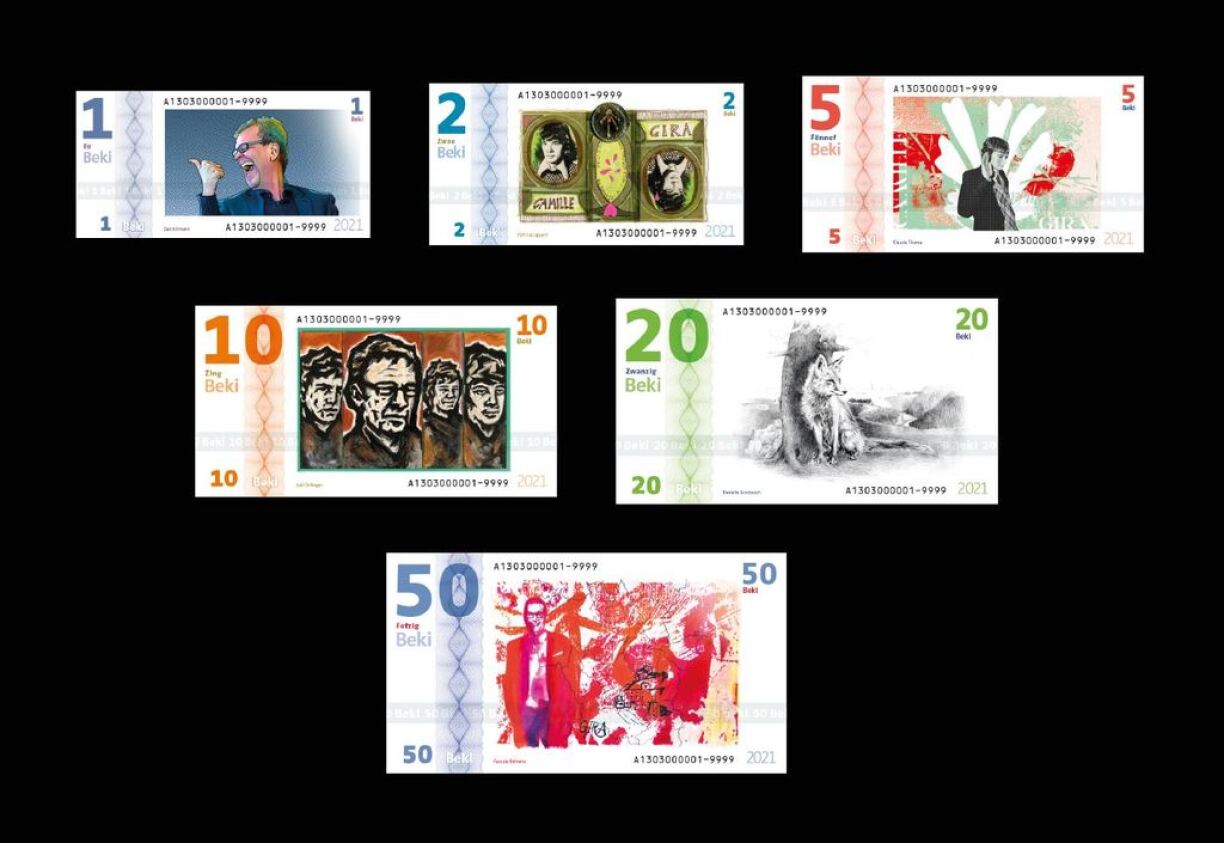
The notes are available for purchase by contacting info@beki.lu and are also on exhibition at the Millegalerie in Beckerich from 23 May to 9 June. The artists who designed the notes are Dan Altmann, Pascale Behrens, Danielle Grosbusch, Patricia Lippert, Joel Rollinger, and Claude Thoma.
Knowledge Bites: ‘Funny money’ - The Luxembourg Franc
Beki.lu - the homepage of the currency (in Luxembourgish and French)





