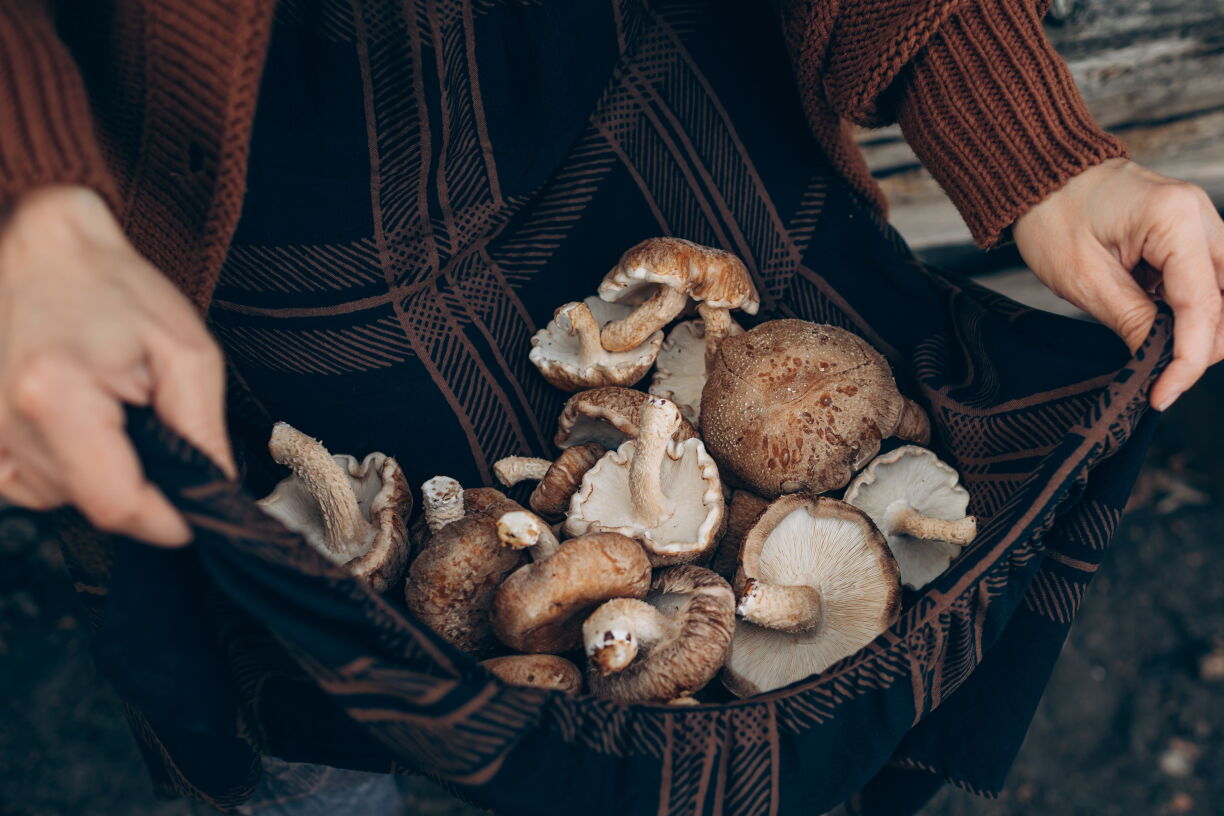
In Steinfort, Claude Petit cultivates unusual varieties of mushrooms such as shiitake, oyster mushrooms, and lion's mane in a state-of-the-art container equipped with cutting-edge technology.


Meanwhile, about 100 kilometres further north at Knapphaff in Knaphoscheid, Daniel Rossler produces hundreds of kilos of organic mushrooms every week. His operation is housed in former pigsties, which have been converted into modern production halls. Despite having two very different approaches and settings, both producers aspire to grow top-quality mushrooms right here in Luxembourg.
Claude Petit's fascination with mushrooms began with a dose of curiosity. During the pandemic, he delved into the science of mushroom cultivation, carrying out his first experiments at home in his cellar.
Today, he grows several varieties in a specially designed container where temperature, humidity, carbon dioxide levels, and air circulation are continuously monitored to ensure optimal development. For Petit, mushrooms are more than just a food product. A mushroom's unique biology is what fascinates him most. Unlike most crops that grow in fields, mushrooms are neither plants nor animals but belong to their own distinct biological kingdom and play a crucial role in natural ecosystems.
Mushroom farming at Knapphaff in the north of the country looks entirely different.
After the pig farming crisis, the business was forced to seek new opportunities. Gradually, former pigsties were converted into modern, insulated production halls, which allowed for perfect mushroom growth conditions. Today, organic mushrooms are grown here under carefully controlled climate conditions. During peak season, the farm can produce up to 1,300 kilograms of mushrooms per week, of which most of the harvest is supplied to wholesalers and the restaurant trade.
Growing mushrooms is far more demanding than it might appear. Even small fluctuations in temperature or humidity can negatively impact both quality and yield. Hygiene is also critical, as fungal cultures are highly sensitive to diseases and other microorganisms. To avoid complications, careful monitoring and daily attention is required.
Whether in a compact high-tech container or large-scale production halls, both producers prioritise fresh, regionally grown mushrooms. Their work proves that there is no single path to successful mushroom farming. Claude Petit focuses on smaller quantities and niche varieties, while Daniel Rossler undertakes large-scale organic production.





