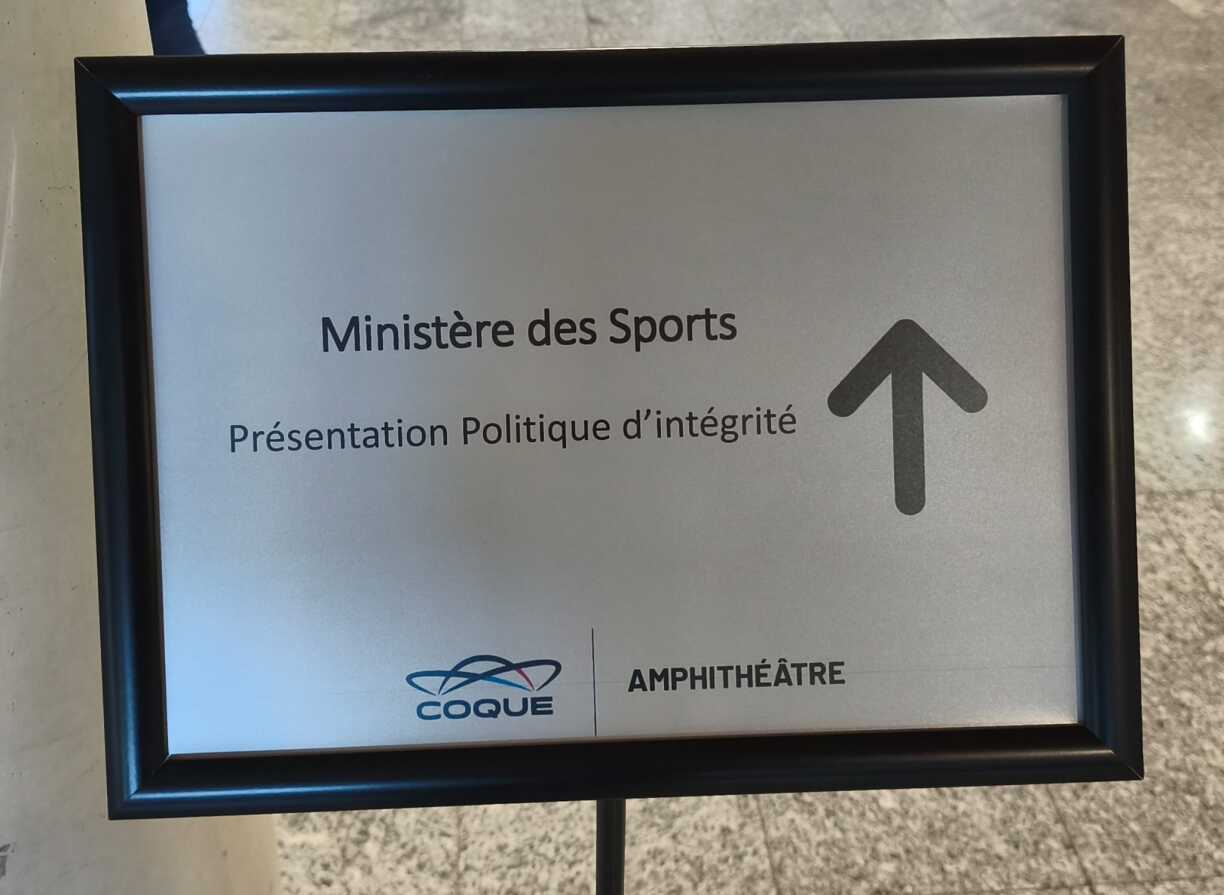
Sports minister Martine Hansen explained that the CNES (National Commission for Ethics in Sport) is based on a joint initiative by the Luxembourg Olympics Committee (COSL), the Ministry of Sport, and the Ministry of Equality between Men and Women and Diversity. While ethics will play a central role, it will also include national integrity policies on safeguarding, anti-doping and the prevention of match-fixing.
Michel Knepper, president of COSL, highlighted the importance of the CNES operating fully independently. It must be represented by people who are not "involved in the day-to-day business" to guarantee neutral and credible work. The CNES project was launched in the last year following discussions around the case of disgraced footballer Gerson Rodrigues, and is currently in its final phase with a view to becoming fully operational in spring 2026.
Safeguarding is to play a particularly vital role in the future, integrated under anti-doping agency ALAD (Agence Luxembourgeoise Antidopage) which will shortly be renamed ALIS (Agence Luxembourgeoise pour l’Integrité dans le Sport). The agency's main mission is to combat doping and match-fixing, but will also operate as the central point of contact for safeguarding.
But what does safeguarding refer to? It is about proactive measures designed to prevent violence, whether psychological, physical or sexual, in sport and to ensure adequate reactions. It means creating a safe and secure environment for all in the sporting world.
An anonymous hotline will be set up for those affected and to guarantee their well-being. It will not only accommodate athletes and players, but also coaches, referees, officials and club members.
The importance and relevance of the agency is underlined by a 2019 study on CASES (Child Abuse in Sport European Statistics), in which 65% of participants said they had experienced emotional violence, while 44% were affected by physical violence. 35% said they were victims of sexual assault, 20% of whom had suffered direct contact.





