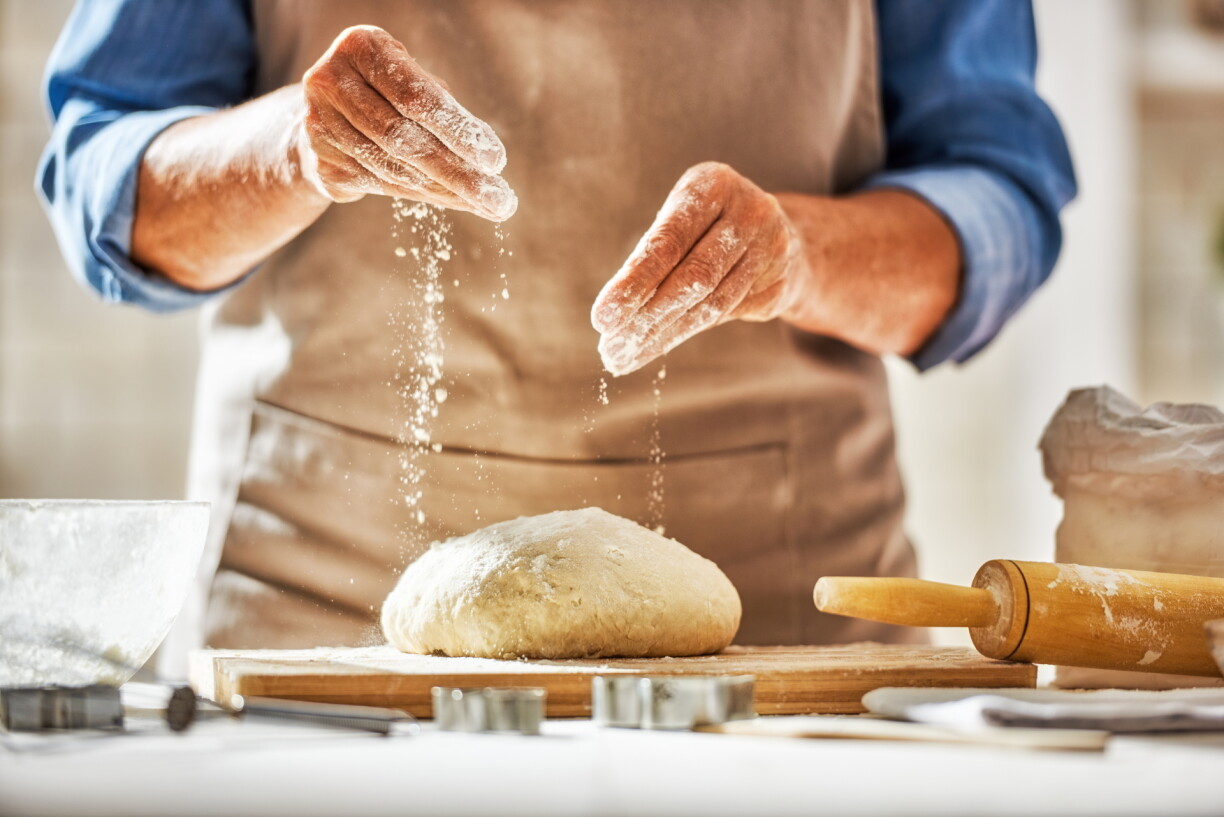
Which flour should I use for my recipe? What is the purpose of wholemeal flour? Which flour should I use to make my home-made bread or pizza? These are questions which may enter your mind when faced with the flour section of your supermarket.
It is important to know that one flour is not the other, and that it is crucial to choose the right flour to ensure that you get the result you want. Indeed, you can’t make good pancake batter, cake or a loaf of bread with the same type of flour. So how do you navigate this powdery conundrum?
First of all, determine the type (T45, T55, etc.) required for your recipe. This information is very often mentioned in the recipe description, and of course on the packaging of the different flours.
This code defines the ash content, i.e. the mineral content of the wheat grain (bran). The lower the ash content, the whiter the flour, the higher the ash content, by contrast, the more whole/integral the flour, as the mineral matter is mainly contained in the bran.
If this basic rule is respected, you can then choose conventional, local or organic flour according to your preferences.
Recently, the new Luxembourg brand LE MOULIN wanted to help consumers find their way around by clearly saying directly on its packaging what type of recipes are associated with each of the flours in their range (pastry, pizza, etc.). Each use is therefore clearly specified on the packaging, thanks to a system of pictograms. You will therefore find a flour dedicated to pizzas, a spelt flour dedicated to home-made breads and even a GASTRONOMY flour dedicated to liquid preparations. This novelty, which is the result of a special sifting process, allows you to make pancake batter, waffle batter or even sauces without any lumps thanks to its fine texture! A real pleasure to cook with, a guaranteed success, and all 100% local!





