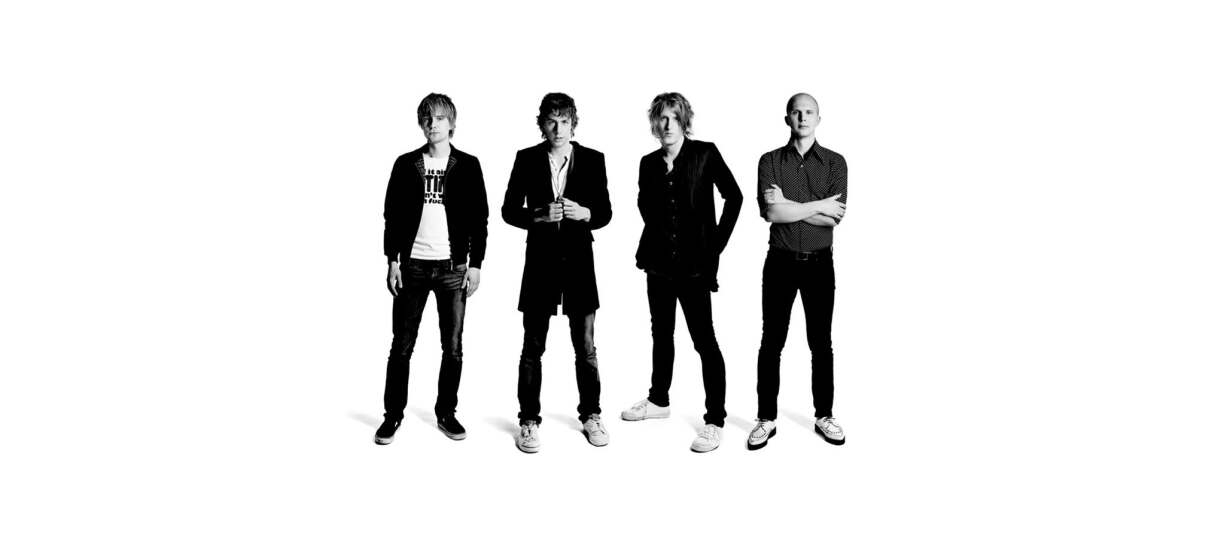
Twenty years after Razorlight's breakthrough self-titled album, Jonny Borrell is looking back without getting stuck in the past. Ahead of the band's Luxembourg show, he talks about rebuilding friendships, the joy of playing live and why he thinks technology is taking something vital away from music.
Jonny Borrell is in a hotel room in Prague, recovering from another night on the road. Outside, it's cold and atmospheric. Inside, after crawling out of the tour bus, the Razorlight frontman is preparing for another soundcheck, another show and another opportunity to prove that his band have plenty left to offer.
Twenty years after the release of Razorlight's self-titled second album, the band are revisiting songs that helped define a particular era of British indie music. Some have remained fixtures in their live shows. Others haven't been performed for almost two decades.
But Borrell isn't especially interested in treating them as museum pieces.
“Songs kind of grow with you,” he tells Stephen 'Steps' Lowe on RTL Today Radio's The Lunchbox. “I always think a song is like a dream.”
Relearning the older material has been surprisingly straightforward. Much of it is still there in the muscle memory, although some arrangements have prompted a little head-scratching. Why did they originally play a particular section six times instead of four? Borrell can't always remember. But that's how the song goes, so that's how they're playing it.
More importantly, he reckons Razorlight are currently performing as well as they ever have.
Borrell has made peace with something that once troubled him: Razorlight are now both a band with a significant musical legacy and a working group making music for an audience in the present.
“In a weird way, Razorlight are kind of two bands at once,” he explains. “We are a heritage act and we are an act that's happening right now.”
There's the enormous audience that remembers the band's commercial heyday, when songs such as Golden Touch, America and In the Morning were everywhere. Then there's a smaller but highly engaged audience following what Razorlight are doing today.
He doesn't see the two as incompatible.
The music, he argues, hasn't fundamentally changed. Popular culture has.
And he's remarkably relaxed about that distinction, provided both audiences leave a Razorlight concert feeling they've experienced something genuine.
The continued affection for the old songs still means a great deal to him. Hearing crowds in different countries singing along, twenty years after the songs were written, is something he describes as extraordinary.
But it's the band's current chemistry that excites him most.
If there's one subject guaranteed to get Borrell going, it's the increasing use of pre-recorded backing tracks at live concerts.
Razorlight, he insists, are a band that actually play their instruments, in real time, without relying on a computer to fill in the gaps.
It might sound like a fairly basic requirement for a rock concert, but Borrell believes it's becoming increasingly unusual.
“If I want to see a band, I want to hear the band. I don't want to hear them playing along to something they've recorded earlier.”
His concern goes beyond artistic principle. He argues that the convenience of backing tracks is reducing opportunities for working musicians, with instrumentalists increasingly replaced by parts played from laptops.
And he believes something less tangible is being lost, too.
A genuinely live performance is never quite the same twice. Songs might be faster one night, slower the next. The musicians respond to one another, the audience changes the atmosphere and unexpected moments become part of the experience.
That's precisely what Borrell wants from a concert.
Far from arguing that musicians should make mistakes for the sake of it. Rather, he wants to preserve the freedom for something spontaneous to happen.
For him, that's the difference between watching a band perform and watching musicians accompany a recording.
And he's clearly prepared to keep arguing the point, whether the rest of the industry agrees with him or not.
Perhaps the most revealing part of the conversation concerns Razorlight drummer Andy Burrows.
The relationship between Borrell and Burrows was once so fractured that the two didn't speak for around eight years.
Borrell describes their personalities as almost comically incompatible. Burrows is diplomatic and measured. Borrell, by his own admission, isn't particularly gifted in either department.
At their lowest point, he says, there was absolutely no trust between them.
Rebuilding that relationship has been a slow process, but one that has meant considerably more to him than simply getting the band back together. “It's a really incredible event in my life, personally, to see that you can rebuild trust with somebody from zero” he says.
It's a striking admission from a musician whose public image has often been defined by confidence, confrontation and the occasional spectacular soundbite.
There's affection there now, too. Borrell is even trying to persuade Burrows to join him in the west of Ireland after the tour to write new songs, although he suspects Christmas and family commitments might scupper the plan.
The fact that he's trying at all says plenty about how far they've come.
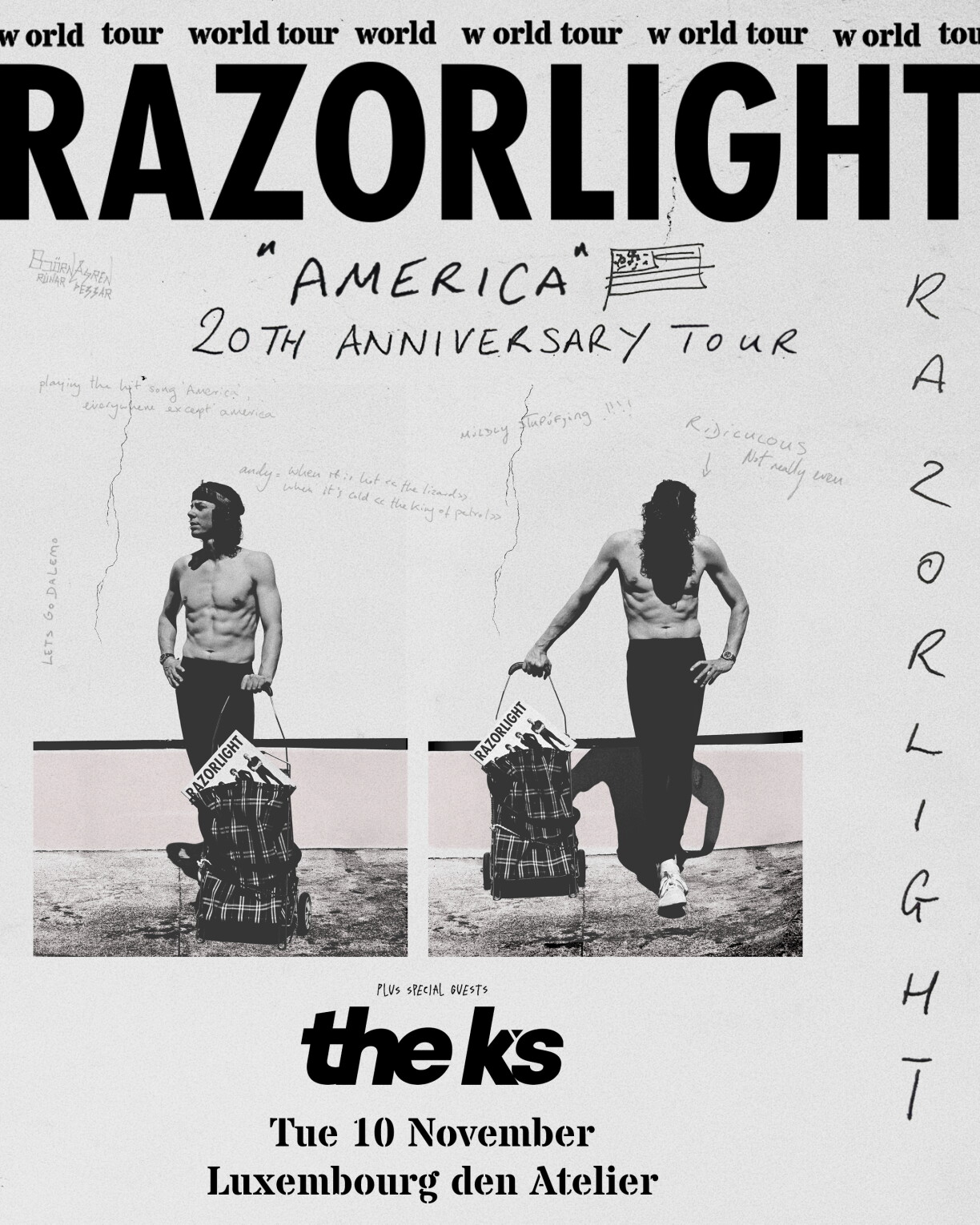
Naturally, the conversation isn't entirely serious.
Asked whether he realised Razorlight were part of something special during the great British guitar-band explosion of the 2000s, Borrell offers a wonderfully ridiculous explanation. Offering that, “every band's name either had a Z or a K in it, so that was how you distinguish between a special band and a non-special band.”
He reels off examples: Kaiser Chiefs, The Zutons, Franz Ferdinand, The Killers and, of course, Razorlight.
It's not the most scientifically rigorous assessment of British musical history, but it does capture something of the extraordinary moment when guitar bands seemed to be everywhere.
Borrell is equally sceptical about the music industry's faith in algorithms.
Record companies, he suggests, spend an enormous amount of time trying to work out how people discover music, grouping listeners according to what they already enjoy and targeting them with similar artists.
But he believes the process is far less predictable.
Sometimes somebody hears a song at a friend's house. Sometimes an older brother recommends a band. Sometimes a track appears unexpectedly on television.
And sometimes a song simply grabs somebody so completely that they immediately want to know who's responsible.
For Borrell, that moment of discovery remains the foundation of everything.
Despite his outspoken opinions, Borrell says he isn't especially interested in making speeches from the stage.
He describes performing as a moment of truth, driven by adrenaline and the immediate connection with the audience. Beyond thanking people for supporting live music, he'd rather let the songs do the talking.
When the conversation turns to politics, he expresses a straightforward preference for peace over national allegiances.
“I'd fly a peace flag before I flew the flag of any country.”
But the subject that really animates him is Razorlight's future.
Asked whether there's unfinished business, his response is immediate and emphatic.
“100%, 100%, 100%, my god, yeah, completely.”
He wants more shows, more opportunities and the chance to introduce Razorlight to another generation of listeners, “show us the stage, we want to play on it.”
It's a fitting statement from somebody who has spent much of the conversation explaining why the stage still matters so much.
Twenty years on, Borrell isn't pretending Razorlight's history doesn't exist. He's proud of it, and increasingly comfortable with the band's place in it.
But there's a difference between celebrating what you've achieved and deciding that's all you're ever going to achieve.
And judging by the mood in that Prague hotel room, Jonny Borrell has no intention of calling it a day just yet.
Listen to the full interview with Jonny Borrell on The Lunchbox with Stephen 'Steps' Lowe, on RTL Today Radio and RTL Play.


