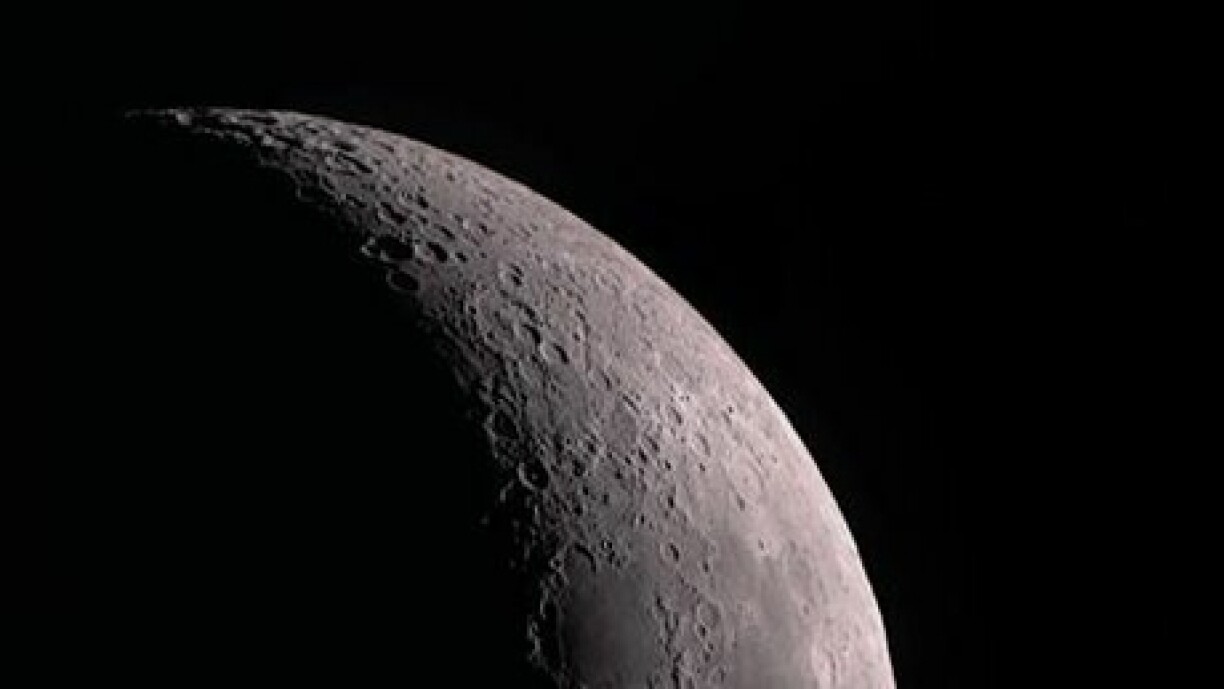
The image shows a Waxing Crescent Moon (31% illuminated) at his highest point throughout the night.
This is the result of 28 different pictures stitched together using a free software called Image Composite Editor (ICE) to form one large image.
The pictures were taken using a Sky-watcher Skyliner 12" telescope and a ZWO ASI224MC planetary camera.
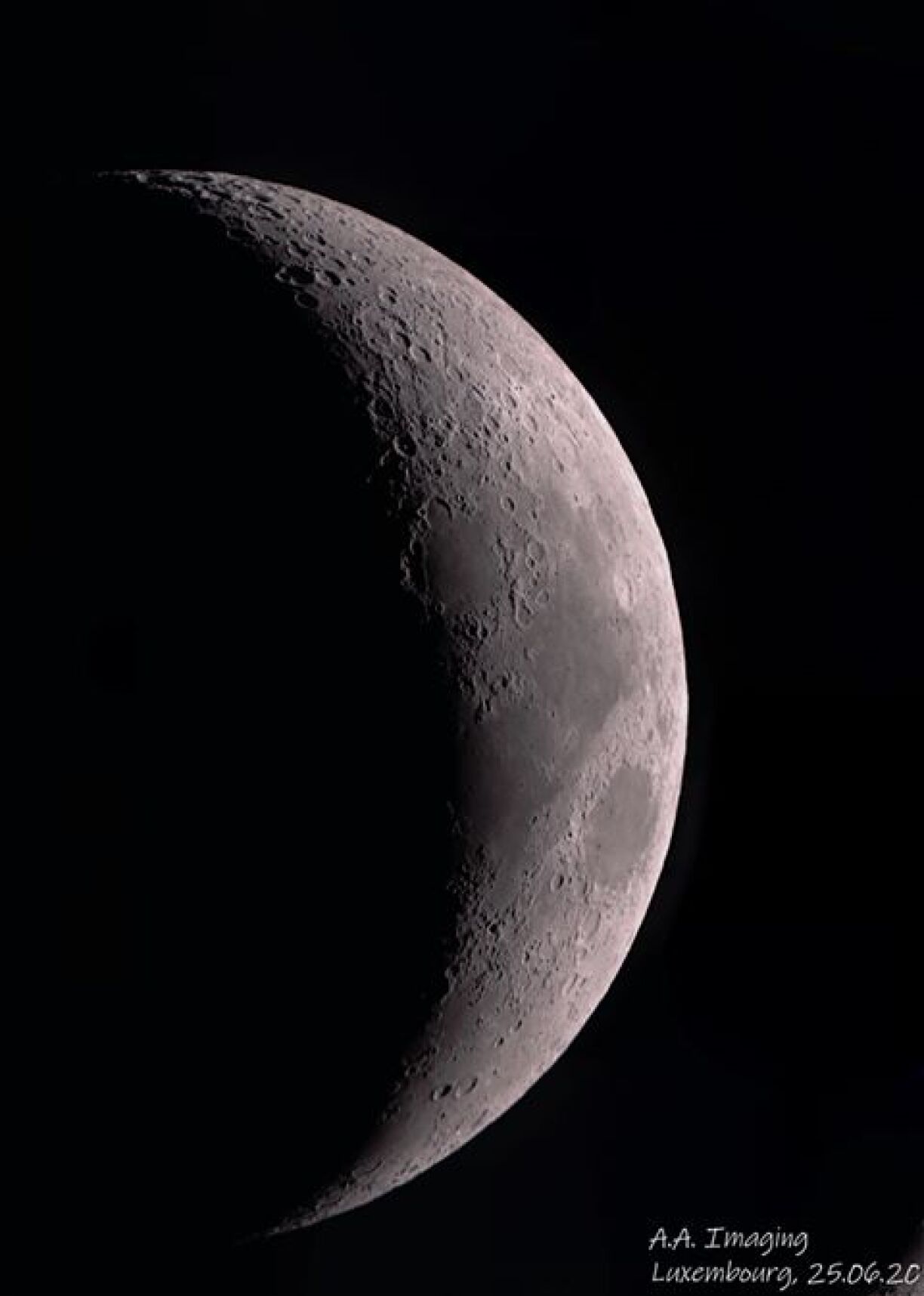
In this picture two of the most famous "Mare" are clearly distinguable: Mare Tranquillitatis (Sea of Tranquillity): Probably the most well-known "Mare", this was chosen as landing site for the first human landing on the Moon, on July 20, 1969. "Houston, Tranquility Base here. The Eagle has landed" were Armostrong first words after a soft landing in the Apollo 11 Lunar Module nicknamed Eagle.
This mare has a diameter of around 870 km and shows light bluish tint relative to the rest of the Moon, likely due to higher metal content in the basaltic soil or rocks.
Mare Crisium (Sea of Crisis): Northeast of Mare Tranquillitatis, lies this 3.9 billion years old Mare, which boasts a diameter of roughly 550 km and an area of 176,000 square kilometres. This Mare was chosen for two Soviet missions: Luna 15 in 1969 wasn't exaclty a succesfull operation as it crash-landed in the Mare Crisium; Luna 24 had better fortune as it safely landed in Mare Crisium in 1976 and returned samples from the lunar surface to Earth.





