This is an opinion article. The views expressed belong to the author.
Not one week of the new year had passed, when the world witnessed what can be considered the third major geopolitical event of the decade, following the 2022 Russian invasion of Ukraine and the 2023 war escalation in Gaza.
In a military operation codenamed Operation Absolute Resolve, the U.S. Armed Forces bombed military infrastructure across Venezuela and then captured Venezuelan dictator Nicolas Maduro and his wife Cilia Flores from their residence in Caracas. Maduro and Flores were subsequently flown to New York City to face criminal charges related to narcoterrorism.
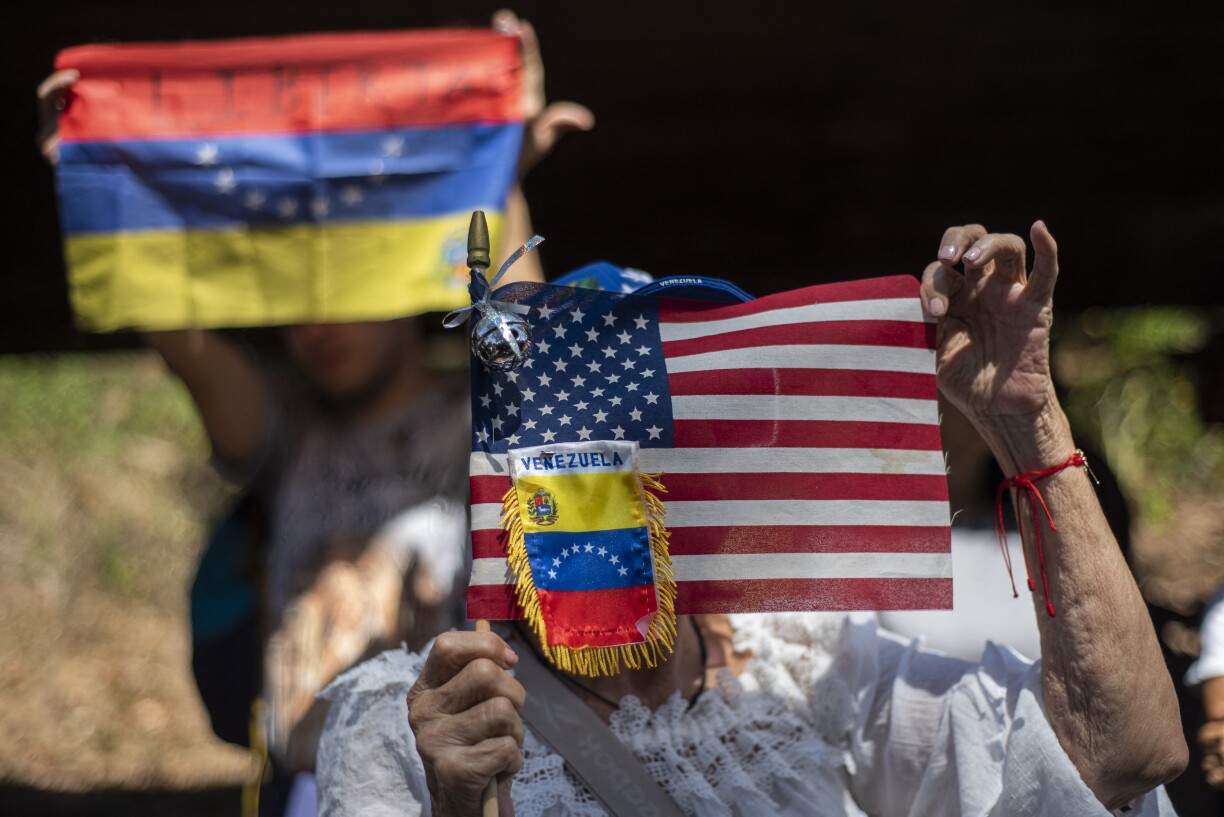
The first to react to Maduro's fall from power were Venezuelans themselves, who celebrated on the streets all around the world. The South American country's collapse since Maduro's predecessor Hugo Chavez took power in 1999 includes systematic human rights violations, hyperinflation, electoral fraud and mass migration. It is calculated that around eight million Venezuelans have left the country in the period, one of the largest international displacement crises in the world according to the UN Refugee Agency.
But after the dust settled, a more disturbing scenario sank in. The invasion of Venezuelan sovereign territory by American troops was a blatant violation of international law, as well as a direct intervention in Latin American political affairs by the United States at a level not seen since the Cold War.
With this, an uncomfortable question arose: can totalitarian regimes invoke international law in their defense, while they commit such humanitarian atrocities at home?
This is the question that lies behind the justified indignation of Venezuelans today. Those who now question the legality of how Maduro was ousted did not raise their voices loud enough in almost three decades of Chavism marked by repression, torture, media censorship and exile. Readers who wish to know more about the humanitarian ordeal Venezuelans had to endure are encouraged to read the 2019 Bachelet Report.
The question of the apparent contradiction between sovereignty and the protection of human rights had already been raised in the past by Uruguayan diplomat Eduardo Rodríguez Larreta, who served as Minister of Foreign Affairs between 1945 and 1947.
In a letter sent to U.S. ambassador William Dawson in 1945, Rodriguez Larreta challenged the sacrosanct principle of non-intervention and promoted parallelism between democracy and peace as an inter-American norm. Later that year, he sent another letter to all American nations, calling for multilateral collective action to sustain democracy and human rights. Non-democracies and violators of human rights were presumed to be a threat to their neighbors and therefore to regional peace.
Tracing its roots to the Peace of Westphalia that ended the Thirty Years' War in 1648, the principle of non-intervention established the foundational concept of sovereign equality among states. Under this principle, borders were to be respected, and internal political arrangements were left to the authority of each ruler, without any interference from foreign powers. Over the following centuries, the non-intervention principle became a sacred norm and a protective shield allowing weaker states to survive alongside stronger ones.
In this context, the three components of Rodriguez Larreta's innovative proposal were: a network of national commitments to democratic governance and human rights, a regional insurance mechanism to respond if those commitments failed, and a requirement that great powers and neighbors alike commit to acting collectively through regional institutions rather than unilaterally.
Rodriguez Larreta had presented his proposal immediately after the end of World War II, while at the same time many Latin American nations were seeing the rise of their own authoritarian regimes such as Somoza in Nicaragua, Trujillo in the Dominican Republic and Peron in Argentina. Aware that governments that abolished democratic institutions could ultimately affect regional peace, he advocated for an international order that could enforce these institutions by collective action and peaceful means.
Ahead of its time, the Larreta Doctrine was ultimately rejected by most American governments and the proposal faded away. However, its intellectual legacy would inspire similar initiatives decades later, such as the 2001 Democratic Charter of the Organization of American States. The Charter was invoked in 2005 against Ecuador, in 2007 against Nicaragua, in 2009 against Honduras and in 2016 against Venezuela. As a result of the latter and citing intervention in its internal affairs amid violent protests that left dozens dead, the government of Nicolas Maduro initiated its withdrawal from the OAS shortly thereafter.
Eight decades have passed since Rodriguez Larreta posed an uncomfortable question about one of the central pillars of international law: whether non-intervention should remain absolute when governments themselves become the primary violators of their citizens' rights. Anyone interested in maintaining the post-World War II rules-based order – or whatever remains of it – should contribute to finding an answer that preserves both national sovereignty and human dignity.
Nicolas Orrico is a Doctor at Law and Social Sciences (JD) from the University of the Republic (Uruguay)





