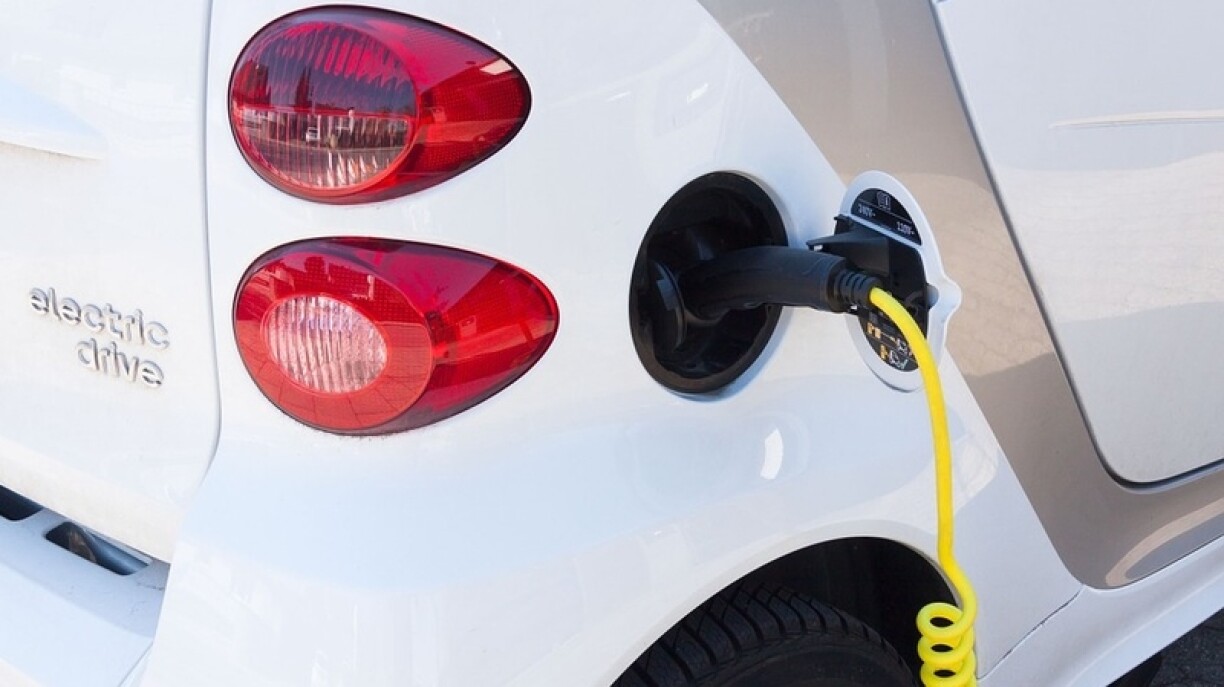
By early October, 100,000 applications for the purchase subsidy had been approved. Automotive market expert Constantin Gall noted that this boom presents a "real dilemma" for manufacturers, as they cannot gauge whether the trend will last.
The Federal Motor Transport Authority (KBA) in Flensburg reported on Monday that just under 88,600 electric passenger cars were newly registered in September. According to the consultancy firm EY, this pushed their market share up by 15.2 percentage points compared to the same month last year, reaching a new record of 34.5%.
New registrations by private buyers saw a particularly sharp increase—rising by 141% in August compared to the previous year. Among corporate buyers, the increase stood at 33%.
The Federal Ministry for the Environment announced that 100,000 applications for the electric car subsidy had been approved between mid-May and early October. Environment Minister Carsten Schneider (SPD) stated: "Every additional electric car makes our country less dependent on expensive oil imports and international conflicts."
Applications for the government electric car subsidy have been accepted since May 19, but the scheme applies retroactively to cars registered since 1 January. The subsidy is primarily aimed at low- and middle-income earners and can range from 1,500 to 6,000 euros, depending on the car model, household size, and income.
Schneider explained that it was particularly important to him that the tiered system based on income actually works: "Finally, households that hadn't even considered it before can afford an electric car. The leasing option helps with this." According to the data, around half of the applicants have an annual household income of no more than €45,000.
"On top of that, small cars from German manufacturers are finally hitting the market", the Environment Minister explained. Automotive market expert Gall expects German carmakers to benefit "more than before" from growth in the electric vehicle market over the coming months, thanks to new entry-level electric models.
In September, hybrid vehicles were even more popular than purely electric cars: according to the KBA (Federal Motor Transport Authority), just under 98,900 new hybrid cars were registered, representing a market share of 38.5%.
By contrast, new registrations of petrol-powered cars fell sharply – by around 29% year-on-year to approximately 44,600 vehicles, leaving them with a market share of 17.4%. The share of diesel cars among new registrations stood at just 9.0%, with around 23,000 vehicles registered – about 20% fewer than in September of the previous year.
Automotive market expert Gall explained that manufacturers face a dilemma, questioning whether it is worth betting on a sustained upward trend for electric cars. In his view, it is "hard to predict" whether customers will return to combustion-engine vehicles once the electric car subsidy ends. He criticized the policy approach: "Incentives on, incentives off, new rules – this makes reliable planning nearly impossible for manufacturers. Anyone investing billions in plants, batteries, and supply chains needs planning certainty spanning years, not just a single subsidy period."
According to a recent survey by the Munich-based Ifo Institute, sentiment in the automotive industry deteriorated sharply in September. Ifo expert Anita Wölfl sees the sector as "still in crisis".





