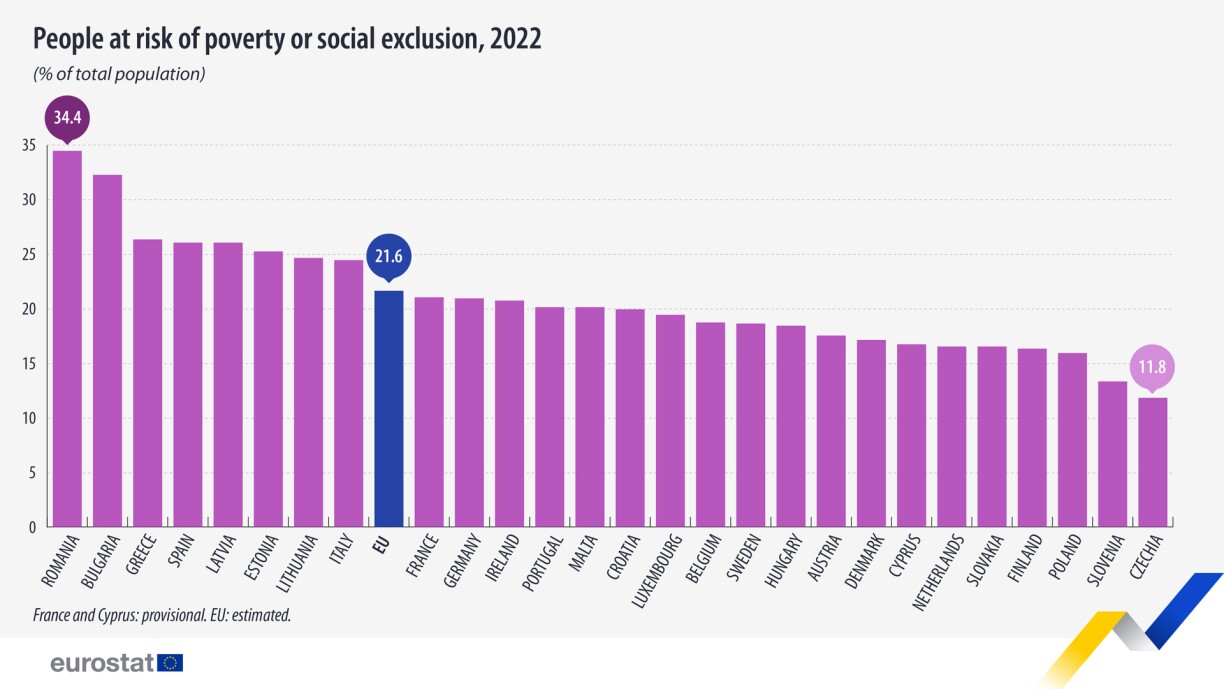
This figure mirrors the data from the previous year, signifying a persistent issue that has remained stubbornly unchanged.
According to the data released by Eurostat, these affected individuals find themselves entangled in one or more of the three recognized risk factors: living in poverty, enduring severe material and social deprivation, or inhabiting households with critically low work intensity.
The statistical portrait painted by Eurostat emanates from a broader investigative study that provides a more detailed analysis of the situation. A summary of the pivotal findings have been presented in this article.
The prevalence of poverty or social exclusion risks varies noticeably across the member states of the European Union.
Romania experienced the highest incidence, with 34% of its population being at risk, closely followed by Bulgaria at 32%. Greece and Spain also revealed significant levels of risk, both standing at 26%.
In contrast, some countries exhibited considerably lower risk levels. The lowest percentage of the population at risk was recorded in Czechia, at a comparatively modest 12%, with Slovenia slightly higher at 13% and Poland at 16%.
Although the Grand Duchy falls below the EU average for poverty risk levels, one in five employees are said to be living below the poverty line in Luxembourg City alone.
Read also: One in five employees are living below the poverty line Read also: Household income rises, but so does the poverty rate Read also: New Statec data on how much Luxembourg residents earn





