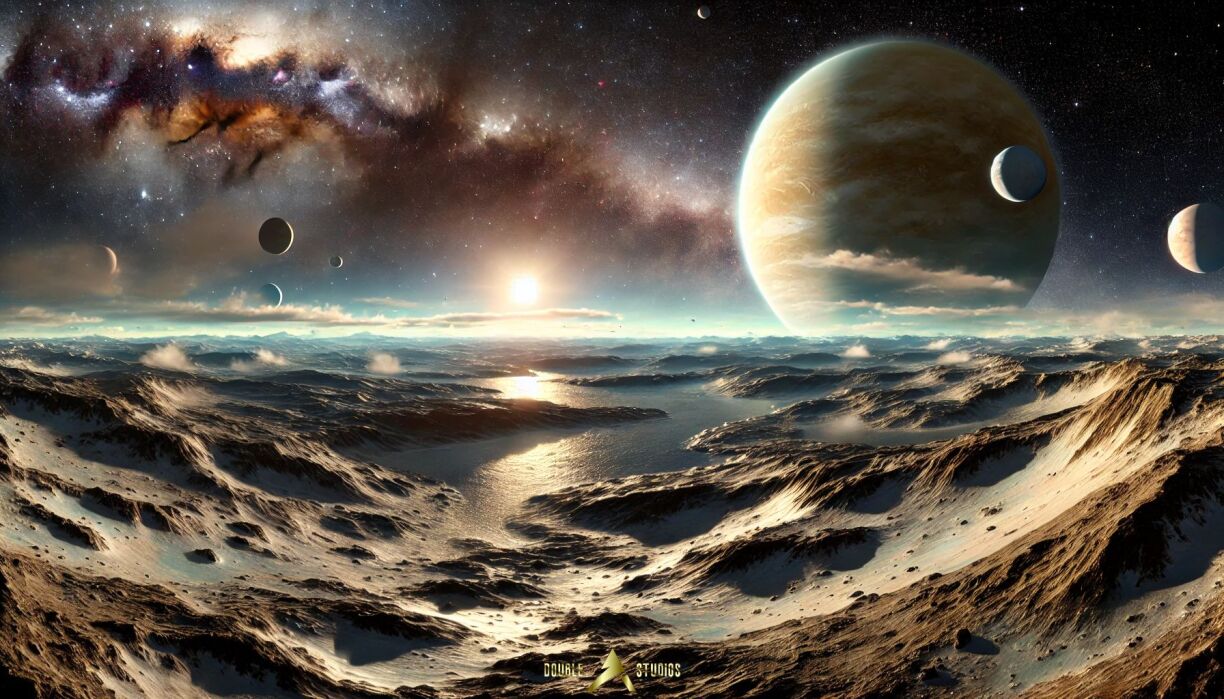
One of humanity's greatest questions, asked since the dawn of time, is whether we are truly alone in the universe. The quest to find life beyond Earth has driven scientific exploration for decades, blending curiosity, technology, and a deeper understanding of what makes a planet – or moon – habitable. From distant exoplanets orbiting other stars to the icy moons of our Solar System, scientists are identifying the most promising candidates where life might be hiding (Mayor & Queloz, 1995). RTL Today contributor Adriano Anfunso dives deeper:
Life as we know it depends on a specific set of conditions: liquid water, a stable climate, essential chemical elements like carbon, and a protective atmosphere. These factors allow complex biological processes to thrive, which is why the search for habitable worlds often focuses on planets and moons with these traits or environments where life could adapt to extreme conditions.
The “Goldilocks Zone,” a term used to describe the habitable region around a star where temperatures are just right
for liquid water, is often the starting point for identifying potentially habitable worlds. However, this concept is not the only criterion. As Dr. Sara Seager of MIT explains, “A planet’s location in the habitable zone is just one piece of the puzzle. Subsurface oceans, geothermal energy, and chemical environments can also create conditions where life could exist” (Seager, 2013).
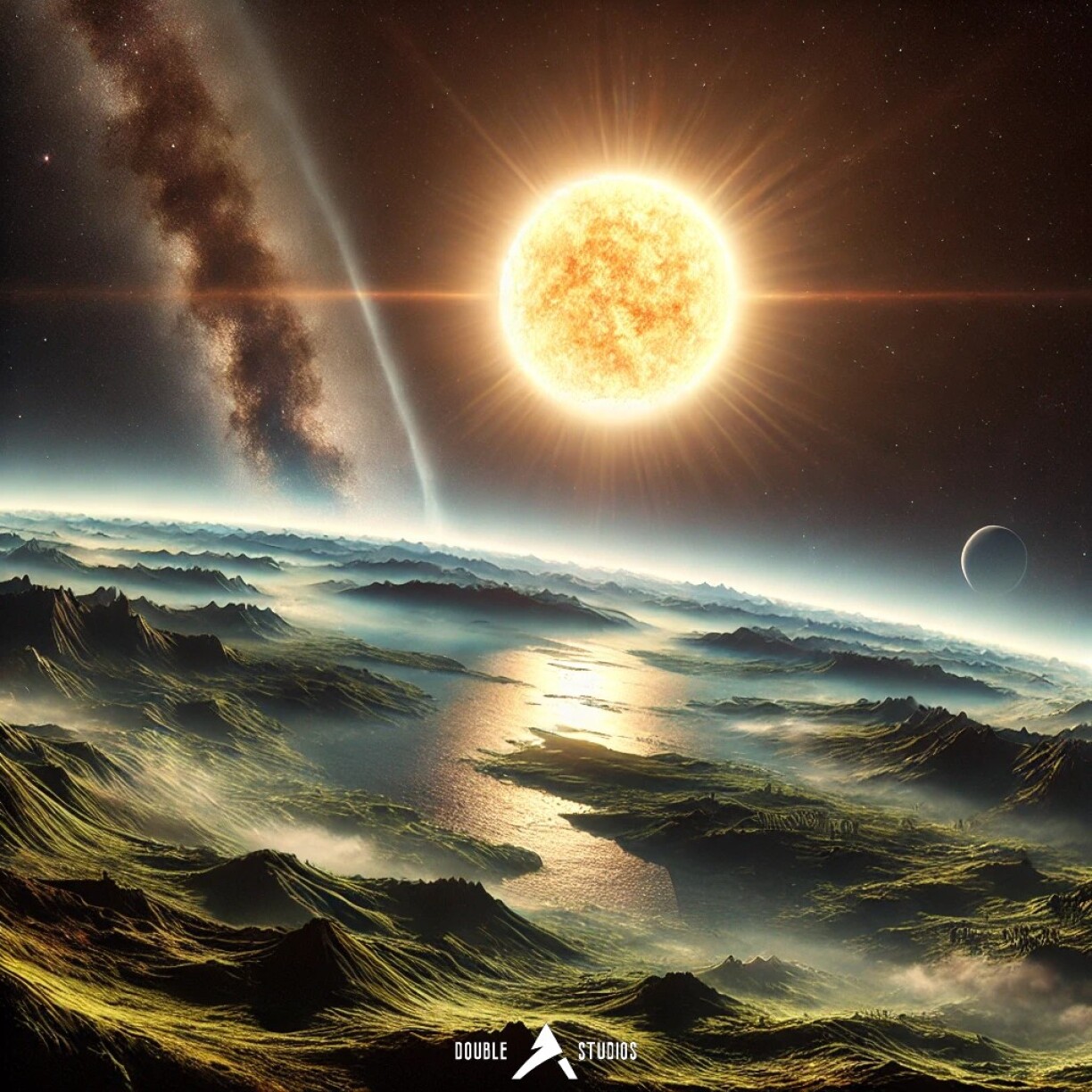
Astronomers have found over 5,600 exoplanets – planets orbiting stars beyond our Solar System – marking a monumental leap in our understanding of the universe. These planets vary widely in size, composition, and distance from their host stars, significantly enhancing the probability of finding one capable of hosting life. Among this expanding catalogue of alien worlds, a select few stand out as particularly intriguing.
Kepler-452b, often referred to as “Earth’s cousin,” orbits a Sun-like star 1,400 light-years away in the Cygnus constellation. Located within its star’s habitable zone, Kepler-452b has conditions where liquid water could theoretically exist. With a diameter 60% larger than Earth, it is likely rocky, though its atmosphere remains a mystery (NASA Exoplanet Archive, 2024).
TRAPPIST-1e, found 39 light-years away in the TRAPPIST-1 system, is an Earth-sized exoplanet that sits in the habitable zone of its ultra-cool dwarf star. Scientists believe it may have water on its surface, and its compact solar system has other intriguing planets with similar potential (Gillon et al., 2017).
While exoplanets grab headlines, some of the most promising environments for life are right here in our Solar System. Moons like Europa, Enceladus, and Titan may host conditions where microbial life could thrive, despite their distance from the Sun.
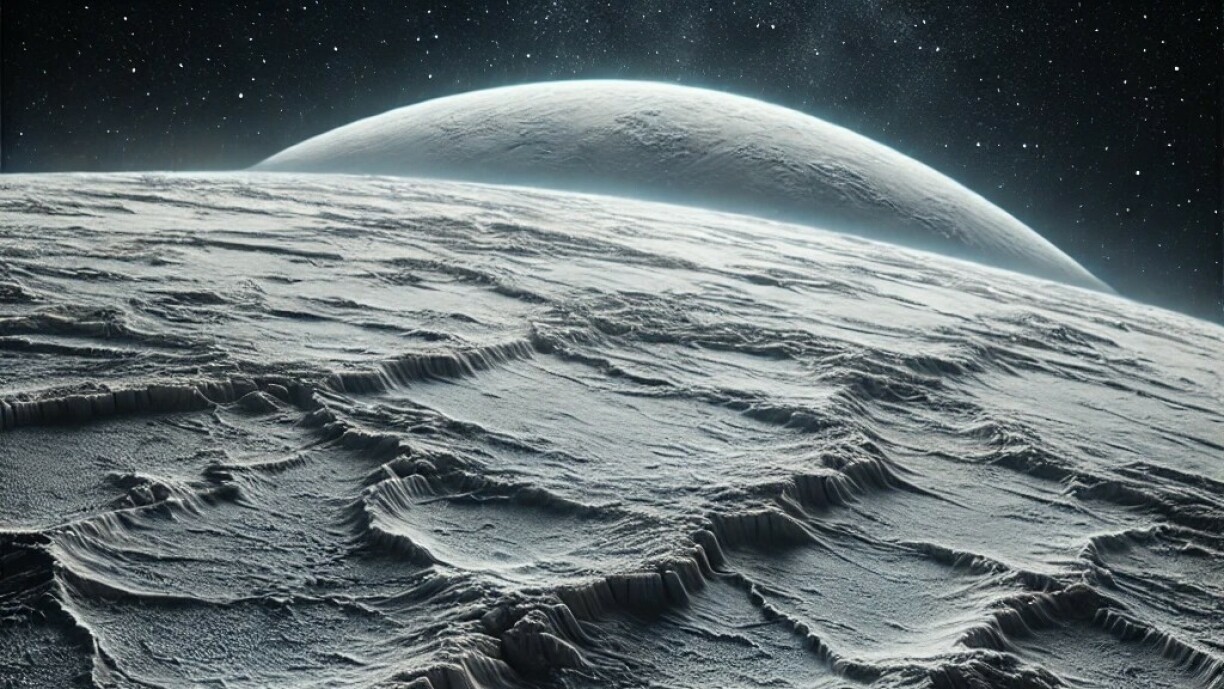
Europa, one of Jupiter’s largest moons, is a prime example. Beneath its thick icy crust lies a vast subsurface ocean, kept warm by tidal forces generated by Jupiter’s immense gravity. Observations from the Hubble Space Telescope have found plumes of water vapor erupting from Europa’s surface, hinting at dynamic activity. If life exists, it might be nestled in hydrothermal vents on the ocean floor, similar to ecosystems found in Earth’s deep seas (NASA, 2024).
Enceladus, one of Saturn’s 146 moon, also conceals a subsurface ocean beneath its frozen surface. During the Cassini mission, organic molecules were detected in water plumes ejected from the moon’s south pole, suggesting the presence of building blocks for life. These findings make Enceladus one of the most intriguing destinations for future exploration (Postberg et al., 2018).
Titan, Saturn’s largest moon, offers a unique environment. With a dense atmosphere and surface lakes of liquid methane and ethane, Titan’s chemistry is vastly different from Earth’s. Yet, scientists speculate that life might adapt to these exotic conditions, potentially using methane as a solvent instead of water (NASA, 2023).
The search for life beyond Earth is entering an exciting new phase, thanks to advanced telescopes and robotic missions. NASA’s James Webb Space Telescope (JWST) is already revolutionizing our understanding of exoplanets. By analysing their atmospheres for signs of oxygen, methane, and water vapor, JWST provides critical data that may show biological activity (JWST Observations, 2023).
Closer to home, NASA’s Europa Clipper mission, set to launch in 2024, will investigate Europa’s surface and subsurface ocean. Using sophisticated instruments, the mission aims to determine whether the moon could support life. Similarly, the Dragonfly mission to Titan, scheduled for the 2030s, will explore its atmosphere and surface to assess its habitability.
Dr. Michel Mayor, who co-discovered the first exoplanet, reflects on the significance of these efforts: “Every discovery brings us closer to understanding the conditions necessary for life. The potential to find even microbial life would redefine our place in the universe” (Mayor & Queloz, 1995).
The search for life beyond Earth isn’t just about science – it’s about perspective. Discovering even the simplest forms of life elsewhere would be one of the most profound moments in human history. It would challenge our understanding of biology, the uniqueness of Earth, and our place in the cosmos.
While we do not yet have definitive evidence of life beyond our planet, each discovery – from distant exoplanets to subsurface oceans – brings us closer to answering the question that has captivated humanity for millennia: Are we alone?
References:
Anglada-Escudé, G., et al. (2016). Proxima Centauri b: A Temperate Rocky Planet Orbiting the Nearest Star. Nature.
Gillon, M., et al. (2017). Seven Temperate Terrestrial Planets Around the Nearby Ultracool Dwarf Star TRAPPIST-1. Nature.
NASA Exoplanet Archive (2024). Kepler-452b Overview.
Postberg, F., et al. (2018). Macromolecular Organic Compounds from Enceladus. Nature.
JWST Observations (2023). Atmospheric Analysis of Exoplanets. Science Advances.
Seager, S. (2013). Exoplanet Habitability and the Search for Life. Annual Review of Astronomy and Astrophysics.





