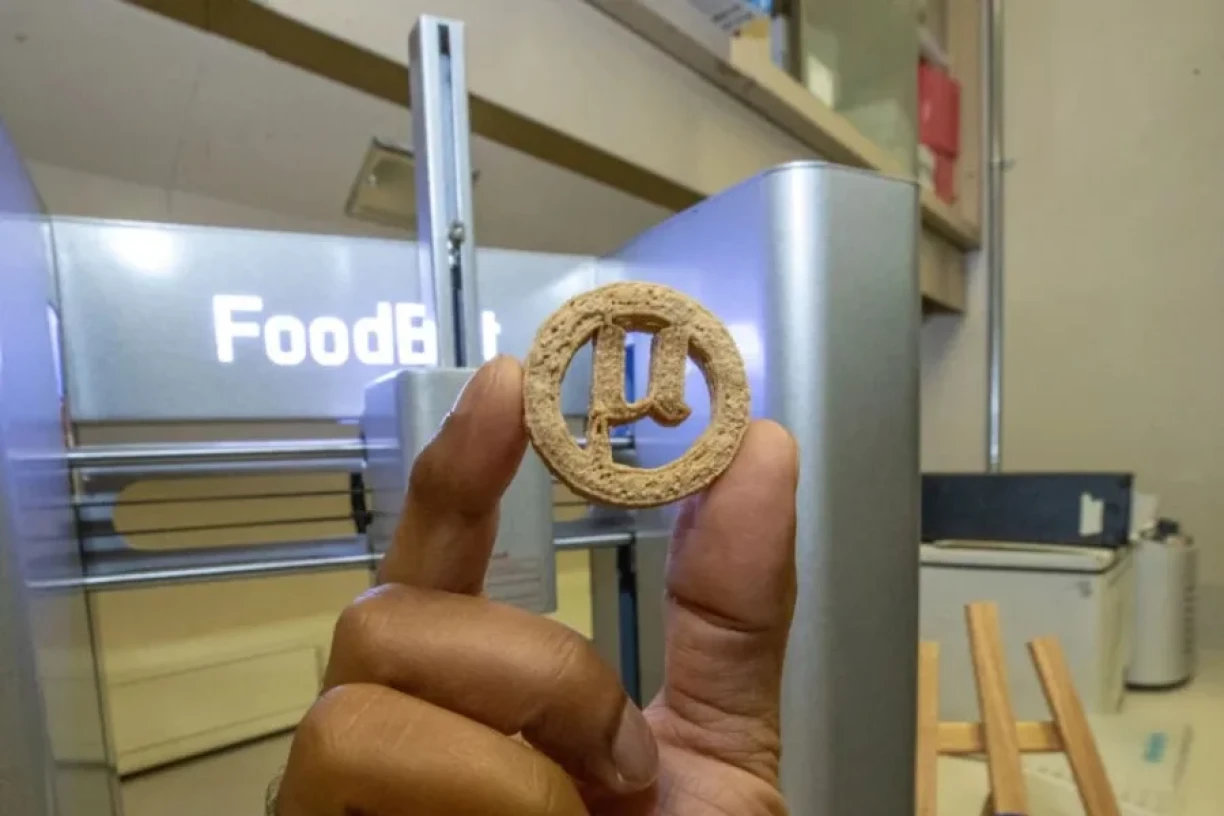
Would you ever consider biting into a biscuit made entirely from plastic waste? While the idea may seem unsettling, a research team at Southern Illinois University in Carbondale (SIUC) has managed to do just that. Using a ground-breaking method, the scientists have transformed discarded plastics and plant matter into edible biscuits, which they have aptly named µBites, short for Microbites.
The American researchers reprogrammed yeast so that it can convert plastics and agricultural waste into edible proteins and flavour molecules. The biscuits are still in the experimental phase, but the work, carried out as part of a NASA-led project, was recently presented at the American Chemical Society (ACS) conference between 23 and 27 August. Even before passing the taste test, the team's creation has already attracted international media attention.
The scientists developed a process called "oxidative hydrothermal dissolution", which breaks down plastic into its fundamental carbon-rich molecules. Unlike traditional recycling, this technology is not just efficient but could also provide vital food sources in disaster zones or on human space missions. The logic is straightforward: both plastics and food are carbon-based, so why not turn one into the other? The most common plastic used is polyethene terephthalate (PET), widely found in drinks bottles, with specially engineered microbes doing the rest.
The production method involves several steps. First, plastic is combined with water and oxygen at high temperatures and pressure, breaking it down into small carbon-rich fragments. These fragments are then fed to genetically modified yeast, which acts as living micro-factories, much like those already used to produce insulin in the pharmaceutical industry. The yeast processes the plastic building blocks into proteins, fats, and other nutrients. The resulting dough, once mixed with fibre, starch, and a little sugar, is then shaped into biscuits using a 3D printer.
The researchers did not leave flavour to chance. One yeast strain creates a vanilla flavour, while another produces beta-carotene, a precursor to vitamin A in the human body. The goal is to make the biscuits not just a survival food, but genuinely palatable and environmentally friendly. So far, however, no one has sampled µBites, as regulatory approval is still pending before human taste tests can begin.
At present, these innovative biscuits are not cheap, costing around $60 per kilogram. The team hopes to reduce this price with improved yeast strains that can generate larger volumes of dough. It may be some time before plastic-derived biscuits appear on supermarket shelves. Until then, we might all need to get used to the idea of eating plastic, at least, in biscuit form.





