In early November, Myriam* and her family returned from a short trip to their Bonnevoie home. They had left their cats with access to the garden via a standard cat flap, unaware it could admit larger animals.
The surprise came on Sunday, 8 November. As the family settled in for the evening, Myriam heard rustling near the pet food. Assuming it was their elderly dog, her partner, Brad*, went to investigate, only to discover a raccoon inside the house. The animal was bold and unafraid, staring down the family as if they were the intruders. Shaking off the initial shock, Brad managed to guide the raccoon down to the garage and opened the street door to give it an exit.
The family soon realised the raccoon had entered through the garden cat flap. "We never imagined a raccoon could squeeze through a standard cat flap," Myriam said, adding that the animal's comfort level made them wonder if it had visited during their absence.
Assuming the raccoon had left, the family returned to the living room. However, a commotion upstairs prompted Myriam and her daughter to investigate. They found the raccoon resting calmly on a bed, watched warily by the cats. Finding the scene strangely endearing, they kept the discovery a secret from Brad until the film ended, with Myriam teasing, “there might be a raccoon upstairs” after having taken a video of it.
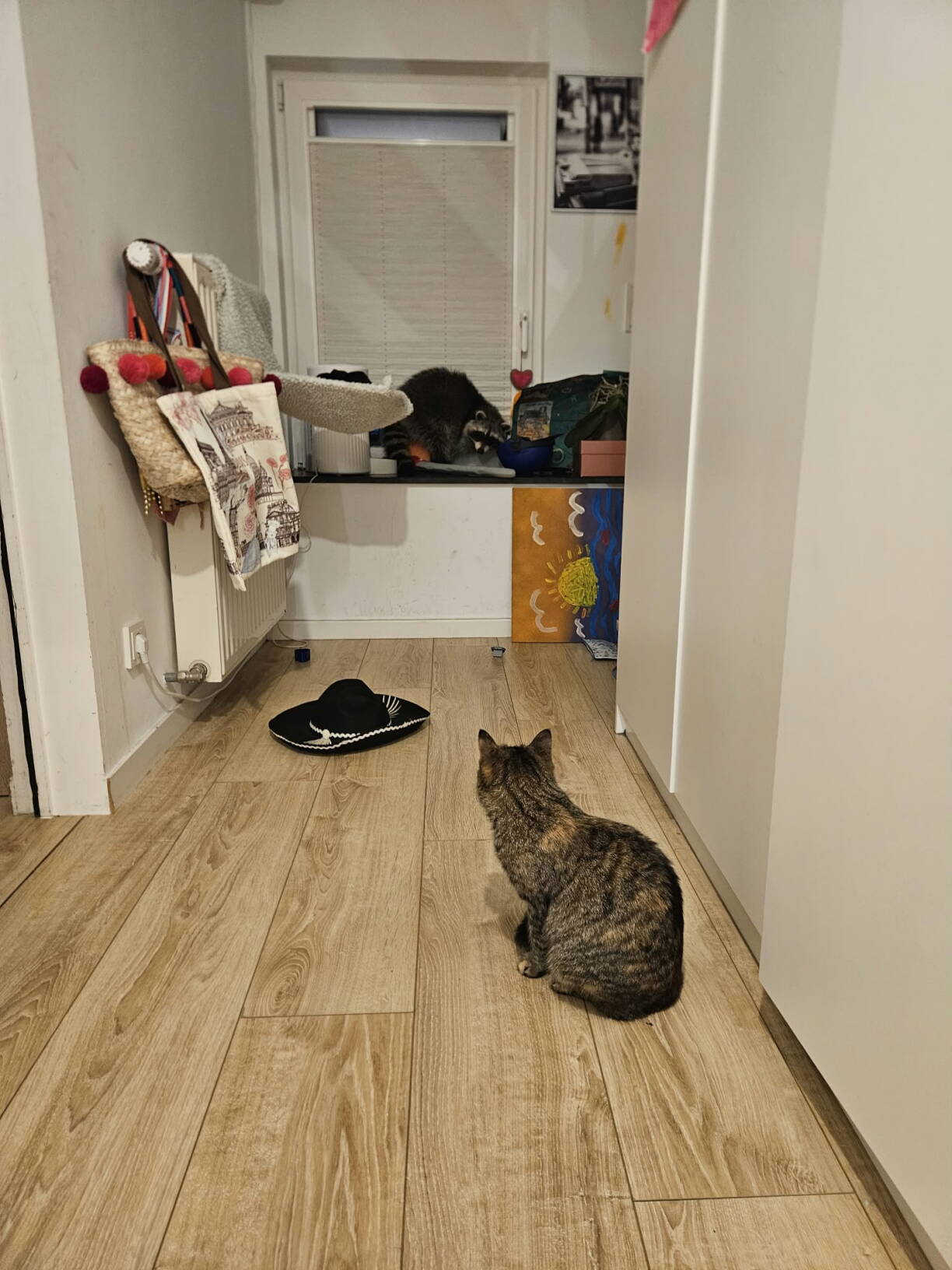
For Brad, however, the situation quickly escalated from amusing to alarming. When he attempted to chase the raccoon out a second time, the animal became aggressive, lunging at him when its exit was blocked. "It was scary. I realised that if I just left it alone, it might go out on its own," Brad said. He eventually coaxed the animal outside using an apple.
Despite the eviction, the raccoon remained determined to stay. In an attempt to let the cats outside while keeping the raccoon out, Brad left the exterior cat flap open but blocked the interior connecting door, leaving a gap only the cats could fit through. The raccoon simply bypassed this by entering the garage, where it tore open food bags in search of a meal.
The family now plans to install a microchip-activated cat flap. The ordeal has taken a toll on Brad, who reported losing two days of sleep and remaining on edge, fearing the raccoon might return and harm the children or pets.
These concerns are justified. The newspaper Land recently reported a tragic incident where a family returned from holiday to find their cat killed by a raccoon that had entered through a similar flap.
While Myriam admitted she was initially charmed by the animal – nicknaming it "Bandit" due to its facial markings – she recognises the danger.
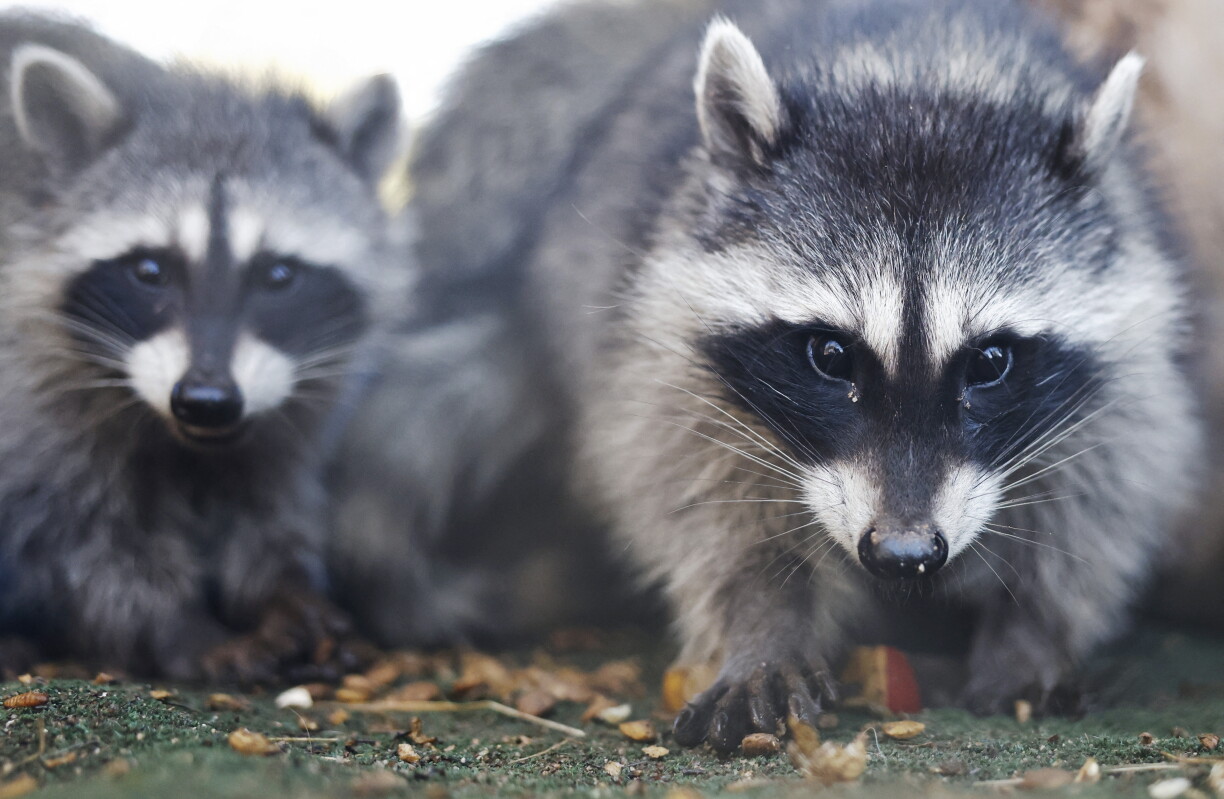
Referring to the recent Land article headlined with a local councillor's quote calling raccoons "right little bastards," Myriam noted the duality of the public's perception.
"Personally, I think they’re absolutely adorable. But that’s the problem. They’re so cute that people underestimate them," she said.
She acknowledged the warnings from acquaintances at the Nature and Forest Agency (ANF) regarding the animals' physical capabilities and disease risks. "They are mini-bears, after all; they’ve got some serious claws and teeth. They’ll surely defend themselves if they feel threatened," she said, noting they are also capable of carrying parasites.
Health authorities warn that raccoons can transmit rabies – a potentially fatal disease – through scratches, bites, or contact with saliva. They also carry raccoon roundworm, a parasite whose eggs can cause severe neurological damage or death in humans if accidentally ingested. Dogs and cats can also act as hosts for the parasite.
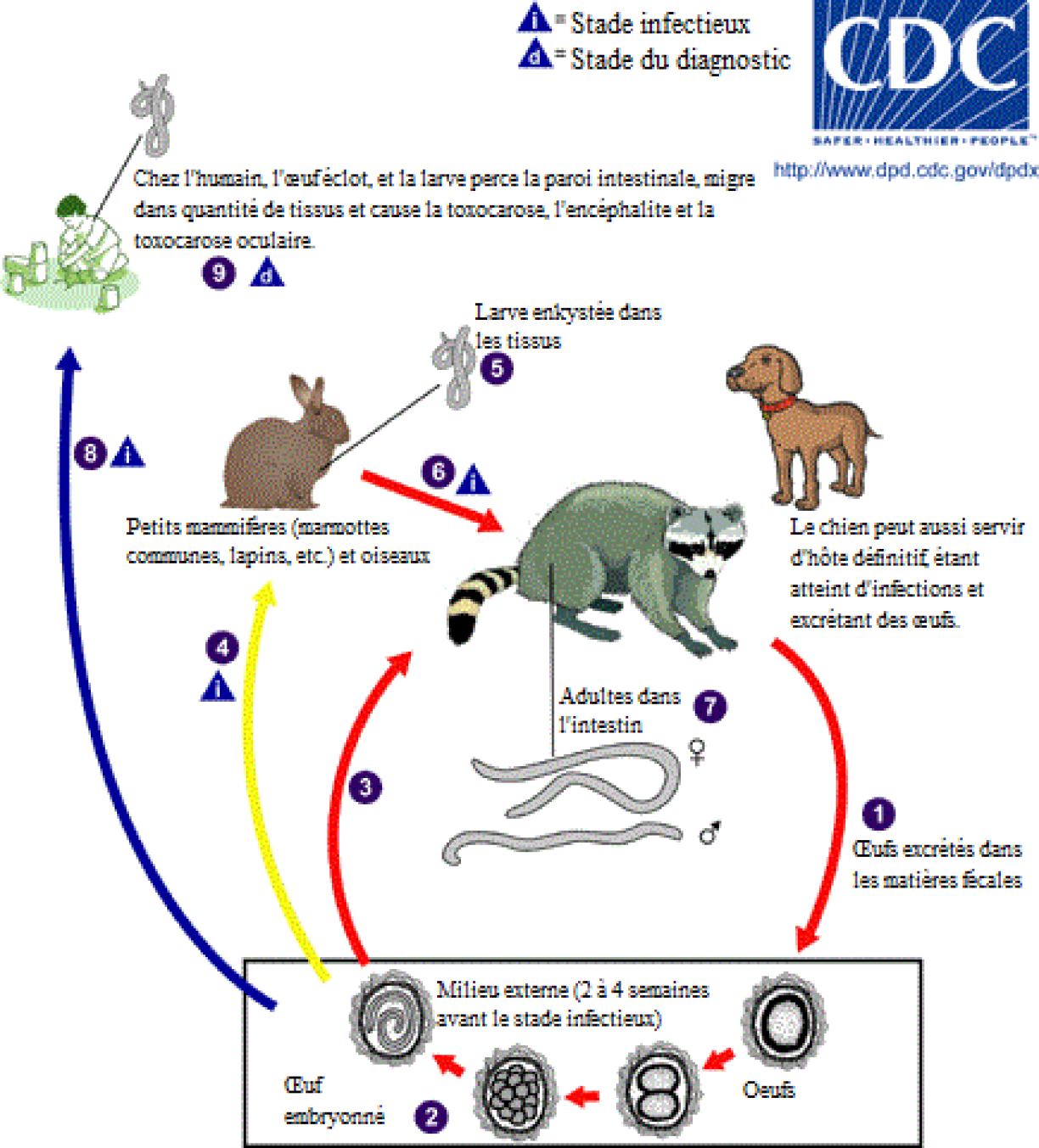
Consequently, national information portals, including Portail.lu, advise keeping raccoons as far from human homes as possible to minimise infection risks.
The Bonnevoie incident is not an isolated case. Raccoons are increasingly common in both the Luxembourgish countryside and urban centers.
The species' presence in Europe dates back to 1934, when they were introduced to Germany by the Nazi regime to supply the fur trade. Following the war, many were released or escaped into the wild. Their spread was further accelerated by US soldiers who kept them as mascots during the occupation. When the soldiers returned home, the raccoons remained.
Raccoons were first recorded in Luxembourg in 1979. The population has grown steadily, leading to the species being classified as game in 2011. Culling figures reflect this surge, rising from approximately 600 animals in 2012 to nearly 2,000 annually today.
As they adapt to urban environments, official intervention policies have shifted. Laurent Schley, head of the Wildlife and Hunting Service at the ANF, recently explained that the agency no longer intervenes directly when raccoons are found on private property.
"In such cases, we do not intervene as an authority. Private individuals must apply for an exemption to trap the animal, which must then be euthanised in a manner appropriate to the species," Schley said.
He noted that total eradication is no longer feasible. "They came to Europe as a result of human activity and are now part of our natural environment. We have to learn to live with them," he stated. Management efforts are now focused on areas where the species has the highest impact on biodiversity, such as protecting the eggs of rare birds or preventing the wipeout of amphibian populations during migration.
However, as urban expansion continues, coexistence between humans and raccoons remains a growing challenge.
*First names have been changed.


