September is the time of year when summer finally begins to surrender the sky and darkness once again takes the lead over Luxembourg. After months of persistent twilight and short nights, it is finally time to look up at the stars again.
In Luxembourg, this seasonal shift is easy to see on the clock: astronomical night begins at around 10.17pm on 1 September, but shortly after 9pm by the end of the month. That is more than an hour of darkness reclaimed in just four weeks.
The month also offers some of the year’s best conditions for stargazing in Luxembourg. Temperatures are generally still comfortable, and there is a good chance of clear nights before autumn rain and fog become more frequent.
Here is what to look for in the night sky this month.
September begins with a close encounter between the brilliant planet Venus and Spica, the brightest star in the constellation Virgo. On 2 and 3 September, the pair will lie roughly 1.5 degrees apart, very low in the west-south-west and will look almost mystical through binoculars in the twilight.
The Moon reaches Last Quarter on 4 September and withdraws from the evening sky, leaving excellent conditions for the month’s most interesting meteor activity: the September Epsilon Perseids, active approximately from 5 to 21 September and expected to peak on the evening of 9 September.
This is a minor shower with relatively low activity, but it may still produce a few visible meteors, especially under the darker skies of the Éislek region. The almost moonless night of 9 to 10 September represents one of the month’s best opportunities to spot one. All that is needed is a blanket or a reclining chair, a warm drink and some patience.
The new Moon falls on 11 September, opening the clearest dark-sky window of the month. These are the best nights to leave the town behind and head north, where the darker skies of the Éislek reveal far more than just the brightest stars.
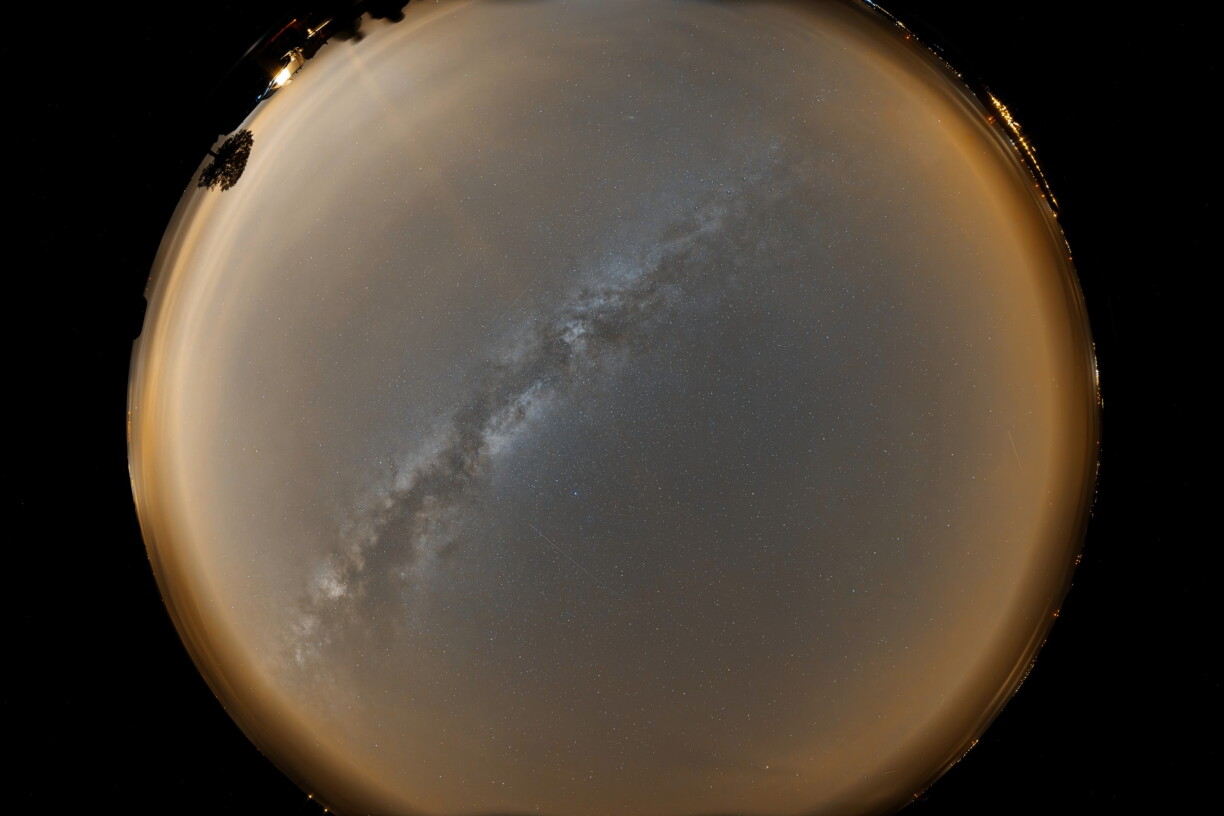
It is also the best time to observe or photograph the Milky Way; the Summer Triangle, formed by Vega, Altairm, and Deneb, is now prominent and difficult to miss, providing an excellent guide to finding the Milky Way as it crosses this part of the sky. The Andromeda Galaxy is perhaps September’s finest binocular target: under a clear, dark sky in northern Luxembourg, it may even be visible to the naked eye as a faint, hazy patch. A telescope reveals further deep-sky highlights, including the Ring Nebula in Lyra and the globular cluster M13 in Hercules.
On 14 September, a thin crescent Moon joins Venus in the evening twilight, forming a striking pair at around 8pm: it is one of those simple celestial sights that can turn an ordinary Monday evening into something special. No equipment is needed, and the pairing makes a natural target for a smartphone or camera.
The Moon then reaches First Quarter on 18 September, bringing brighter evenings back but also providing one of the month’s best opportunities for lunar observation and photography.
The astronomical turning point comes on 23 September, when the Sun crosses the celestial equator southwards and astronomical autumn begins in the Northern Hemisphere. From this point, darkness arrives early enough for an evening telescope session, while the air can still be mild enough to stay outside comfortably.
Saturn is the month’s outstanding telescopic planet, rising earlier each night and comfortably placed by late evening during the final week. Its opposition follows on 4 October, so its prime season has already begun. Even a modest telescope will reveal the rings, although they remain relatively narrow compared with other years.
The month closes with another magnificent pairing on 30 September, when the bright waning gibbous Moon rises beside the Pleiades. The pair will be low in the east and lunar glare will hide the cluster’s fainter stars, but binoculars should fit both in the same field.
September begins with summer overhead and ends with winter rising in the east. In between, the balance changes almost night by night.
The night has returned.





