This involvement in beekeeping reflects Luxembourg's commitment to sustainable farming and biodiversity preservation, albeit on a smaller scale.
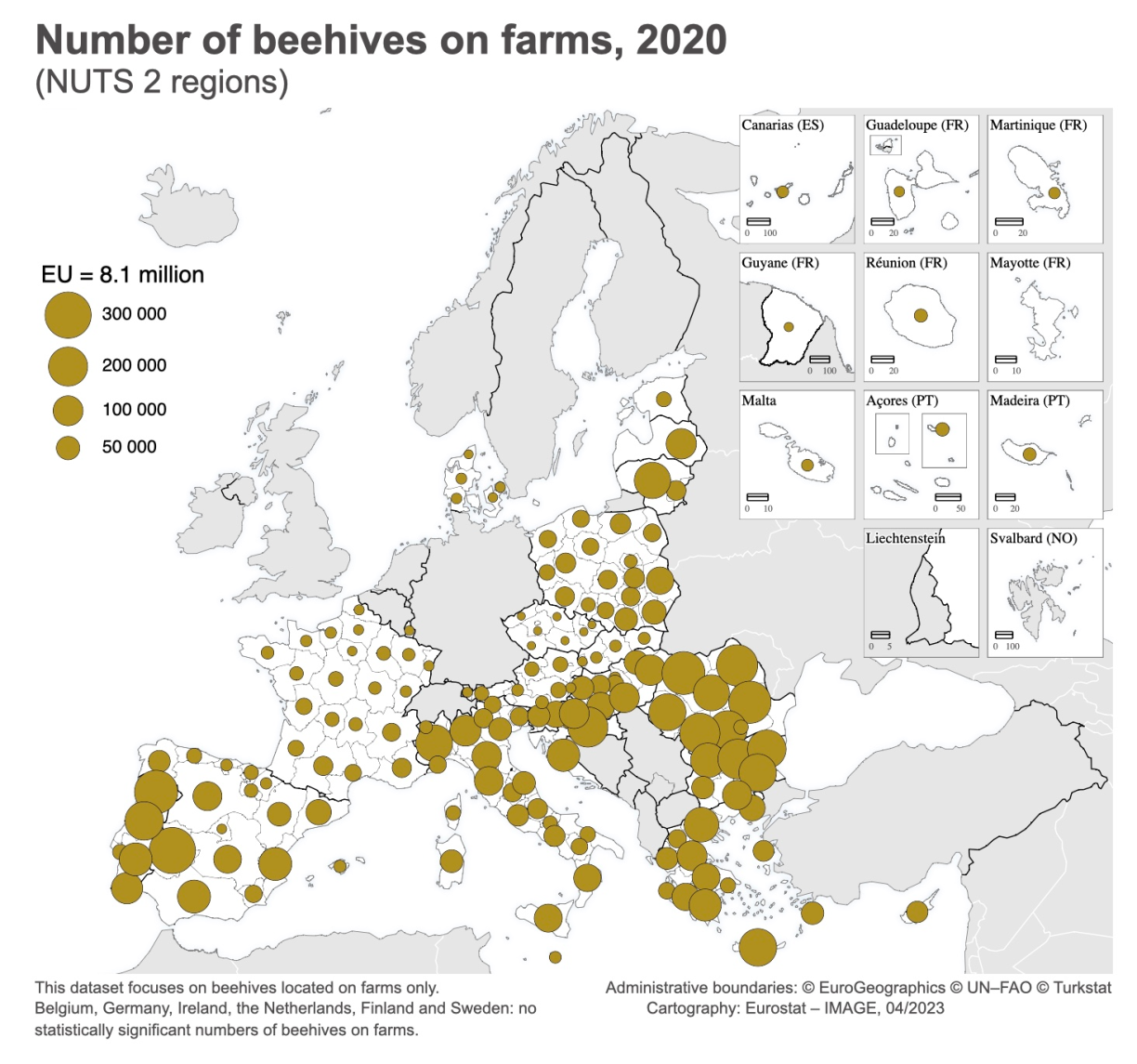
The European Commission recently highlighted the importance of pollinators in agriculture and the fight against biodiversity loss, responding to the European Citizens' Initiative (ECI) ‘Save bees and farmers!’. The Agricultural Census reported 8.1 million beehives on EU farms in 2020, with Romania leading the EU with 1.5 million hives.
Bees, essential to food production and biodiversity, are kept throughout the EU, pollinating a wide range of crops in both warmer and colder climates. The Spanish region of Extremadura has the highest number of beehives on farms in any one region, with 300,220 hives.
The Commission's response to the ECI underscores the priority of adopting and implementing proposals on the sustainable use of pesticides and the restoration of nature. This is seen as a crucial step in ensuring the EU’s food security and combating biodiversity losses.





