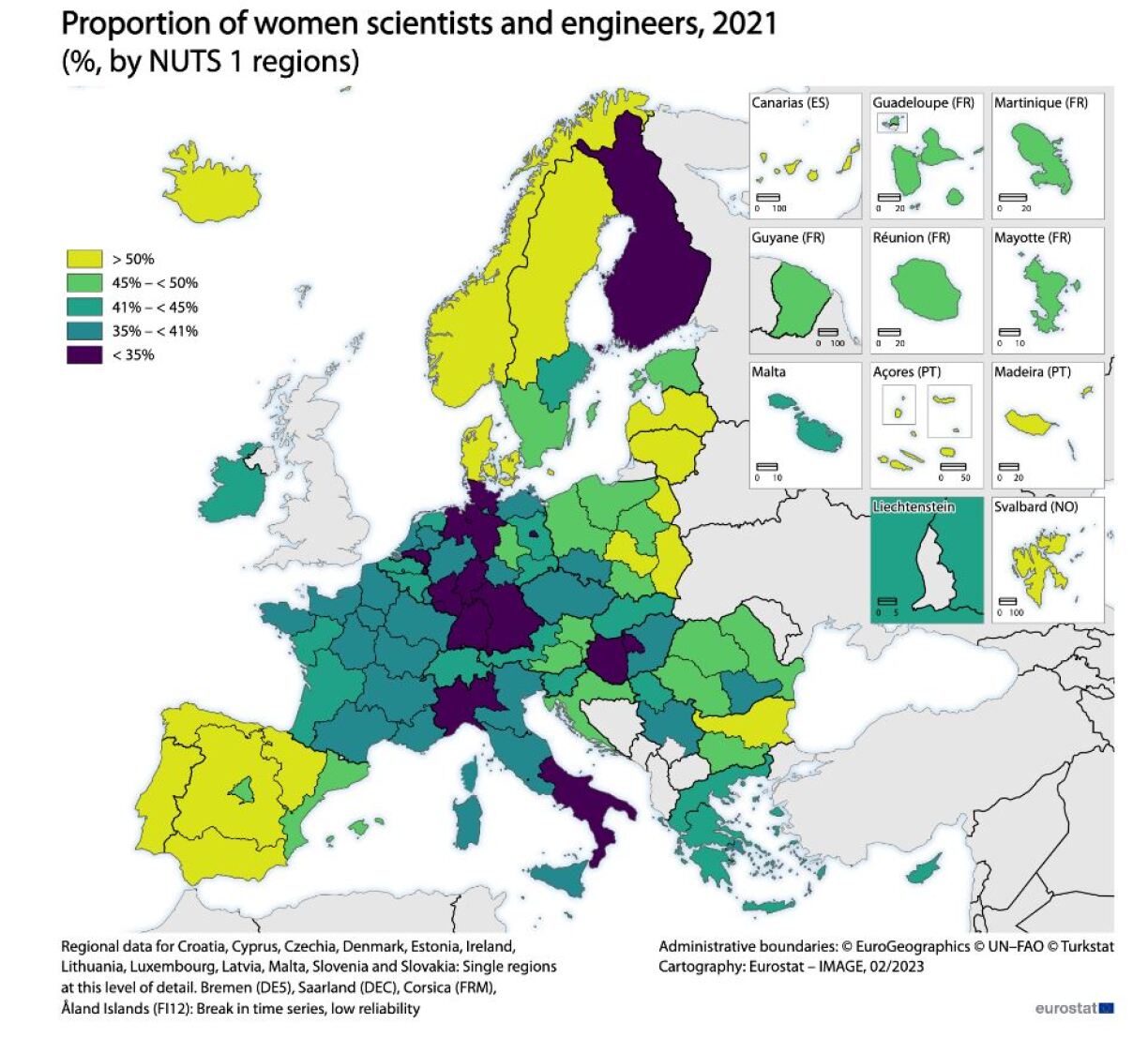
The data set, released as part of the UN's International Women and Girls in Science Day on 11 February, showed that the European Union boasted 6.9 million female scientists and engineers in 2021, up by 369,800 from 2020. But science in some countries, including Luxembourg, is still overwhelmingly male-dominated.
Within the EU, women are underrepresented in all sectors of the statistical classification of economic activities, with a higher gender balance seen in the services sector.
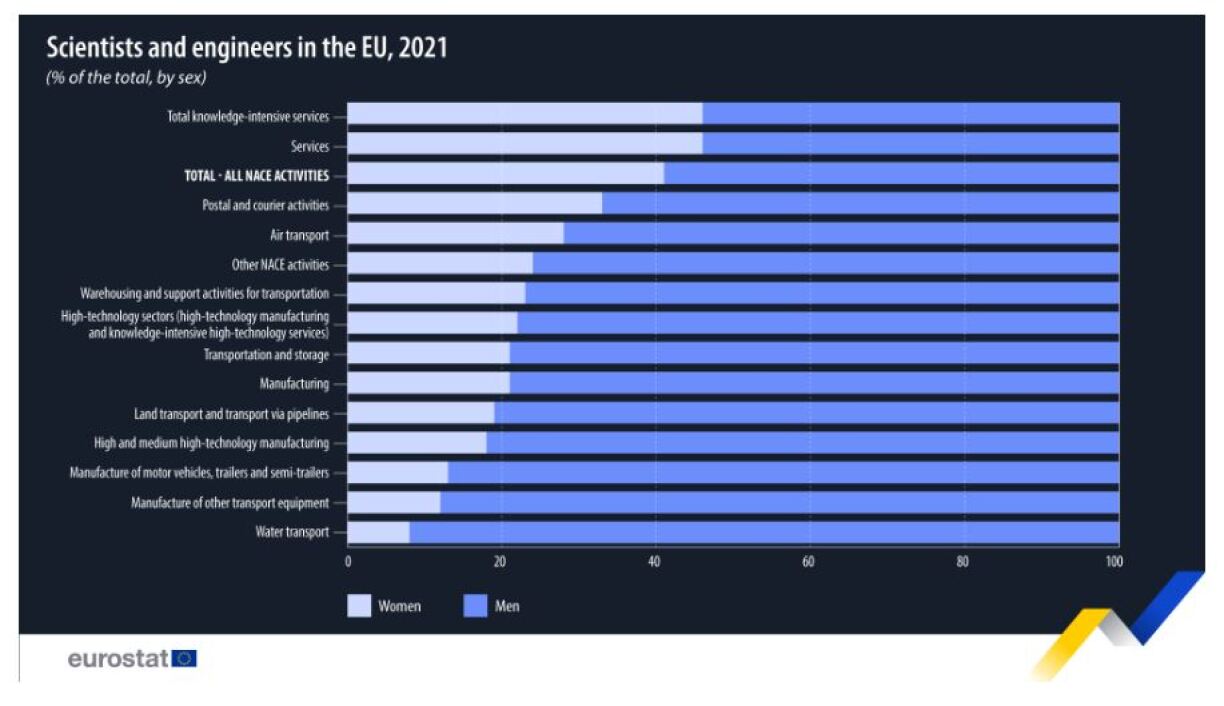
A detailed breakdown shows that women represented 46% of engineers and scientists in KIS (knowledge-intensive services), with 22% in high-tech sectors and just 18% in high and medium-technology manufacturing.
Figures don't only vary by sector, but also by EU member state. In 2021, the Grand Duchy had one of the lowest shares in the EU, with only 35% of scientists and engineers in Luxembourg identifying as female.
Only four member states fared worse than Luxembourg: Germany and Italy (both 34%), Hungary (33%) and Finland (31%). The highest share in 2021 went to Lithuania where a whopping 52% of the science and engineering workforce is female.
The NUTS classification (Nomenclature of territorial units for statistics) of major socio-economic regions showed that female scientists and engineers represented the majority in 14 regions of the EU. This female-majority was noted in four regions of Spain, three regions in Portugal, one region each in Bulgaria, Sweden, Lithuania, Latvia and Denmark.
The NUTS1 data set also identified the regions with the lowest share of female scientists and engineers. Those regions were Baden-Württemberg and Bayern in Germany, Manner-Suomi in Finland and Közép-Magyarország in Hungary.
RTL Today's very own Lisa Burke recently welcomed not one, not two but seven guests to the studio to discuss women and girls in science. The group discussed the under-representation of girls and women in the field, as well as other issues facing female scientists like shorter careers, the gender pay gap and under-representation in scientific journals.
You can watch the full episode of The Lisa Burke Show here on RTL Play or listen in via the player below!
"Innovate. Demonstrate. Elevate. Advance." says the UN as it launches its 8th year for Women in Science.





