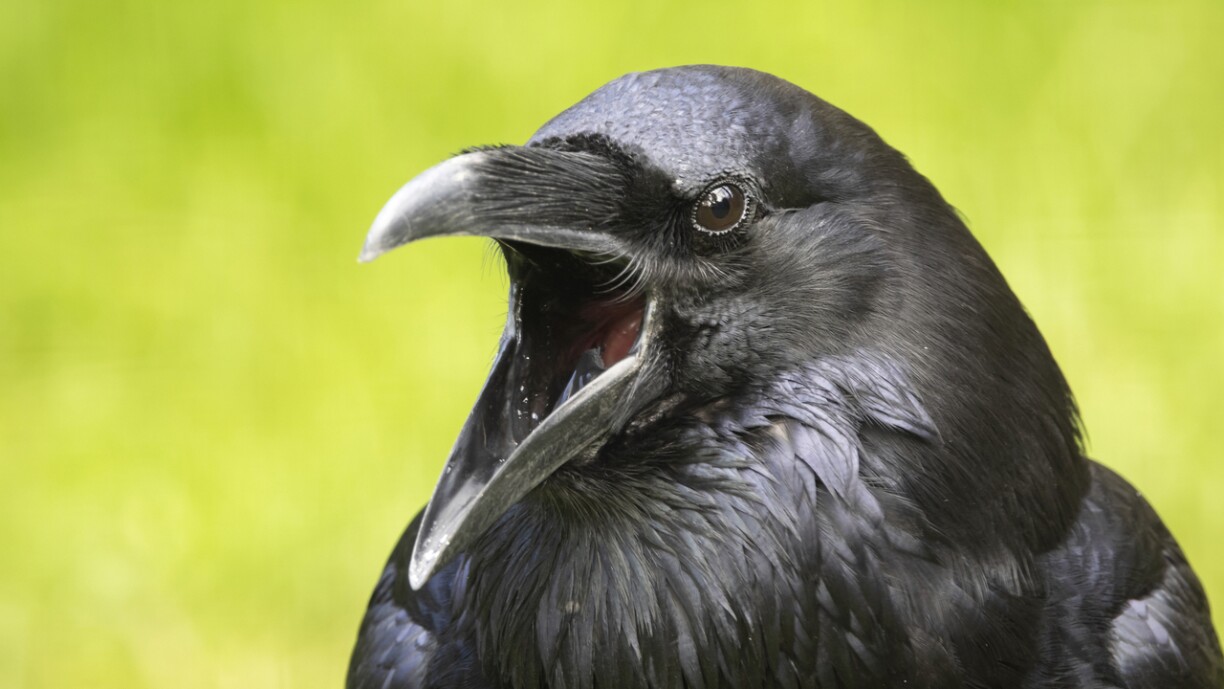
Rooks, known for their intelligence and social nature, are a common sight in Luxembourg City. However, their noisy cawing and droppings, particularly near breeding sites, have made them a source of frustration for some residents.
As a protected species, rooks cannot be easily removed, prompting the municipality to develop a comprehensive management plan to address the challenges they pose.
The 150-page "rook management concept" outlines specific areas where the birds are tolerated and others where they are not. The plan provides detailed insights into rook populations in the capital, including the number of nests, inhabitants, and even eggs, as well as their preferred locations, such as certain trees and crossroads.
Thanks to the implementation of the plan, several previously critical areas are now free of rooks. For example, the Belair 'Château' playground on Rue Charlemagne, once a hotspot for the birds, is now empty. However, a single nest in 'Schéiwiss', Belair, remains untouched due to its inaccessible location.
Roby Biwer, president of the non-profit organisation 'Natur an Ëmwelt', suggests that municipalities could explore more creative solutions beyond nest removal. Some municipalities have adopted measures such as regular clean-ups under nests or the use of nets.
In Luxembourg City, the environment delegate team has been actively monitoring and managing rook populations. Areas such as Rue Giuseppe Verdi, Boulevard Marcel Cahen, the area around Foyer Roberti, Merl primary school, and Rue Jean-Baptiste Gellé are now rook-free, thanks to the team's efforts. Authorised to remove nests until the end of March, the team conducts regular checks and interventions in these six designated areas.


Manon Bosch, who oversees rook management in the Environment Department of the municipality, explains that complete control over the birds is not feasible. Rooks thrive in the capital due to its relatively higher temperatures, breeding in 33 sites across the city from February to June. While their presence is generally tolerated, the municipality intervenes only when public health or safety concerns arise.
Maurice Bauer, a member of the municipal executive board ('Schäfferot') and responsible for environmental affairs, expressed his appreciation for the continued presence of rooks in the capital. However, he emphasised that in neighbourhoods where the birds cause significant nuisance, the management plan allows for their removal. Schools and playgrounds, in particular, are designated as off-limits for the birds.
Deforestation in rural areas has driven rooks into urban environments. However, the natural predators of rooks, such as the Eurasian eagle-owl and the peregrine falcon, are becoming increasingly rare, warns the non-profit organisation 'Natur an Ëmwelt'. These predators could play a crucial role in naturally controlling rook populations.
The organisation stresses the importance of finding ways to coexist with rooks, highlighting the need for balanced and sustainable solutions. The current management plan, in place until spring, has been effective in addressing immediate concerns, but it remains unclear whether it will be followed by a new plan.
An interesting side note, Roby Biwer noted that while true crows (Corvus corax) can still be found in England, they are no longer present in Luxembourg. However, aside from rooks, the Grand Duchy remains home to other corvid species, including carrion crows, hooded crows, and western jackdaws.





