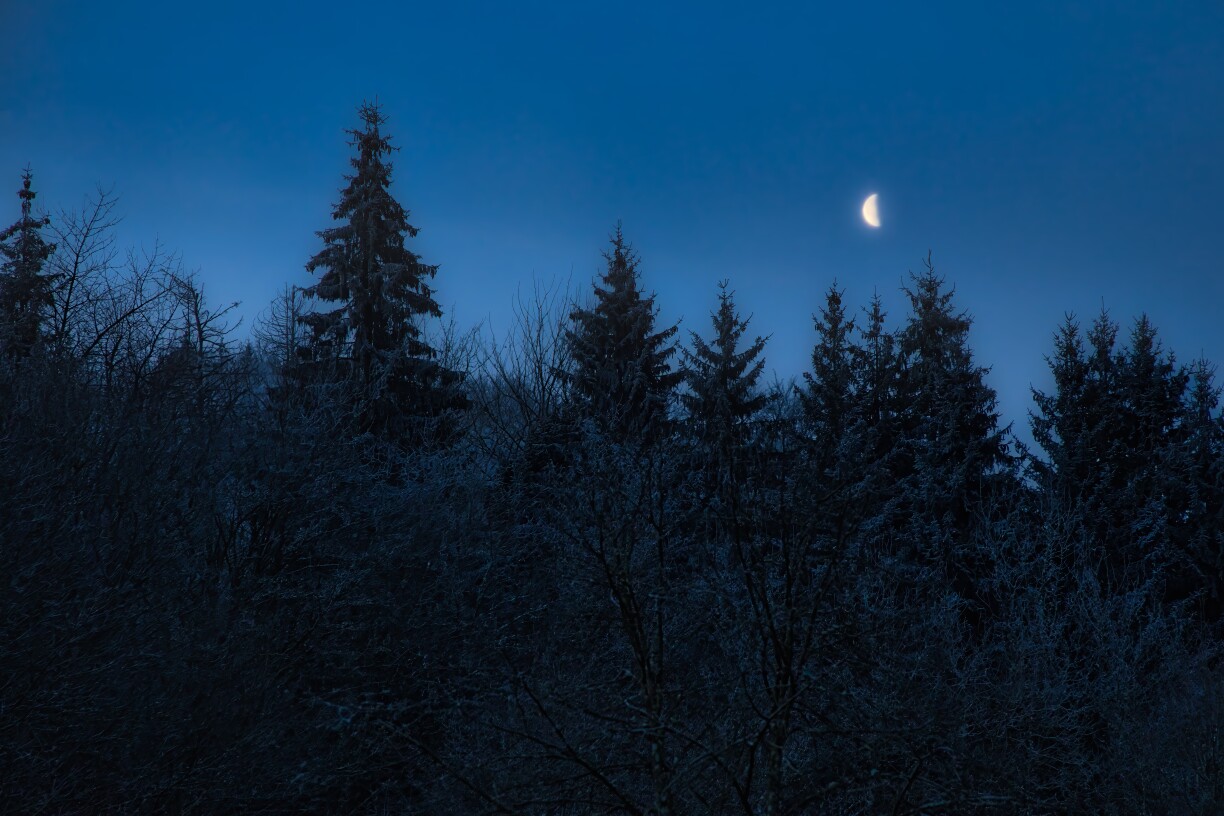
As Luxembourg settles into winter, the evenings grow longer, the air turns sharp and still, and the stars begin to stand out with a clarity rarely seen at other times of the year.
Cold nights bring a calmness to the sky that feels almost old-fashioned, the kind of deep darkness that encourages you to look up and slow down.
Walk outside on a clear night and the first thing you'll notice is how early the stars begin to appear. By late afternoon the Sun is already slipping behind the hills, and before most people have finished dinner, the sky is fully dark.
These long nights make December one of the best months for stargazing in Luxembourg. It's quiet, peaceful, and wonderfully generous for anyone who pauses long enough to let their eyes adjust.
One of the most captivating sights of the season is the slow rise of Orion in the east. Just after 9pm, the familiar Belt, made of three stars in a line, emerges above the horizon, crisp and bright against the chilly air.
As the constellation climbs, the deep red glow of Betelgeuse and the icy white of Rigel set the tone for the winter sky. Beneath the Belt sits the Orion Nebula, a faint blur to the naked eye but an unforgettable sight through a simple pair of binoculars.
Lift your gaze slightly higher and you'll find the Pleiades, a tight cluster of young blue stars shining clearly, even through the light-polluted skies of Luxembourg City. They rise high in the evening sky and stay with you for much of the night, a delicate glitter that has inspired myths for thousands of years.
Nearby lies Taurus, with the bright red giant Aldebaran watching over the Hyades cluster. Together, these constellations form the backbone of December’s sky, a pattern that has guided winter travellers since the first people walked these valleys.
But the real star of the month is the Geminid meteor shower, the brightest and most reliable shower of the year. Every December, Earth ploughs through the dense trail of dust left by the asteroid-like object 3200 Phaethon, and those tiny grains burn brilliantly as they hit our atmosphere.
The result is one of nature's finest night-time displays.
In 2025 the Geminids peak on the night of 13–14 December, just as the Moon is a thin waning crescent, rising only in the early morning here in Luxembourg. This means deep darkness and perfect conditions for spotting meteors.
The best time to watch is between 10pm and 3am, when the radiant in the constellation Gemini stands high in the east. Under clear skies you can expect slow, bright streaks. Some leave long trails; others flare suddenly and vanish.
Remember, they can appear anywhere in the sky, so the best approach is simply to sit back, look up and wait.

In spite of its small size, Luxembourg offers several excellent spots for meteor watching. The northern Oesling, particularly around the Parc naturel de l'Our, remains the darkest region in the country. The shores of the Haute-Sûre lake are another fine choice, with broad southern horizons that feel wonderfully open on winter nights.
Even suburban areas can deliver a good show, as the brightest Geminids are strong enough to stand out despite moderate light pollution.
Another shower arrives later in the month, though a quieter one this time. Around 22–23 December, the Ursids send a modest trickle of meteors from the northern sky.
They rarely exceed 10 meteors per hour, but in a still winter night the occasional bright streak above the rooftops can be surprisingly rewarding. With the Moon just past new, even a handful of meteors becomes a small pleasure worth stepping outside for.
While not a poor astronomical event, the winter solstice on 21 December marks the longest night of the year. From this point on, daylight slowly begins to return, but for stargazers the solstice is not an ending, it's the beginning of the best observing season.
January will bring even deeper nights and clearer skies, but December is where the magic starts.
The planets, too, benefit from the cold, transparent winter nights, accompanying the constellations and serving as bright markers in the evening sky.
Jupiter, the king of planets, puts on a superb show, shining high in the southeast soon after sunset and remaining visible well past midnight. Its brightness is unmistakable, and even a simple pair of binoculars will reveal its four largest moons gliding around it.
Saturn, meanwhile, sits lower in the southwest after dusk, a pale but steady light. If you have binoculars or a small telescope, make sure to look at its rings before it fades behind the hills around 10pm.
December is also the perfect time to enjoy the Milky Way from a unique perspective. In clear, dark areas, the winter arc, softer, and more subtle than the summer core, stretches from Auriga across Perseus and into the fainter constellations beyond.
And then there's the cold, the one thing that always threatens to shorten a winter stargazing session. But with a few simple preparations the experience becomes far more comfortable.
Always dress in layers, with warm gloves and waterproof boots, and bring a blanket or reclining chair, as sitting on cold ground drains heat quickly. A thermos of tea or coffee works wonders and makes the experience even more enjoyable.
Most importantly, give your eyes time to adjust. Stay away from screens or any source of light; just chill and enjoy the show. After about twenty minutes the sky becomes richer, deeper, more detailed than you remembered.
December rewards patience. It rewards curiosity. And above all, it rewards simply stepping outside, even for a brief time, to reconnect with the night sky during the quietest time of the year.
This month invites you to slow down, breathe in the freezing air, and look up at a sky that for thousands of years has marked the turning of the seasons.
Clear nights are never guaranteed, but when they come, they are worth every moment.
Peak events:
Planets:
Constellations:





