There's no harm in having a small beer. Or a glass of red wine to go with dinner. That's good for the heart!
At least that's what some studies say.1 2 3 Others, however, insist4 5 6: no alcohol whatsoever! Every drop is harmful!
So, which is it?
The idea that drinking in moderation is good for your heart is now being challenged.7 8 9 10 11 12 13 14 15 When you factor in the associated risks of cancer, liver damage, accidents, violence, addiction, and so on, the risks clearly outweigh the benefits.16
Alcohol kills four times more people every year17 than all illegal drugs combined. And yet, so many people enjoy drinking!
Hence today’s questions: What effect does alcohol have on our bodies? How harmful is it – also in comparison to other drugs? At what point is someone considered an alcoholic?
For thousands of years, people everywhere in the world have been drinking alcohol. Wine, beer, and spirits are part of our culture, and many associate alcohol with having a good time, spending time with friends and celebrating.
Alcohol reduces activity in the prefrontal cortex, the part of the brain responsible for self-control and caution18, and also releases endorphins, which can make us feel less stressed and anxious.19 20 21 22 23 As a result, we tend to relax, feel more confident – or less inhibited – and become more sociable.
Studies show that people who drink moderate amounts of alcohol together laugh more, talk more, and feel more socially connected24 25 26 than groups of people who remain sober.
Unfortunately, alcohol is also toxic to cells, carcinogenic, and addictive. Through the stomach and intestines, it spreads throughout the whole body and into the brain, causing damage. In the brain, for example, it interferes with communication between nerve cells, 27 28 29 while damaging proteins and DNA inside our cells.30 31
As the body breaks down alcohol, acetaldehyde is produced in the liver – an intermediate substance that is even more toxic than alcohol itself and also carcinogenic.32
During alcohol intoxication, memory, reaction time, and judgement are measurably impaired, in some cases leading to a complete blackout. Excessive alcohol consumption can cause measurable damage, particularly in young people, as the brain isn’t fully developed until the mid-twenties.33 34 35 36
According to the WHO, 2.6 million people worldwide die every year as a result of alcohol consumption37 – a third of them in Europe alone. These deaths are caused either directly by conditions such as liver cirrhosis, cardiovascular disease, and cancer, or indirectly through violence, suicide, and accidents.
In the US, for example, in 2022, only 59% of those killed in alcohol-related crashes were the intoxicated drivers themselves.38 The rest were passengers, pedestrians, or people in other vehicles who were killed in crashes involving a drunk driver…
Also completely innocent are the 630,000 babies born each year with foetal alcohol spectrum disorder39, who suffer lifelong consequences as a result of their mother drinking during pregnancy.
Studies in English-speaking countries have found that between 20% and 79%40 41 42 43 44 45 46 of the population have experienced harm as a result of someone else’s drinking – whether through arguments, accidents, or neglect within the family.
For the individual user, heroin, crack, and meth are more harmful than alcohol.
However, a much-cited UK study47 48 along with a similar European study found that, when harm to others is taken into account, – such as accidents, violence and family problems – alcohol ranks far higher overall than heroin or crack.
Alcohol can cause eight types of cancer49 50, including cancers of the mouth, oesophagus, liver and bowel, as well as breast cancer in women.
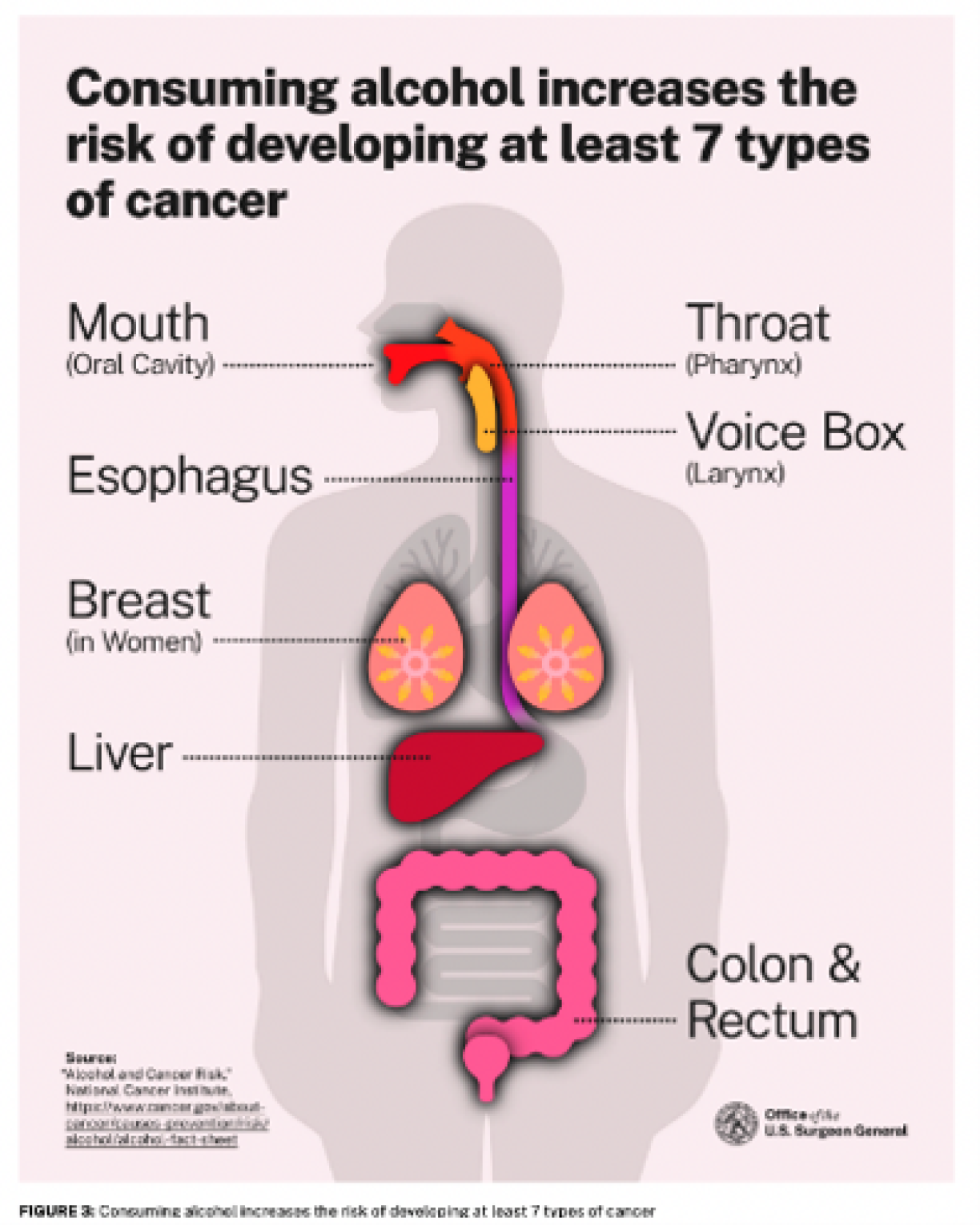
Importantly, there is no known threshold below which alcohol consumption can be considered risk-free when it comes to cancer.51 52
According to a recent study53 54, even drinking less than one glass of wine a day is linked to 23,000 additional cancer cases across the EU each year – almost half of them breast cancer.
Alcohol is an indulgence that can bring enjoyment and a sense of connection, but it is unhealthy, can be addictive, and also cause a great deal of misery. The real problem arises when people drink excessively.55 56 57
In medicine, there is no simple either-or distinction between alcoholics and non-alcoholics. It’s much more nuanced.
You can, for example, look at how much someone drinks. According to Dr. Claude Besenius, director of the Centre Thérapeutique, a distinction is made between:

In the EU, men consume an average of around 20 standard drinks a week, compared with around 6 for women.58
Put simply, one standard drink is roughly equivalent to a glass of beer, a glass of wine, or a shot of spirits.
And this level of consumption is already considered risky or even harmful.
In Luxembourg, alcohol consumption is relatively high by comparison: 43% of residents drink alcohol every week, compared with just under 29% across the EU.59 1 in 10 drinks excessively at least once a week, compared with 1 in 30 across the EU.60 61
Since the amount someone drinks alone does not tell us anything about the psychological, physical or social problems they may experience, there are more nuanced classifications.
In Europe, the WHO’s ICD-11 classification is used. Let’s do a quick self-check: how many of these criteria have applied to you in the past 12 months?
According to the ICD-11, an honest ‘yes’ to two of these questions is enough to indicate alcohol dependence, regardless of how many glasses you drink each week.
According to addictologist Dr. Jean-Marc Cloos, we should not only ask how much of a role alcohol plays in our lives, but also why we drink. Each case requires an individual assessment and appropriate support. Keep in mind: if you ever develop an alcohol dependence and want to overcome it, you need to give up alcohol completely and for the rest of your life.

Wine, beer and spirits are part of our culture. They can make us feel good, help us overcome our inhibitions, and create memorable moments – as long as we drink in moderation.
Unfortunately, though, alcohol can also be addictive. It is toxic to our cells, can cause cancer even at moderate levels of consumption, and can lead to a wide range of health problems and harm to others – especially when consumed in large quantities.
The traditional distinction between alcoholics and non-alcoholics is no longer so clear-cut. Whether someone is dependent on alcohol is not determined simply by how much they drink, but by a range of other factors.
It’s not our place to tell anyone how to live their life. We simply want to share the current scientific understanding. Ultimately, it’s up to each of us to decide how much enjoyment we get from drinking and how we weigh that against the risks.
Authors: Jean-Paul (Jhemp) Bertemes, Michèle Weber (FNR)
Editing and verification: Anouk Ewen, Linda Wampach (FNR)
Peer review: Torsten Bohn (LIH), Claude Besenius (Centre thérapeutique), Dr Jean-Marc Cloos (CHdN)





