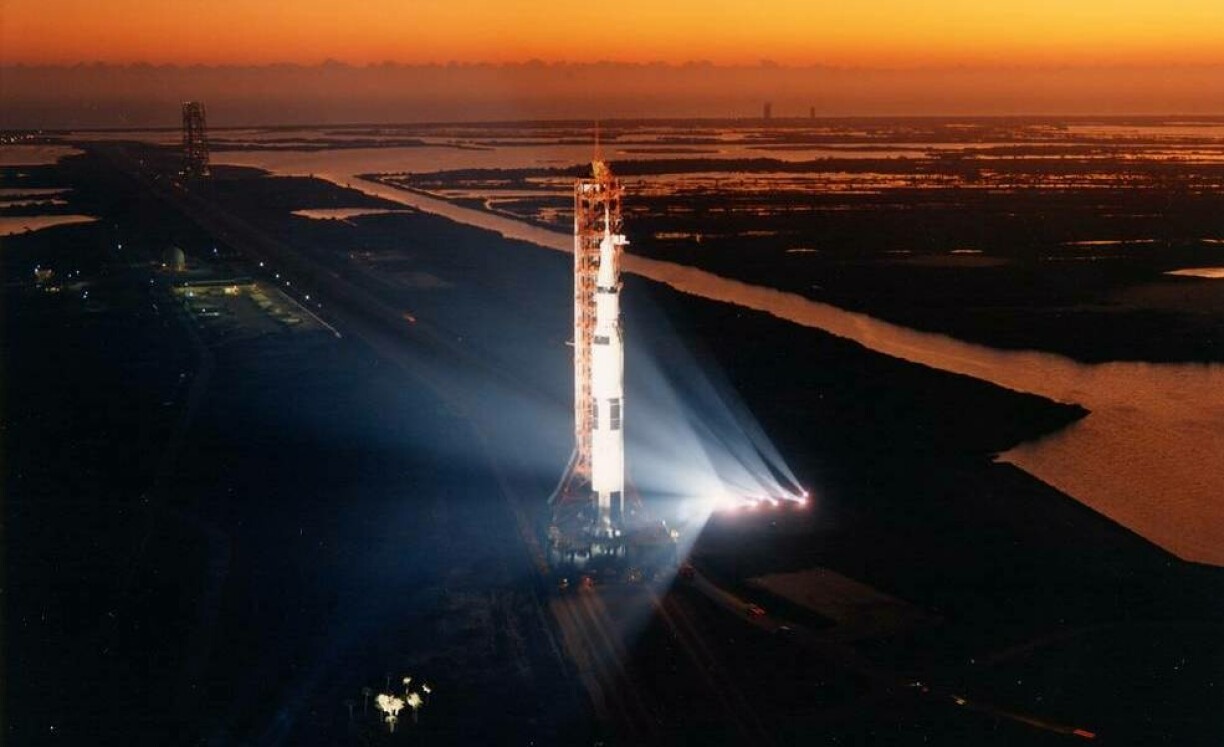
Project Apollo was the American spaceflight programme that prepared and landed the first humans on the moon. The spaceships used for this programme had two principal components: the command and service module (CM) and the lunar module (LM). The former functioned as a mothership while the later was used to fly between the lunar orbit and the moon’s surface.
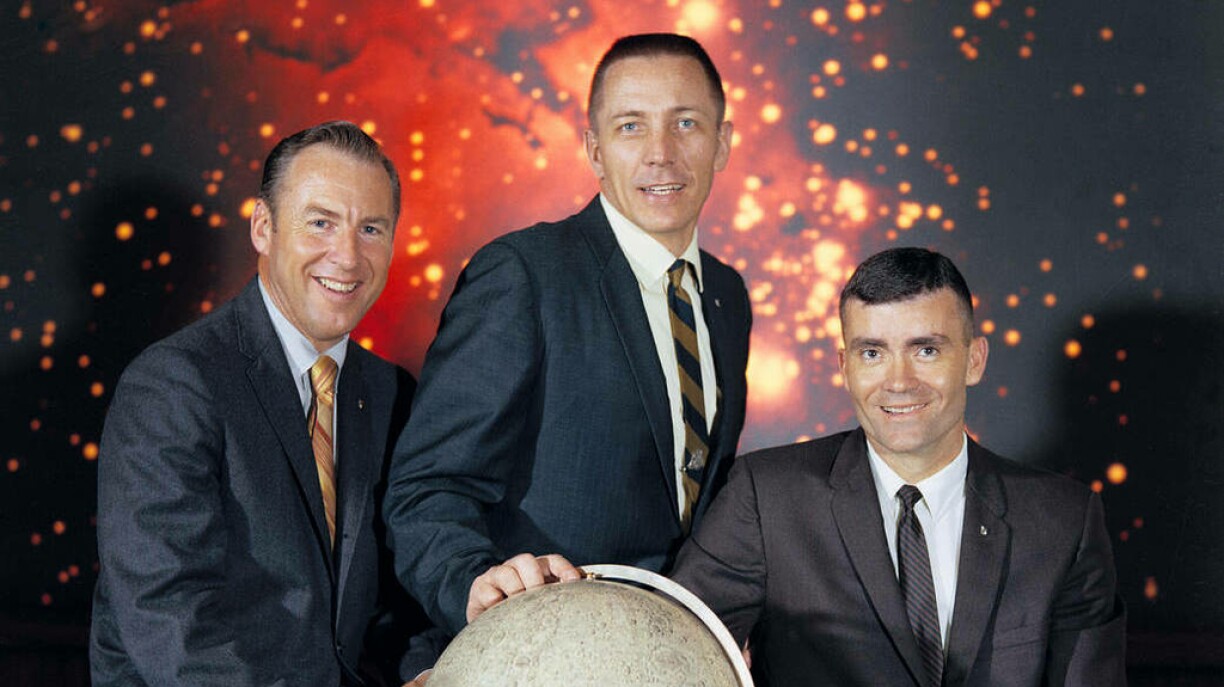
Apollo 13 successfully launched at the Kennedy Space Centre in Florida at 2.13pm EST. The mission was commanded by Jim Lovell with Jack Swigert as command module pilot and Fred Haise as lunar module pilot.
Early on the evening of 13 April, the astronauts pressurised the lunar module, code-named Aquarius. But this routine stir of the oxygen tanks damaged wire insulation inside one of them and caused an explosion which was heard throughout the whole ship.
Within eight seconds of the explosion, pressure in one of the service module’s two oxygen tanks had dropped to zero, causing the other one to fail as well. The command module's normal supply of electricity, light and water was lost.
The crew on board had yet to find out. Quickly, they gathered to study the instruments and try to figure out what had just happened. They noticed that one of the main electrical systems aboard was degrading. Haise and Lovell immediately radioed this information over to mission control in Houston, Texas. Thus unknowingly creating one of humanity’s most quoted exchanges:
Fred Haise: Okay, Houston—
Jim Lovell: I believe we’ve had a problem here.
Mission control: This is Houston. Say again please.
Jim Lovell: Houston, we’ve had a problem. We’ve had a main B bus undervolt.
About an hour after the accident, mission control announced “we are now looking toward an alternate mission, swinging around the Moon and using the lunar module power systems because of the situation that has developed here this evening.”
In the early morning of 14 April the crew transferred into Aquarius, forthwith to be used as a lifeboat. By now, they were twenty hours away from the moon.
Within just a couple of hours, ground control in Houston had to write up and test completely new procedures and generate simulations. It turned out that water would be the main consumable concern. They estimated that the crew would run out of water about five hours before re-entry into the Earth’s orbit. So they cut down water to one fifth of a normal intake.
Apollo 13 entered Earth’s atmosphere on April 17 and splashed down on target at 1.07pm EST.
NASA's review board of the accident concluded that “an electrically initiated fire in oxygen tank No. 2 in the service module was the cause of the accident.” The members of the review board determinate that “the accident was not the result of a chance malfunction in a statistical sense, but rather resulted from an unusual combination of mistakes, coupled with a somewhat deficient and unforgiving design.”
This incident had awakened a renewed interest by the general public for the Apollo programme. For the 50th anniversary of the mission NASA launched the website Apollo in real time allowing viewers to follow along as the missions of Apollo 11,13 and 17 unfolded through photographs, videos and audios of the conversations between the astronauts and mission controllers.