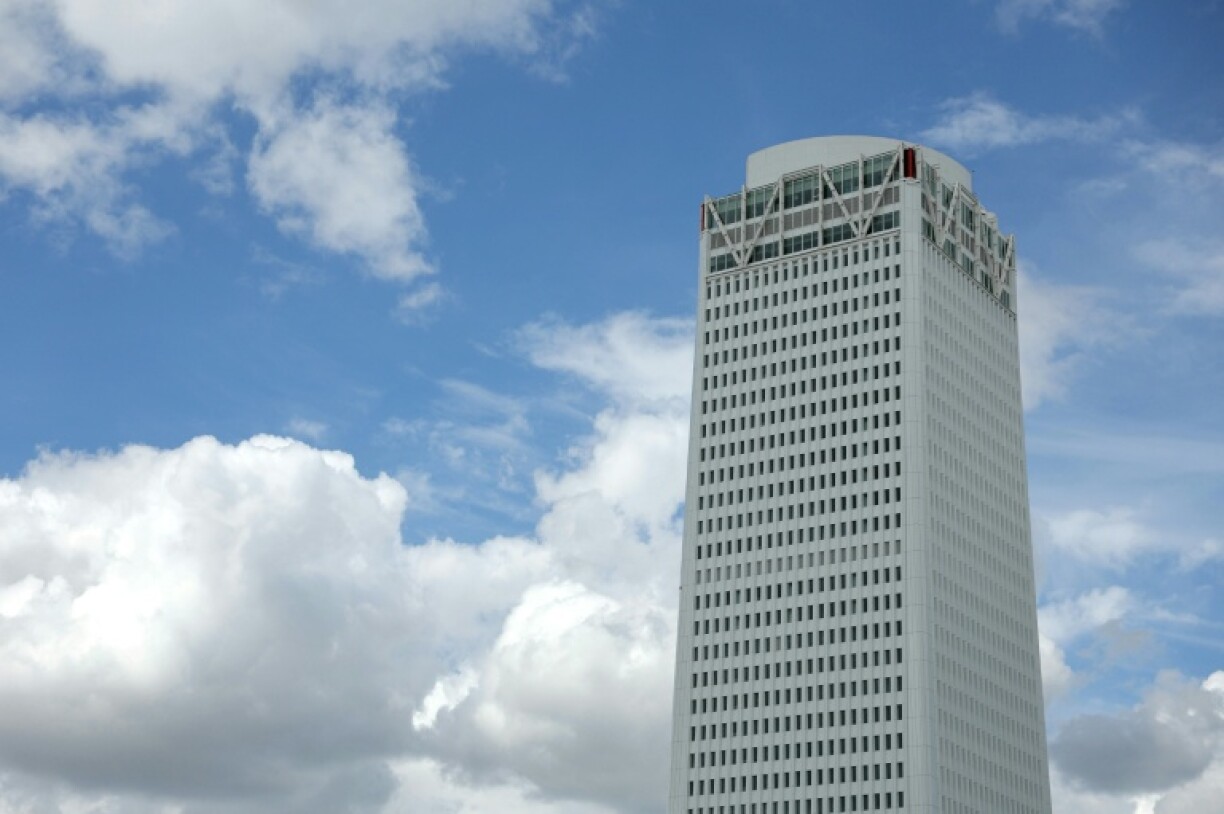
Some 600 experts gather outside Paris on Monday to start work on the next major UN climate report, as the international consensus on global warming is challenged by climate change-sceptic US President Donald Trump.
The previous report by the Intergovernmental Panel on Climate Change (IPCC), released in 2023, had warned that the world was on track to breach the 1.5C warming threshold by 2030.
The United Nations now says the planet is set to breach the limit earlier than feared -- a line that, if crossed, could unleash devastating storms, floods and droughts.
Experts from more than 100 countries are meeting in a skyscraper in Saint-Denis for five days, launching a process that will culminate with the IPCC's Seventh Assessment Report (AR7), due to be published in 2028 or 2029.
It brings together lead authors of the report in a single venue for the first time, in an effort to tackle interdisciplinary climate questions.
Their work could face hurdles in the face of a US administration whose president called climate change the "greatest con job ever" and a "hoax" during a speech at the United Nations in September.
"The statements, for example, from the American administration on the origin of climate change, the fact that it's a hoax, if you will, we still find that quite surprising," said an official at the French ecological transition ministry who requested anonymity.
The IPCC operates by consensus.
"If any country opposes the text, the report cannot be approved. Every country has a sort of veto," climate scientist Robert Vautard said during a video press conference Friday.
There already appears to be disagreements over the timing of the next report's publication.
A group called the High Ambition Coalition, which includes European Union countries and developing nations vulnerable to climate change, wants the assessment to come out in 2028.
That would coincide with the global stocktake -- a review, required under the 2015 Paris Agreement, of the progress countries have made in limiting climate change and its impacts.
But a group of emerging economies and major fossil fuel-producing countries say more time is needed and are advocating for 2029.
The divide echoes the disagreements seen at the UN's recent COP30 climate summit in the Brazilian Amazon city of Belem, which concluded with a deal that left out an explicit call to phase out fossil fuels.
Despite the disagreements over when to publish the next report, IPCC chairman Jim Skea told AFP in March: "I don't think the IPCC is in crisis. We will resolve this issue about the timeline."
dep-hh/lt/sbk/kjm





