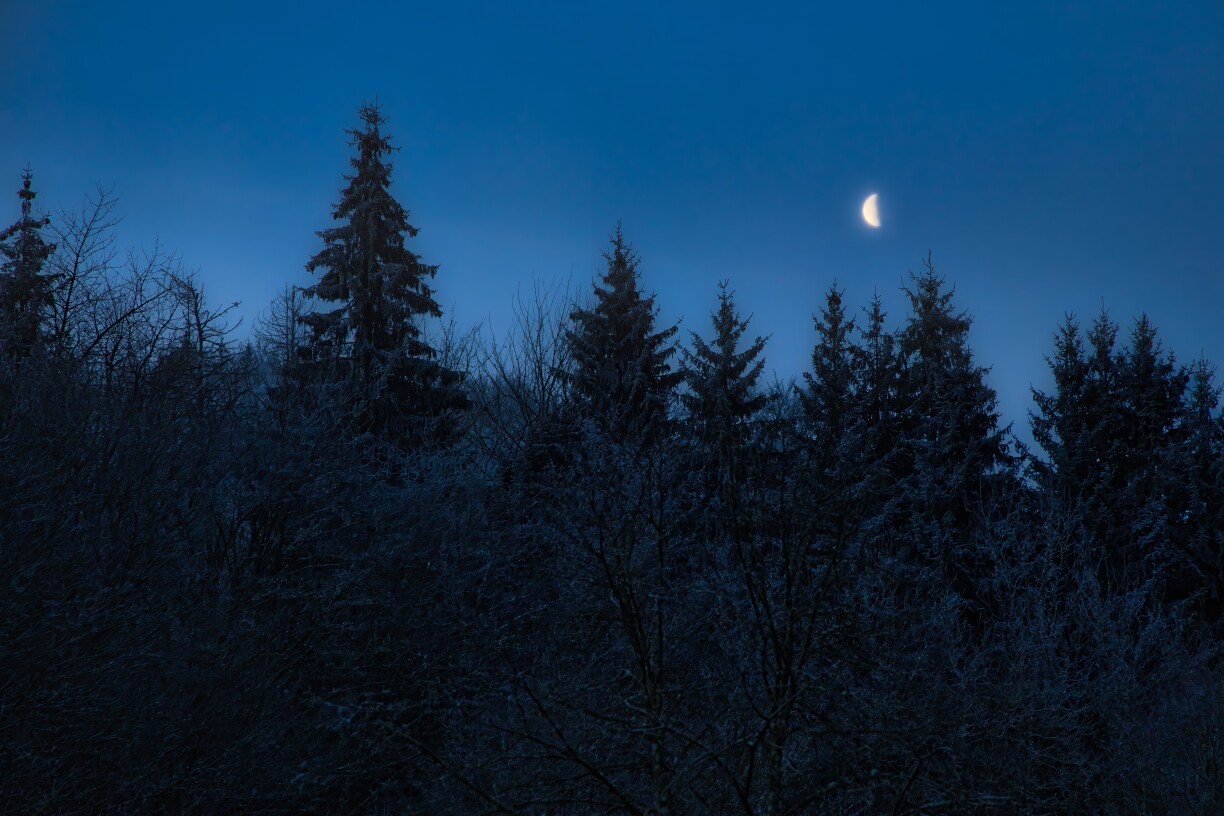
The month begins with Luxembourg deeply settled in winter, the nights long, and the air biting. The year’s first full moon arrives on 3 January, traditionally known as the Wolf Moon, and it’s the first and most significant 'Supermoon' of 2026.
The Moon will appear roughly 10–14% larger and up to 30% brighter than a typical full moon. Bathed in this pale silver light, the frozen Luxembourg landscape will be illuminated with a brilliance that mimics an early winter twilight. Keep your camera ready!
This spectacular lunar presence, however, will obfuscate the month's first major meteor display: the Quadrantids. Reaching their peak in the pre-dawn hours of 4 January, the Quadrantids are often the year's most prolific shower, capable of producing over 100 meteors per hour.
This year, the challenge is clear. The 'Super' Wolf Moon will dominate the sky, its glare likely overwhelming all but the most brilliant meteors. Yet, the Quadrantids are famed for their bright 'fireballs': vivid explosions of light that can pierce even the strongest moonlight.
To catch them, find a dark vantage point – the remote Oesling in northern Luxembourg remains the gold standard – and use a tree or ridge to block moonlight. Look toward the northern sky near the handle of the Big Dipper and be patient.
As the first week fades, the Moon's glare begins to retreat. Rising later each night, it finally leaves our evening hours in velvety darkness, perfect timing for the month's true protagonist to step into the spotlight.
10 January is the date to mark on your calendar as Jupiter reaches opposition. This is the astronomical 'sweet spot' where Earth sits directly between the giant planet and the Sun, meaning Jupiter is at its closest, largest, and brightest for the entire year.
To find it, look for a steady, white-gold beacon that rises in the east at sunset and culminates at its highest point in the south around midnight. Even with a modest pair of binoculars, you can witness a miniature solar system in action, with Jupiter flanked by the four Galilean moons.
This is also the best window to appreciate the winter Milky Way. Move away from the city glow, toward the north, to experience a delicate, hazy band of light stretching from Perseus through Auriga and down toward the iconic hourglass of Orion rising in the east.
With the New Moon on 18 January, deep darkness returns to reveal the fainter, more ancient details of our galaxy.
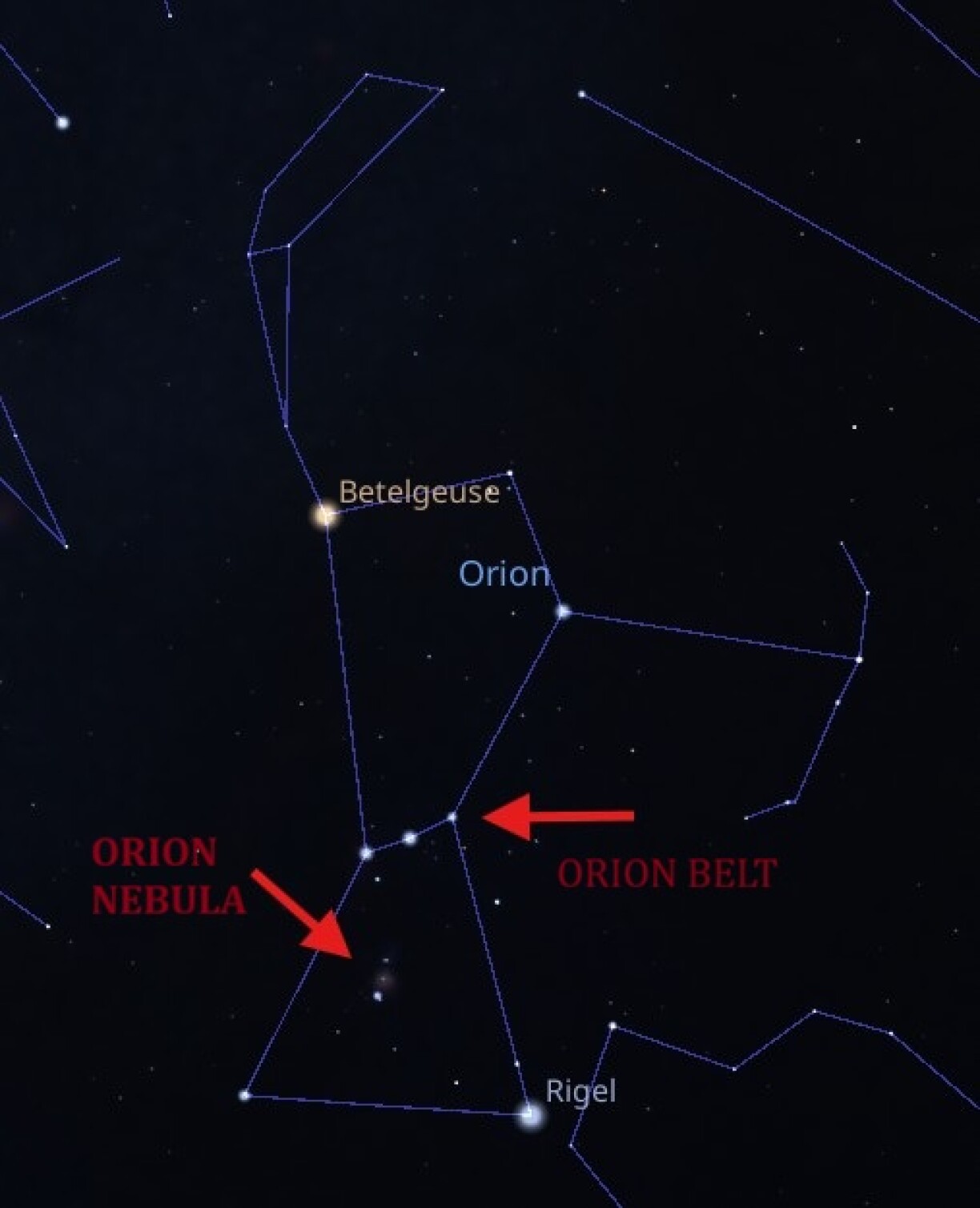
Orion the Hunter strides across the southeastern horizon with his unmissable three-star belt. Just below Orion's Belt is his sword, where the famed Orion Nebula lies. To the naked eye, it is a mere foggy smudge, but through binoculars, it transforms into a luminous, glowing cloud, a stellar nursery where new suns are currently being born from gas and dust.
High above the Hunter sits Taurus the Bull, anchored by the fiery red eye of Aldebaran. This red giant is surrounded by the V-shaped Hyades cluster, a group of stars so bright they are easily resolved even from Luxembourg City. Yet, the true jewel of the Bull is the Pleiades, or the Seven Sisters: seeing them sparkle in the crisp Luxembourgish air remains one of the most enchanting sights of the season.
Finally, turn your gaze toward the north, where the familiar 'W' of Cassiopeia sits nearly overhead. Following the lines of this constellation leads you toward a faint, elongated smudge in the darkness: the Andromeda Galaxy. In the rural reaches of the Oesling, this blur can be seen with the naked eye, representing the light of a trillion stars located 2.5 million light-years away.
As January draws to a close, a waxing gibbous Moon glides past the Pleiades on 27 January, in a spectacular dance. For observers in Luxembourg, the Moon will pass directly in front of several stars in the cluster, briefly hiding them from view. Even without a telescope, watching the brilliant lunar disc hang alongside the 'Seven Sisters' is a beautiful sight.
By this final week, our primary protagonist, Jupiter, remains a brilliant fixture in the south, though it now begins its descent earlier in the night. At the same time, Venus begins its tentative return.
Having passed behind the Sun earlier in the month, the 'Evening Star' now creeps back into view. In these final January twilights, look low in the southwest just after sunset. With an unobstructed horizon, you may catch a glimpse of this startlingly bright spark of white light, just a preview of February's celestial return.





