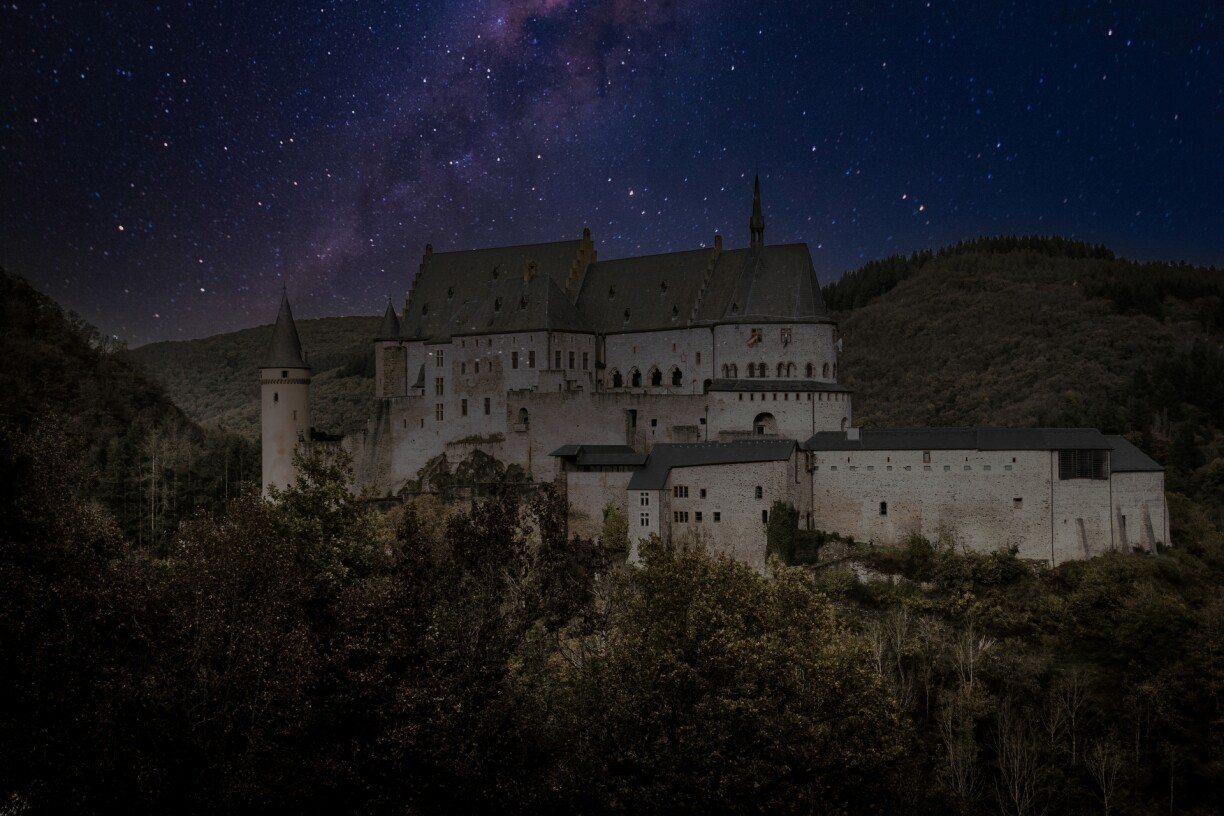
With the first signs of spring appearing, now is the perfect time to step away from the city lights and head to the countryside. As winter gives way to spring, nights become slightly milder while still offering plenty of darkness – ideal conditions for an unforgettable night under the stars.
Here are some of the celestial wonders you can catch this month.
There has been a lot of buzz in the media recently about a 'planetary alignment.' However, while catchy, this term is scientifically misleading as there is no true 'alignment' of planets in a straight line, as often depicted. Instead, the correct term for this phenomenon is a 'planetary parade', which simply means that multiple planets are visible in the sky at the same time.
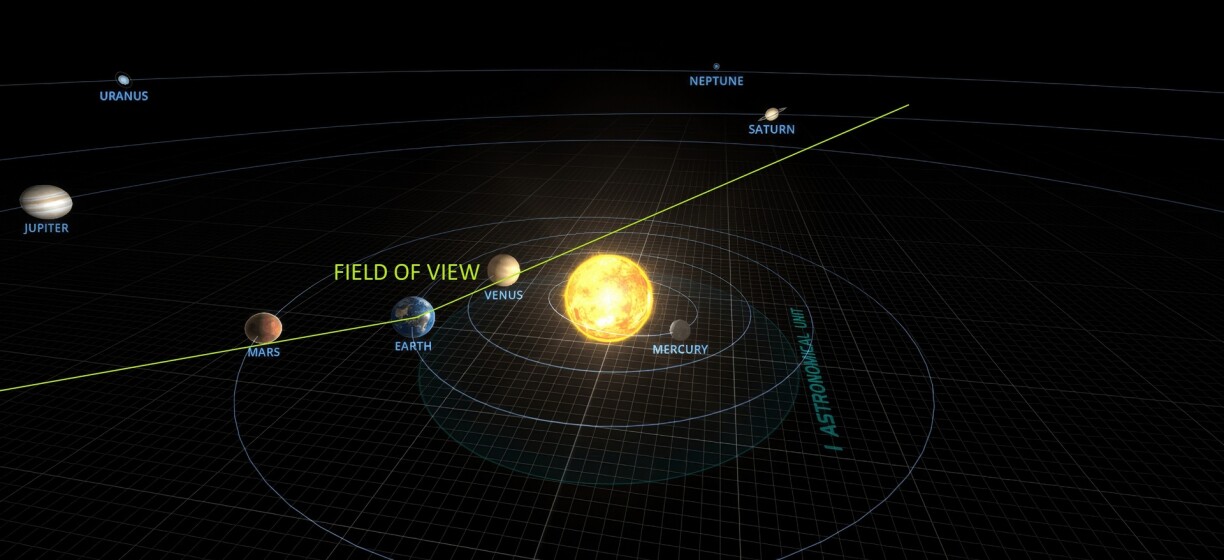
A perfect alignment, where all planets line up in a straight row, is nearly impossible due to their different orbits around the Sun. While the recent planetary spectacle has faded, March still offers fantastic opportunities to see two of the most stunning planets in our Solar System:
Jupiter: The largest planet in our Solar System is still visible in the western sky after sunset. Though it is sinking lower as the evenings grow longer, it stays observable for most of March. Look for a steady, bright white glow, distinct from twinkling stars. Even with a small telescope or strong binoculars, you can spot its four largest moons (Io, Europa, Ganymede, and Callisto) appearing as tiny dots around the planet.
As spring appears, winter constellations gradually set earlier, making way for new star patterns to take centre stage. However, a few winter classics stay prominently visible and are still well worth seeing.
Leo: Rising in the east after sunset, Leo the Lion takes centre stage in the spring night sky. Its sickle-shaped head, resembling a backward question mark, is easy to spot. The constellation's brightest star, Regulus, sits at the base of the sickle and shines as one of the most luminous stars visible to the naked eye.
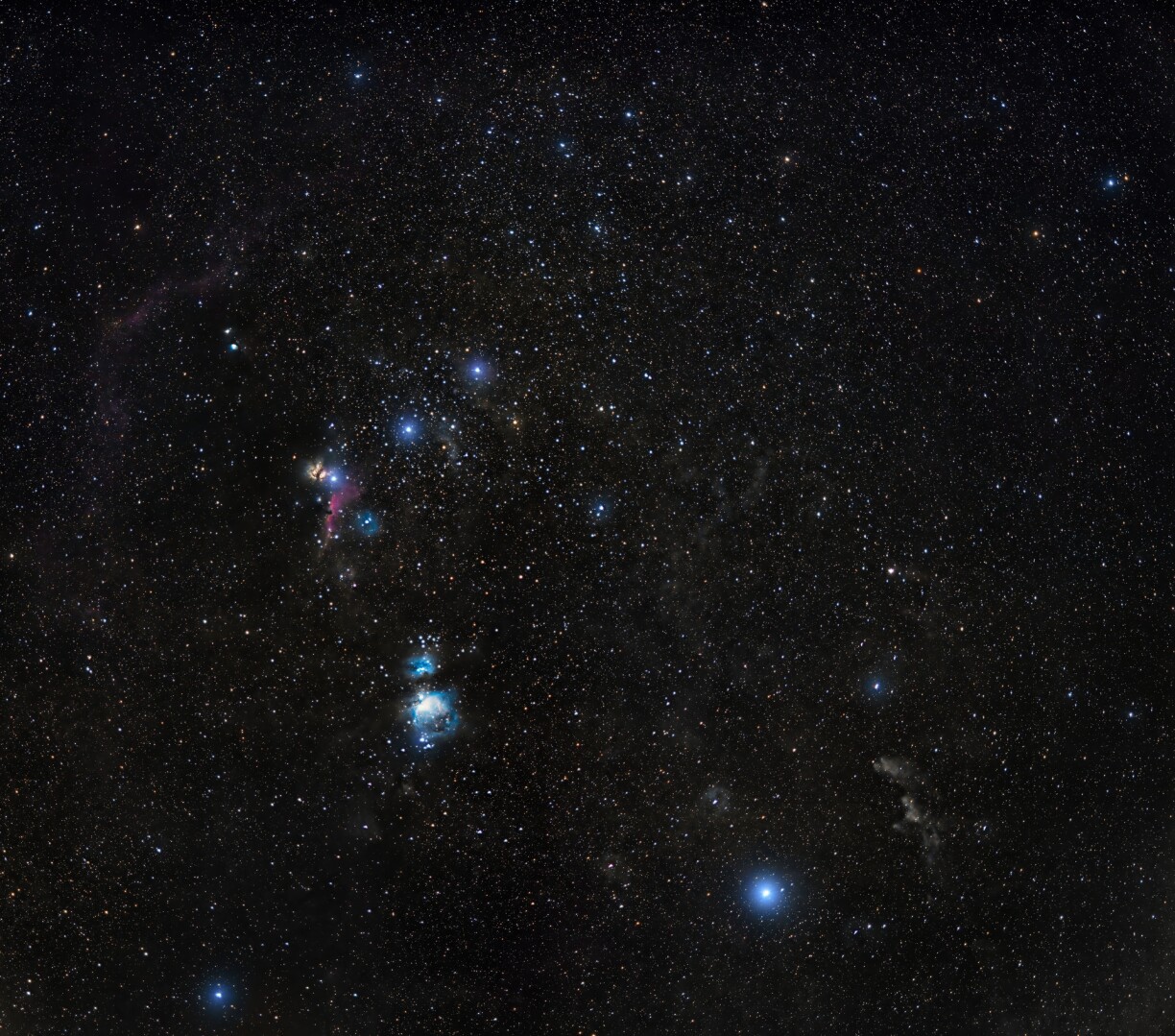
For those who can escape the glare of city lights, March offers a wealth of stunning sights that are sure to leave you in awe.
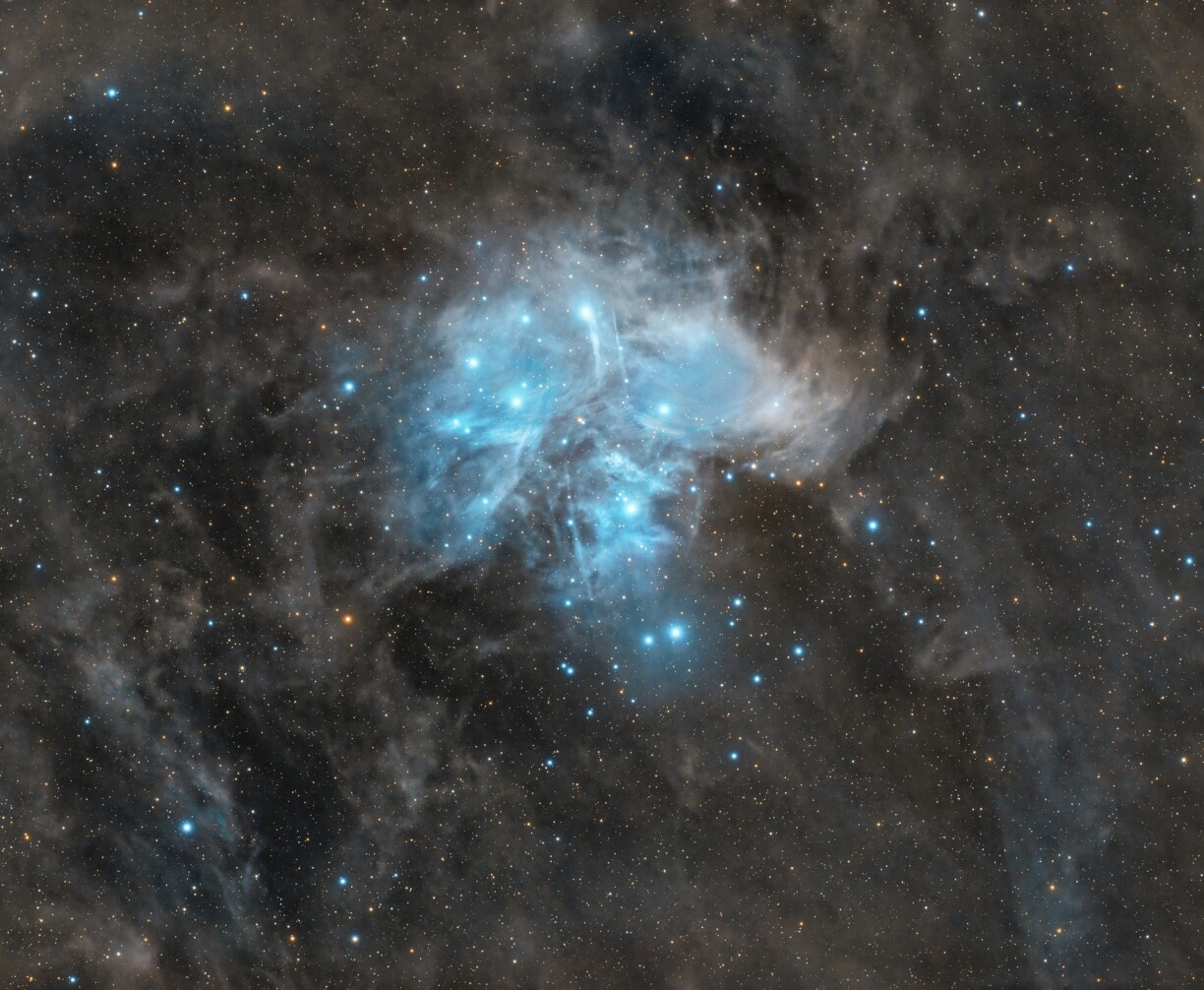
Pleiades (M45): This famous star cluster in Taurus is named after the Seven Sisters of Greek mythology. It is easily visible to the naked eye as a small, hazy patch resembling a tiny question mark. Binoculars, however, reveal dozens of stars while long-exposure photography allows to capture the faint bluish nebula surrounding them.
The Great Orion Nebula (M42): Found just below Orion's Belt, the Orion Nebula is one of the brightest nebulae in the sky. Visible as a faint glow even from light-polluted areas, it truly comes to life through binoculars or a small telescope, revealing swirling clouds of gas and dust. Try to spot the Trapezium, a small grouping of four stars at the nebula's heart.
The key to a rewarding stargazing experience is preparation. A printed star map or apps like SkySafari, Stellarium, and SkyView make finding constellations and planets easier.
March nights in Luxembourg can still be cold, so dressing in layers, bringing a blanket, and sipping a warm drink can make the experience far more comfortable. Using a red flashlight preserves night vision, allowing you to take in even the faintest celestial details.
Adriano Anfuso is a photographer and digital creator who is passionate about capturing the awe-inspiring beauty of the cosmos and Earth's wonders. You can check out his work here.





