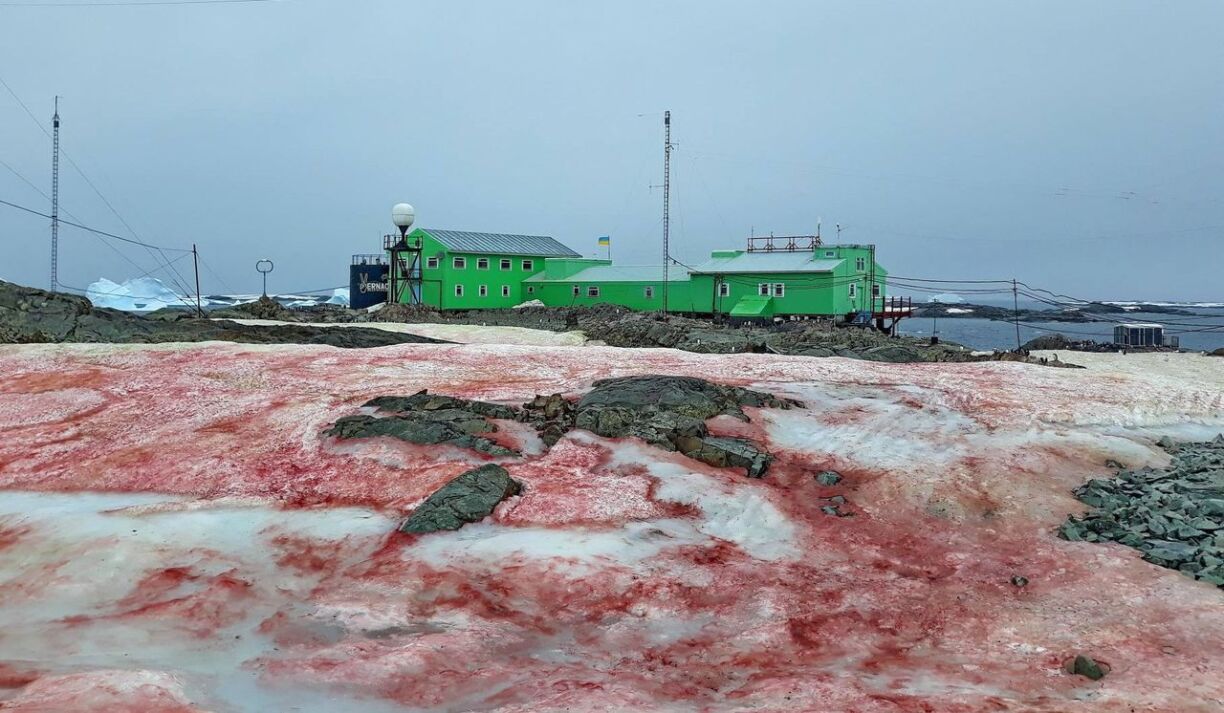
Researchers stationed in the Antarctica took pictures of a phenomenon they call "watermelon snow." The ice around Ukraine’s Vernadsky Research Base near Antarctica’s northernmost peninsula has gradually changed its colour to pink and red over the last weeks.
The cause of the colourful metamorphosis is a a microscopic algae called Chlamydomonas nivalis. This algae is full of the chemical compounds that are also responsible for the bright colours of some foods such as carrots or pumpkins. The algae is nothing new but it lies dormant in snow for most of the year. Only when ice and snow start to melt, the algae blooms, causing the snow to change its colour.
The Ministry of Education and Science of Ukraine explained that the bloom was linked to climate change. In other words, the colouring will become more intense as ice continues to melt.
Antarctica has recorded its hottest day in February this year with temperatures climbing over 18 degrees. According to the ministry, "the snow reflects less sunlight and melts faster" because of the red-crimson colour. This can lead to a vicious circle as the snow will consequently produce even more bright algae.





