Here’s a list of the main event a stargazer can’t miss out.
September 2 – Full Moon
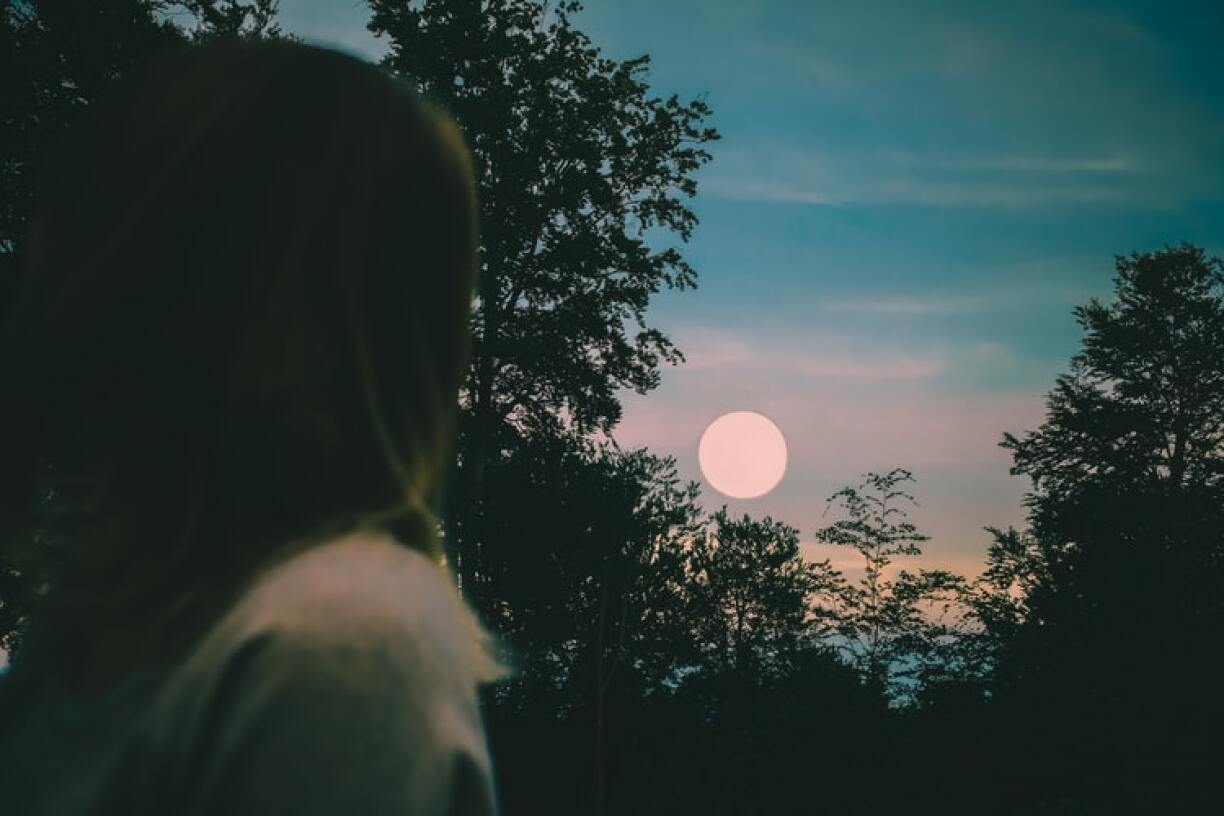
The month of September starts with a bang, as the Moon will position itself almost directly opposite to the Sun in the sky and its face will be will be fully illuminated; the full Moon will be observable in Luxembourg throughout the whole night between 1st and 2nd September.
The full Moon in September is the last full Moon of summer this year, and is generally known as “Corn Moon” (U.S.) or “Fruit Moon” (Europe). The name “Corn Moon” comes from the Native Americans, who used to name each month’s full Moon in relation to a natural event or sign of the season; as the name suggests, September’s full Moon corresponded with the time of harvesting corn.
Similarly, the European name “Fruit Moon” comes from the fact that many fruits ripen toward the end of the summer.
September 6 – Conjunction of Moon and Mars
The night between 5th and 6th September an 86% illuminated Moon will make a close approach to the red planet in a spectacular conjunction.
With the Moon passing just 0°01' north of Mars, the two will be close enough to fit within the field of view of a telescope or binoculars, but also clearly visible to the naked eyes.
The event will be visible from Luxembourg from around 10.40pm on September 5 above the eastern horizon and it will reach the highest point in the sky around 4.20am on September 6 above the southern horizon.
September 11 – Neptune at opposition
Mark this date on your calendar as this is the day when Neptune, the blue giant, will be at its closest approach to Earth (in astronomy this is called perigee) and its face will be fully illuminated by the Sun (opposition). This means that Neptune will be brighter than any other time of the year and will be visible all night long.
Truth be told, however, Neptune it will only appear as a tiny blue dot in all but the most powerful telescopes due to the planet’s great distance from Earth.
From Luxembourg, Neptune will be visible all night long, becoming observable at around 10.30pm on September 10 above the south-eastern horizon until around 04.04am on September 11 above the southern horizon.
September 14 – Conjunction of Moon and Venus
On September 14, starting at approx. 03.15am, a 14% illuminated Moon and Venus, our sister planet, will share the same right ascension, in yet another breath-taking conjunction.
With the Moon passing 4°27' the north of Venus, however, the pair will be too widely separated to fit within the field of view of a telescope but will be visible to the naked eye or through a pair of binoculars.
September 22 – September equinox
While it may not be considered an observable event, the September equinox is nevertheless an important occurrence as it marks the first day of fall (autumnal equinox) in the Northern Hemisphere and the first day of spring (spring equinox) in the Southern Hemisphere.
The word equinox comes from the Latin words “aequus” (equal) and “nox” (night); on this day, in fact, everywhere on Earth the day has almost exactly 12 hours of day and night.
That is because the Sun virtually crosses the Earth's equator going from the Northern Hemisphere to the Southern Hemisphere.
September 25 – Conjunction of Moon and Jupiter
On the evening of September 25, Jupiter will be in conjunction with a 63% illuminated Moon above the southern horizon, in the constellation Sagittarius.
The two celestial objects will be visible from Luxembourg starting at around 7.45pm to reach the highest point in the night sky at around 8.30pm.
The event will be clearly visible to the naked eye or through a pair of binoculars although it will prove hard to fit the pair in the field of view of a telescope as Jupiter will transit just 1°35' north of the Moon.
September 25 – Conjunction of the Moon and Saturn
On the same night, the Moon will be the protagonist of another stunning conjunction in the constellation Sagittarius, this time with Saturn, the ringed planet.
The pair will be visible from Luxembourg starting at around 7.50pm to reach the highest point in the sky at 21.04pm above the southern horizon.
Also in this case, the two celestial bodies will be too far apart to fit within the field of view of a telescope, but will be visible to the naked eye or through a pair of binoculars.





