
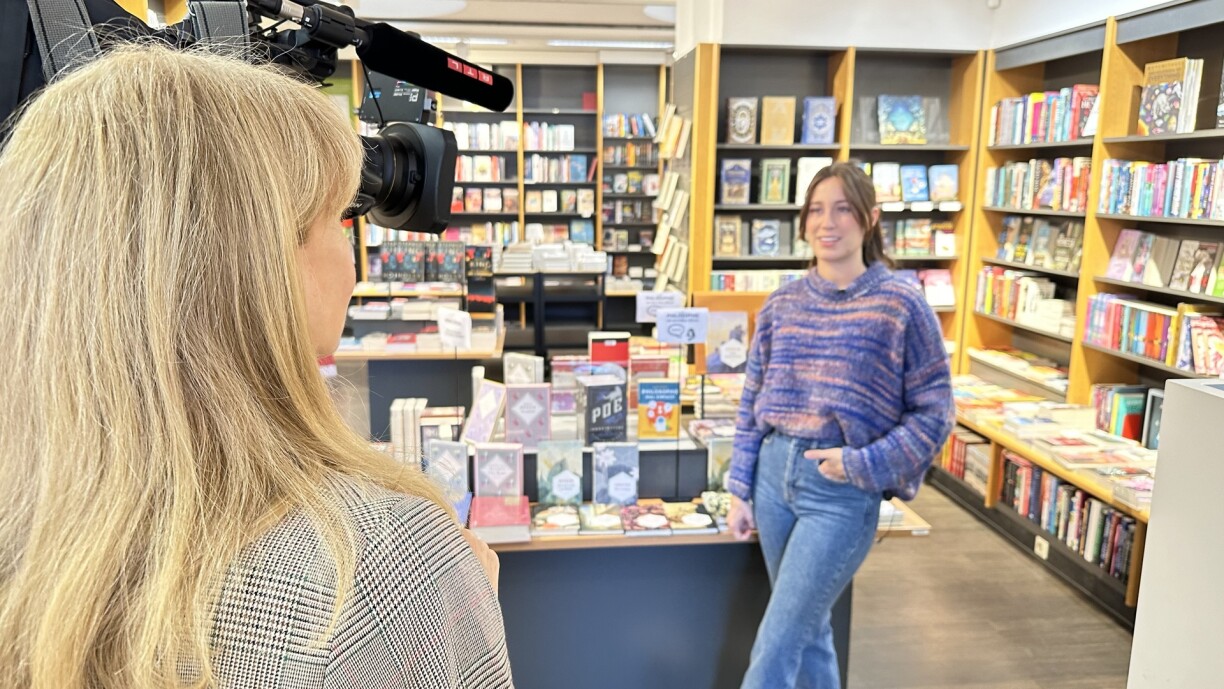
In a candid interview with RTL Télé, Braz met reporters at the Diederich bookshop in Esch-sur-Alzette amidst a busy schedule, including commitments for the municipality of Esch and participation in the International Women's Day protest march in Luxembourg City.
With a packed schedule and frequent travel between Esch and Luxembourg City, the 27-year-old navigates the demands of her newfound political roles, having secured positions in both the Esch municipal council and the Chamber of Deputies on her first attempt.
Reflecting on her rapid rise to prominence, Braz admits, "I still can't really explain it to myself; it took me a long time to come to terms with everything." She acknowledges the challenges of being thrust into the public eye, recognising the weight of her words and actions: "The lessons of the first few months were good, but tough ones to learn."
Braz, a law graduate who worked in the Ministry of Foreign Affairs and actually had a diplomatic career in mind, possesses a remarkable clarity of expression and does not hesitate to speak her mind. Young, eloquent, and opinionated: can't that also come across as arrogant?
Braz hesitates briefly before making it very clear that she does not see herself that way at all and certainly does not want to be seen that way: "It's important for me to show that I know that I don't know anything yet, that I still have so much to learn." In her work, she is guided by one of her father's maxims: "You have two ears and only one mouth, and there's a reason for that; you should listen more than you speak."
Liz Braz is the daughter of Green Party politician Félix Braz, who served as Deputy Prime Minister and Minister of Justice until he suffered a heart attack in 2019.
"In principle, everyone has the right to criticise the government's work," and in this respect Braz sees no contradiction with her previous statement that she "still has much to learn." According to Braz, it is important to take a stand on issues where one has gained sufficient understanding.
Expressing concern over a perceived rightward shift in politics, Braz voices apprehension about the growing prominence of extremist tendencies. She criticises the government's apparent tolerance of such views, highlighting the danger posed by the normalisation of far-right ideologies: "Someone once said that if you didn't know any better, you'd think that the adr [Alternative Democratic Reform Party] was part of our government."
Braz also called for the fight against this shift to the right and for more tolerance to be taken to the European level.
Braz is dealing with a full workload and has also declared that she does not want to skip any stage. Nevertheless, she is now a candidate for the European elections. She acknowledges the personal limitations of her candidacy, and she is open about the fact that she only wants to do campaign "from the back row." However, Braz is resolute in her commitment to the cause:
"The EU cannot function if you give too much power to right-wing voices. I see it as my responsibility to contribute to this debate and, above all, to convince young people how important these elections are."
As the daughter of Félix Braz, she has got to know all sides of politics. Do people underestimate the pressure they may face when they get involved in a party?
Braz notes that the system in Luxembourg is such that you are bound to a certain party loyalty. However, her law degree would give her the freedom to stop at any time and not make any concessions regarding her values: "Maintaining independence in politics is the healthiest thing you can do if you want to do politics for the people."
Liz Braz defines her political identity as "socially liberal," navigating a middle ground between left-leaning and liberal ideologies. She emphasises the importance of striking a balance between individual freedoms and collective obligations.
A dozen MPs are under 40 years old, and two of them, Liz Braz and Luc Emering, are even under 30, and that would be a good thing, according to Braz. The last time there was such a rejuvenation process was in the 1980s with the generation that is now 55 or older.
However, Braz critiques the persistence of entrenched older politicians, urging parties to cultivate a continual renewal of leadership rather than relying on established figures for prolonged periods.
According to Braz, there is a certain solidarity between the younger MPs, transcending party lines to offer mutual support. How does a generation that has grown up with social media deal with hate and cyberbullying?
In this respect, she admits that she has not yet found the right balance between ignoring and denouncing when things go too far. She sees the anonymity behind which internet users can hide as one of the main problems.
Braz underscores the need for a nuanced approach in addressing cyberbullying, acknowledging the limitations of simply "developing a thick skin" and advocating for broader discussions on internet anonymity and online hatred beyond the realm of politics.





