
"Throughout their lives, women put their bodies in the hands of gynaecologists," says Anne-Marie Antoine, psychotherapist and sexologist at Planning Familiale.
Women are observed, treated, operated on and advised by gynaecologists from puberty through to the menopause, including childbirth. Too often, this medical history is peppered by inappropriate comments, gestures or acts, or worse, as proved to be the case for a French doctor struck off the register for numerous medical errors.
"Gynaecological and obstetrical violence is a form of violence which is still largely taboo," says the Women's Health group in a report by the Scientific Council. On Wednesday 4 May, a series of speakers tackled the issue at a conference organised by Cesas in Luxembourg.
Why is this topic so taboo? First of all, it should be noted there is a distinct lack of data on the subject. In Luxembourg, there is no specific recording of obstetric or gynaecological violence against women; nor is there an ongoing investigation or survey among women, says Dr Isabelle Rolland-Portal, who coordinates the Women's Health work group.
The only current indicators are rates for Caesarean sections (around 30%) and episiotomies in Luxembourg, which affected one in four women in 2016. These acts, although considered necessary, are often criticised for being too frequently used in the Grand Duchy.
It is difficult to make an exhaustive list of violent acts, which can take a multitude of forms such as:
The consequences of these acts are just as numerous, says Dr Antoine. These may include vaginismus (discomfort and fear of penetration), low or absent libido, difficulty establishing a bond with babies, depression, struggles with self-image, health anxiety and distrust of the medical community.
Fundamentally, Dr Antoine says it is vital that victims are listened to, understood and believed, as in any other situation involving violence.
During Wednesday's debate there was just a single male representative on the panel of speakers: Dr Jean-Pierre Clees, a member of Luxembourg's Society of Gynaecology and Obstetrics. Dr Clees began his speech with a reference to the foundation of medical ethics: "I respect the autonomy and dignity of my patient", an excerpt from the Hippocratic Oath. Although Dr Clees unreservedly denounced acts of gynaecological and obstetrical violence, he warned against making generalisations against doctors who respect their patients. He also reminded of the need to observe nuances, and drew attention to the constraints weighing upon medical practitioners such as stress, lack of sleep and training, and the pressures of being overworked.
Dr Clees added that "the feeling of pain is subjective", and said certain emergency procedures often left doctors with no choice. In the case of a woman haemorrhaging during childbirth, for example, he said it was vital to stop the bleeding as soon as possible, and in such a moment he would have no choice but to cause the patient pain in order to save them.
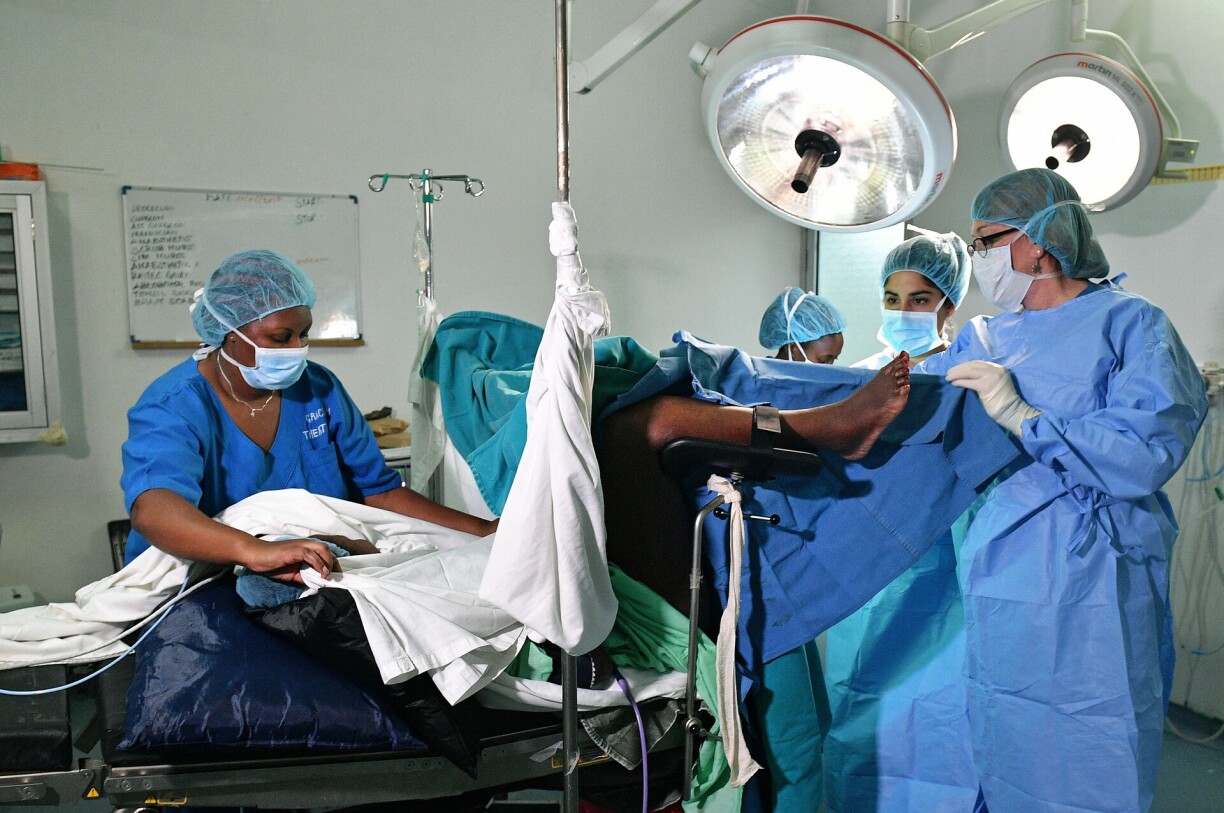
Among the audience on Wednesday were several midwives, including one who gave her name as Katja. She said that often women who have suffered gynaecological violence felt alone. "Yes, they can turn to hospitals for help", she added, "but hospitals are not neutral. We lack a neutral place where women can speak freely and lodge complaints. I know women who have suffered traumatic and violent births, who are still looking for somewhere to record their experiences."
Katja also denounced the lack of gynaecologists and maternity wards in Luxembourg, as well as the fact that midwives had increasing workloads and no longer had time to take proper care of new mothers and babies.
Another midwife explained there was a lack of communication in the field, meaning expectant mothers are often not informed about what is happening during their labour and birth. "One woman told me 'I didn't even know they were going to perform a Caesarean section and cut my belly open'", she told the assembled listeners. "That is horrible."
Another audience member said "We have to start raising awareness very early on, teaching young girls what their rights are over their bodies and reminding them that no one else has any rights to their body."





