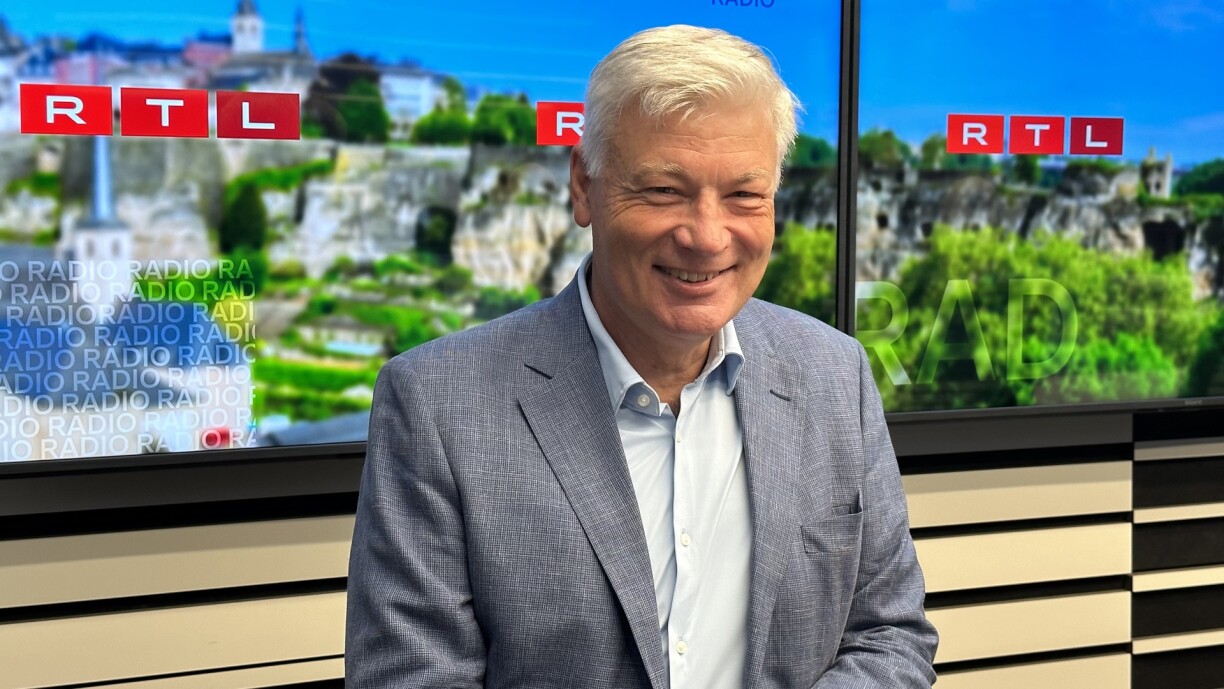
Claude Wiseler, co-president of the leading opposition party, discussed these goals in an interview with our colleagues from RTL Radio on Wednesday morning.
"We're doing everything we can to get back into government," Wiseler stated firmly, emphasising their aim to maintain their position as the leading party. The CSV's objective is to remain the strongest political force in Luxembourg, enabling them to engage in post-election negotiations and potentially return to governmental affairs. Wiseler expressed confidence in the CSV's preparedness, stating that they have presented "strong lists" in all four constituencies.
The latest "Sonndesfro" poll appears to support the CSV's efforts, with the party's national lead candidate, former Minister of Finance Luc Frieden, seemingly having a positive impact and the party gaining two seats compared to the previous poll. Although this is viewed as a "positive signal," it's noted that the party may still lose two seats compared to their standing in October 2018.
If vote were held Sunday: Two- or three-party coalitions possible in new government
However, Wiseler cautioned against placing too much reliance on polls, stressing that the ultimate determinant is the final ballot count. While acknowledging the favourable poll results have boosted morale, he made it clear that the primary focus remains on the election campaign.
One aspect that slightly dampens the CSV's spirits is the poll's indication that the current government majority, composed of the Democratic Party (DP), the Luxembourg Socialist Workers' Party (LSAP), and the Green Party (déi Gréng), could retain 31 seats. Wiseler stated, "we are convinced that if this majority were to retain 31 seats, they would simply continue."
The Co-president of the CSV added that "it doesn't matter whether the future Prime Minister is called Xavier Bettel or Paulette Lenert, it will all be the same," in the eyes of the CSV co-president, because "the policies will be the same." There is "only one alternative, and that is the CSV," Wiseler stressed, although he refrained from specifying the party's preferred partner for a potential new government.
The former Minister for Mobility dismissed criticism that not enough was achieved during his term of office as "totally unjustified." He pointed out that relative to GDP, "at least as much" was invested in roads and railways.
The growth of the 1990s and 2000s was underestimated, Wiseler believes. Infrastructure is "continually strained" in view of the country's demographic development. Wiseler called for streamlined procedures and reduced administrative hurdles to enable faster responses to the country's infrastructure needs.





